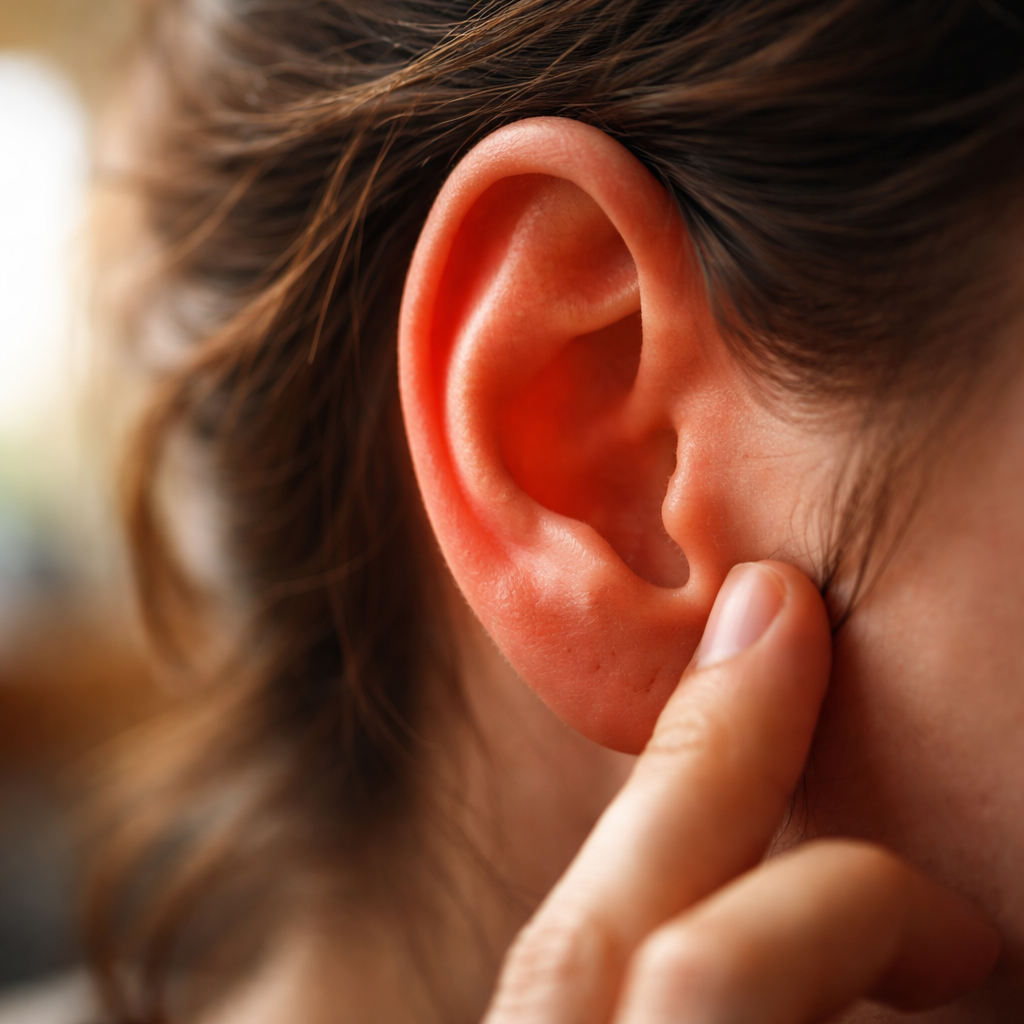
Have you ever noticed your ear suddenly turning red and feeling warm for no obvious reason? The meaning of burning ears has puzzled people for centuries — and the explanations range from surprisingly grounded science to deeply rooted cultural folklore. Whether it happens to you occasionally or you’ve been curious about what others experience, there’s more behind this sensation than most people realize.
What’s actually happening when your ears feel hot
From a purely physiological standpoint, the sensation of warm or burning ears comes down to blood flow. The ears contain a dense network of small blood vessels close to the surface of the skin. When those vessels dilate — a process called vasodilation — more blood rushes to the area, raising the skin temperature and producing that distinctive flushed, heated feeling.
This can happen for a number of perfectly ordinary reasons that have nothing to do with superstition or symbolism. Temperature changes, physical exertion, emotional responses like embarrassment or anxiety, hormonal fluctuations, and even certain foods or alcohol can all trigger this response. The body’s autonomic nervous system regulates blood vessel dilation automatically, which is why the sensation can appear seemingly out of nowhere.
Common physical causes worth knowing
Understanding what triggers hot ears can help you figure out whether the sensation is worth paying attention to or simply a minor bodily reaction. Here are the most frequently reported physical reasons:
- Emotional arousal — embarrassment, anger, or sudden excitement can cause rapid facial and ear flushing
- Temperature exposure — moving from a cold environment into a warm room often triggers temporary redness
- Hormonal changes — hot flashes associated with hormonal shifts can include ear warmth
- Spicy food and alcohol — both are known vasodilators that affect blood vessel behavior
- Sunburn or skin irritation — prolonged UV exposure affects the outer ear noticeably
- Ear infections — an inflamed middle or outer ear can produce localized heat and discomfort
- Medication side effects — some medications list facial flushing and skin warmth as known reactions
In most cases, burning ears are temporary and harmless. However, if the sensation is persistent, accompanied by pain, discharge, or hearing changes, it’s worth consulting a medical professional to rule out infection or other ear-related conditions.
The folklore: what different cultures believe
Beyond the science, burning ears carry a rich symbolic meaning across many cultures around the world. The most widespread folk belief is that if your ears are burning, someone is talking about you. This superstition appears in ancient Roman writings and has parallels in European, Asian, and Latin American traditions.
“When your ears burn, someone has you in their thoughts” — a proverb repeated in various forms across dozens of languages and regions.
Interestingly, many traditions go further and distinguish between left and right ears, assigning different meanings to each side.
| Ear | Folk interpretation |
|---|---|
| Right ear burning | Someone is saying positive things about you |
| Left ear burning | Someone is speaking negatively or criticizing you |
This left-right distinction reflects a broader cultural pattern where the right side is associated with good omens and the left with caution or negativity — a symbolic framework found in many ancient belief systems. While there is no scientific basis for this distinction, it remains a fun and widely recognized piece of folk wisdom.
Why this belief has survived so long
It might seem odd that a superstition this old continues to circulate in modern, information-rich societies. But there’s a psychological explanation for its staying power. Humans are naturally wired to look for patterns and assign meaning to physical sensations — especially ones that are sudden and unexplained. When something unusual happens to the body, the mind immediately searches for a cause.
Folk explanations like “someone is talking about you” offer a socially satisfying narrative. They connect your internal experience to an external social world, which aligns with how human beings process feelings of being observed or thought about. This is sometimes described in psychology as a form of apophenia — the tendency to perceive meaningful connections between unrelated things.
When to take burning ears seriously
Most episodes of hot ears are short-lived and require no action. But there are specific situations where the sensation signals something that deserves medical attention. Relapsing polychondritis, for example, is a rare inflammatory condition that can cause significant redness and heat in the ears along with pain. Red ear syndrome is another documented but uncommon condition characterized by recurring episodes of burning and redness without a clear trigger.
Pay attention if the following are present alongside the burning sensation:
- Persistent pain inside the ear canal
- Visible swelling of the ear cartilage
- Fluid discharge from the ear
- Reduced hearing or a feeling of fullness
- Fever alongside ear warmth
These are signs that warrant a visit to a doctor rather than a search for folk interpretations. Being aware of your body’s baseline helps you recognize when something genuinely shifts.
Both worlds can coexist
There’s something quietly interesting about a sensation that lives simultaneously in medical textbooks and in centuries-old superstition. Burning ears remind us that the human experience of the body has always been interpreted through both biological and cultural lenses — and that neither explanation cancels out the other.
Knowing the physiological reasons behind hot ears doesn’t make the folk tale any less charming. And understanding the folklore doesn’t stop you from checking whether you’ve been sitting too close to a heater. The two perspectives simply answer different kinds of questions — and both, in their own way, are worth knowing.
