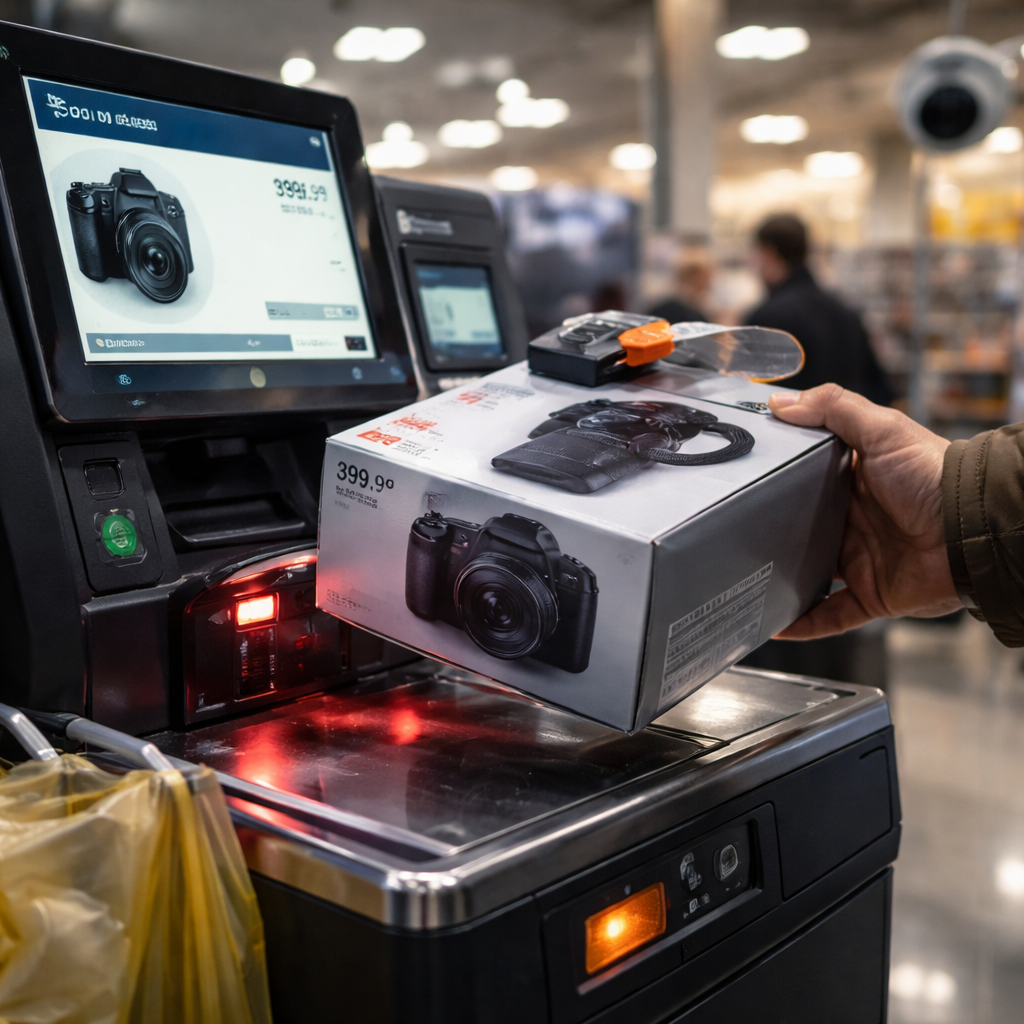
Most shoppers never think twice about scanning a few groceries at a self-checkout kiosk, but the question of whether it is safe to use self-checkout for expensive items is a genuinely different conversation — one that involves store policy, loss prevention technology, personal liability, and a few practical risks that are easy to overlook.
What actually happens when you scan a high-value item yourself
Self-checkout machines were originally designed with low-cost, easy-to-scan items in mind — think a bottle of water or a pack of gum. When a $300 piece of electronics or a high-end kitchen appliance enters the equation, the process gets more complicated. Many items above a certain price threshold trigger an automatic attendant review before the transaction is approved. Retailers often configure their systems to flag purchases over a set amount, requiring staff verification before you can complete the payment.
Beyond the automated flags, high-value items frequently come with security tags, anti-theft packaging, or locked cases — none of which a self-checkout machine can handle on its own. If a staff member has to unlock a case and hand you the item anyway, the “self” part of self-checkout becomes largely symbolic for that purchase.
The real risks worth knowing about
There are a few distinct categories of risk when using self-checkout for expensive purchases, and they affect the shopper in different ways.
- Scanning errors: Barcodes on premium products can sometimes be damaged, duplicated on packaging, or simply harder to read. A misread barcode might charge you for the wrong item — potentially more expensive — or fail to register the product entirely, which can look like theft even when it is not.
- Receipt disputes: If something goes wrong with a high-value purchase at self-checkout, the transaction log may be harder to trace than one processed by a cashier. Always keep your receipt and review the itemized list before leaving the store.
- False suspicion of theft: Loss prevention staff pay close attention to self-checkout lanes, especially for large-ticket items. Honest mistakes — like a barcode not scanning correctly — can attract unwanted attention. Some retail chains have internal policies that allow them to review footage and even detain customers they suspect of scan-and-go theft.
- Software glitches: Self-checkout terminals occasionally freeze, double-charge, or fail to apply promotional pricing. For a five-dollar item, this is a minor annoyance. For a $500 item, it is a problem that may require manager involvement and a wait.
Retail security researchers have noted that self-checkout lanes generate a disproportionately high rate of unintentional scanning errors compared to staffed registers — and the risk scales with the price of the item involved.
How stores protect themselves — and what that means for you
Major retailers have invested heavily in self-checkout loss prevention. Weight sensors on the bagging area, overhead cameras with AI-assisted monitoring, and real-time transaction analysis are all standard tools in modern retail environments. For the honest shopper, this infrastructure mostly works in the background. But it also means that any unusual behavior — placing an item in the bagging area before scanning, skipping the bagging step, or scanning an item multiple times — can trigger an alert that pauses your transaction or brings over a staff member.
Some stores have introduced dedicated attendant-assisted lanes for purchases over a certain value. Others simply prohibit self-checkout for specific product categories — alcohol, tobacco, and high-value electronics are the most common examples. It is worth checking the specific policy of the store you are shopping at, particularly in large-format retail chains.
| Item Type | Typical Self-Checkout Restriction | Recommended Approach |
|---|---|---|
| Electronics over $200 | Often requires staff approval | Use staffed register |
| Jewelry or watches | Frequently locked, staff must assist | Always use staffed register |
| Alcohol | Age verification required | Self-checkout with attendant nearby |
| Appliances | Bulky items, weight sensor issues | Staffed register preferred |
| Clothing with security tags | Tag removal required | Staffed register only |
Practical steps to protect yourself if you do use self-checkout
Sometimes a staffed register simply is not available, or the line is unreasonably long. If you decide to proceed with self-checkout for a high-value item, a few straightforward habits can save you a lot of trouble.
First, scan the item slowly and deliberately — make sure the screen confirms the correct product name and price before moving on. If the barcode does not read on the first try, do not attempt to scan it multiple times in rapid succession. Instead, call an attendant over to assist. This both solves the problem and creates a visible record that you were not attempting to bypass payment.
Second, keep the item visible throughout the process. Do not place it in a bag before the screen confirms it has been successfully added to your transaction. This is especially important for items with unusual shapes or packaging that does not sit flat on the weight sensor.
If anything goes wrong — a screen freeze, a duplicate charge, a price discrepancy — stop the transaction immediately and ask for staff assistance. Completing a payment you already know is incorrect puts you in a much harder position to dispute it later.
Third, take a photo of the receipt on your phone before you leave the register. For expensive items, having a timestamped digital record of your purchase is a simple but effective safeguard, particularly if there is any question at the exit check or later at customer service.
When the smarter move is just to queue for a cashier
For anything above roughly $150 to $200, the convenience of self-checkout starts to be outweighed by the friction points it introduces. A staffed register gives you a human buffer — the cashier can manually enter a barcode that does not scan, apply a price match on the spot, remove a security tag, and provide a signed or stamped receipt that is harder to dispute. You also have a witness to the transaction, which matters more than most people realize when dealing with returns, warranty claims, or any kind of payment dispute down the line.
This is not about distrusting the technology. Modern self-checkout systems are reliable for the use cases they were built for. The issue is that high-value retail purchases involve a level of complexity — security packaging, pricing accuracy, return eligibility, proof of purchase — that benefits from human involvement. A few extra minutes at a staffed register is a reasonable trade-off for that peace of mind.
The bottom line is straightforward: for everyday, low-cost items, self-checkout is convenient and efficient. For anything expensive, the staffed lane is not just a preference — it is genuinely the safer, more protected option for both your wallet and your time.
