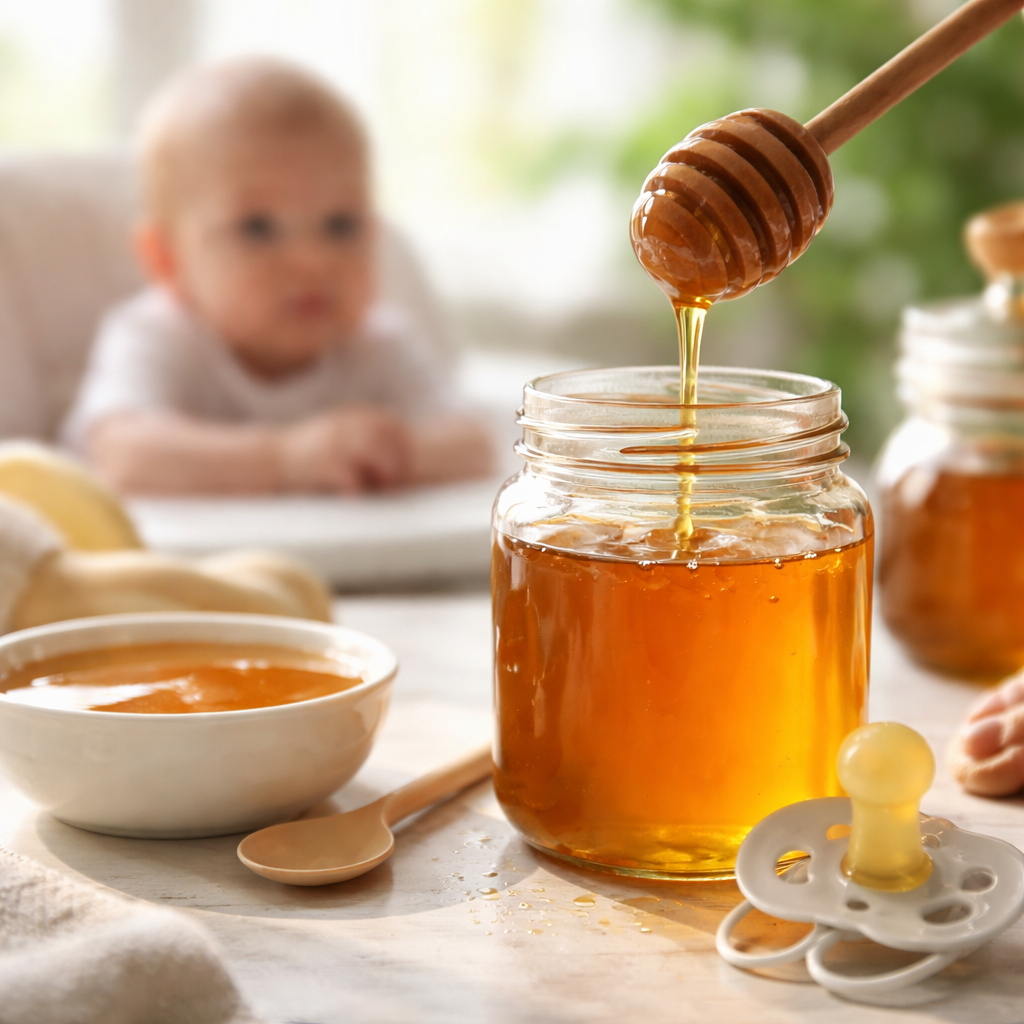
Many parents wonder: is it safe to give honey to a baby? The answer from every major pediatric health organization worldwide is clear and consistent — no, honey should never be given to infants under 12 months of age, regardless of the type or amount. This is not a precautionary overreaction. It is a hard medical rule backed by decades of clinical evidence.
The real reason behind the restriction
Raw and processed honey can contain spores of the bacterium Clostridium botulinum. In adults and older children, these spores pass through the digestive system harmlessly because the gut flora is mature enough to prevent them from multiplying. In babies, however, the intestinal environment is still developing. When those spores are ingested, they can germinate, colonize the bowel, and begin producing a powerful neurotoxin — leading to a condition called infant botulism.
What makes this especially important for parents to understand is that the danger applies to all forms of honey — organic, raw, local, pasteurized, or store-bought. Pasteurization does not destroy botulinum spores. Even a small amount, such as a drop used to soothe a pacifier or mixed into food, carries risk.
What infant botulism actually looks like
Infant botulism is the most common form of botulism reported in many countries. Early symptoms can be subtle and are sometimes mistaken for general illness or fatigue. Knowing what to watch for is critical if accidental exposure has occurred.
- Constipation that appears suddenly and persists
- Weak, floppy muscle tone (hypotonia)
- Poor feeding or a noticeably weakened sucking reflex
- Weak cry that sounds different than usual
- Drooping eyelids or difficulty keeping eyes open
- Labored or slow breathing
Symptoms typically appear between 12 and 36 hours after ingestion, though the incubation period can stretch longer. If you observe any of these signs in a child under one year — especially after potential honey exposure — seek emergency medical attention immediately. Infant botulism can progress to respiratory failure without prompt treatment.
“Infant botulism is a medical emergency. Even a tiny amount of honey can introduce enough spores to cause serious neurological harm in babies whose digestive systems are not yet equipped to defend against Clostridium botulinum.”
— Centers for Disease Control and Prevention (CDC)
When honey becomes safe — and what changes at 12 months
The one-year mark is not arbitrary. By around 12 months of age, the gastrointestinal tract has matured sufficiently, and a well-established gut microbiome can outcompete botulinum spores, preventing them from germinating and producing toxins. This is why the restriction applies specifically to the under-12-month window.
After the first birthday, honey can be introduced gradually as part of a normal diet. However, it remains a high-sugar food that should be given in moderation, just like any other sweetener. It is also worth noting that children with certain immune conditions may need individual medical guidance even beyond age one.
| Age | Can they have honey? | Reason |
|---|---|---|
| Under 12 months | No | Immature gut — botulinum spores can germinate |
| 12 months and older | Yes, in moderation | Mature digestive system provides protection |
| Children with immune disorders | Consult a doctor | Individual assessment required |
Common situations where parents accidentally expose babies to honey
Accidental exposure happens more often than people expect, and it is rarely the result of carelessness — often it comes from a lack of awareness about hidden sources. Here are some situations worth knowing about:
- Pacifiers or teething toys dipped in honey to calm a fussy baby
- Herbal teas marketed for infant colic that contain honey as an ingredient
- Baked goods or cereals made with honey, sometimes given as early finger foods
- Homemade remedies passed down through generations for coughs or sore throats
- Honey-flavored yogurts or snack products not specifically formulated for infants
Always read ingredient labels carefully when choosing foods for babies under one year. Products that seem natural or soothing are not automatically safe for very young children.
What you can use instead to comfort or sweeten for babies
If you are looking for safe alternatives to soothe a baby or add a mild sweetness to purees, there are several age-appropriate options that pediatric nutritionists typically consider acceptable for infants over six months who have already started solids:
- Mashed ripe banana — naturally sweet and rich in potassium
- Unsweetened applesauce — gentle on digestion and widely tolerated
- Pureed pear or mango — provides natural sweetness without added sugar
- Breast milk or formula — still the primary nutrition source for babies under one year
These options not only avoid the risks associated with honey but also support a diverse, nutritious diet from the very beginning of solid food introduction.
What every caregiver in your child’s life needs to know
One thing parents sometimes overlook is that the rule applies to everyone who cares for the baby — not just the immediate parents. Grandparents, babysitters, and well-meaning relatives may not be aware of current infant feeding guidelines. In previous generations, honey was commonly used as a home remedy for infants, and those habits can persist.
Having an open, non-judgmental conversation with caregivers about why honey is off-limits for babies under one year can prevent accidental exposure. A simple explanation of how infant botulism works is usually enough to ensure everyone takes the restriction seriously.
The first year of a child’s life involves countless decisions about what is safe and what is not. Honey is one of the rare cases where the answer is completely black and white — and where following the guideline consistently, across every environment your baby is in, makes a real difference.
