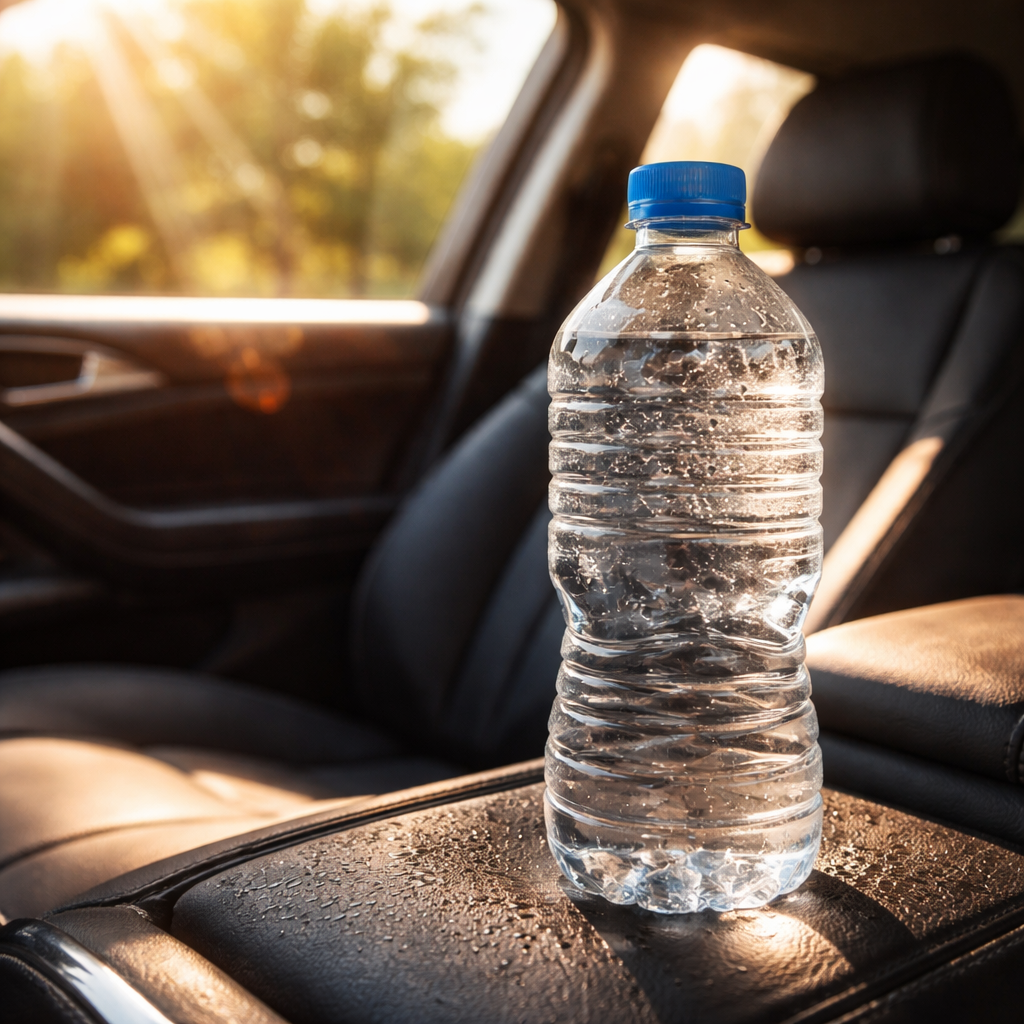
Most people have reached into a hot car and grabbed a water bottle without thinking twice — but the question of whether is it safe to drink water left in a hot car is more nuanced than a simple yes or no. The answer depends on the bottle material, how long it’s been sitting there, and the temperature inside the vehicle.
What Actually Happens to Water Inside a Hot Car
On a warm day, the interior of a parked car can reach temperatures far exceeding outdoor levels — sometimes hitting 70–80°C (160–175°F) within an hour. The water itself doesn’t spoil in the traditional sense, but the container it sits in is a different story entirely.
The real concern isn’t the water — it’s what the bottle releases into it. Research has shown that when plastic bottles are exposed to high heat, certain chemical compounds can migrate into the liquid. The most studied of these is antimony, a chemical used in the production of PET plastic (the material used in most disposable water bottles), as well as BPA (bisphenol A), though many modern bottles are now BPA-free.
The Science Behind Plastic Leaching
PET bottles — typically labeled with the recycling symbol #1 — are widely considered safe for single use under normal conditions. But heat accelerates chemical migration. Studies have found that antimony levels in bottled water increase significantly after prolonged exposure to temperatures above 60°C. While these levels often remain below the safety thresholds set by organizations like the EPA or WHO, repeated exposure over time raises legitimate questions about cumulative intake.
Beyond antimony, heat can also affect the structural integrity of the plastic itself, making it more prone to releasing microplastics — tiny particles that have become a growing subject of scientific investigation worldwide.
| Container Type | Heat Resistance | Risk of Chemical Leaching |
|---|---|---|
| Single-use PET plastic (#1) | Low | Moderate to High at elevated temps |
| Reusable plastic (BPA-free) | Moderate | Lower, but not zero |
| Stainless steel | High | Minimal |
| Glass | High | Negligible |
Does the Water Taste Different — and Should You Care?
If you’ve ever taken a sip from a bottle that’s been baking in the sun all afternoon, you’ve probably noticed an odd plastic-like aftertaste. That’s not just your imagination. The off-taste is a real sensory indicator that something has changed — the plastic is off-gassing and interacting with the water in ways it normally wouldn’t at room temperature.
Taste alone isn’t a reliable safety indicator, but it’s a useful signal. If your water smells or tastes like plastic, that’s a reasonable reason to skip it — especially if you have a better alternative nearby.
“The concern isn’t that one sip of warm bottled water will harm you. It’s the habit of regularly consuming water stored in heat-stressed plastic containers over months and years.”
Practical Situations and What They Mean for You
Life doesn’t always offer perfect conditions. Here’s how to think through the most common real-world scenarios:
- Left in the car for a couple of hours on a mild day — generally fine for a one-off situation, especially if the bottle is new and hasn’t been refilled multiple times.
- Left overnight in summer heat — the risk increases. The bottle has spent extended time at high temperature, and the water may have absorbed more chemical compounds than is ideal.
- Reusing a single-use bottle repeatedly and leaving it in the car — this combination is the most problematic. Single-use bottles degrade faster with each refill and heat cycle.
- Using a stainless steel or glass bottle — heat exposure doesn’t trigger chemical leaching. Your main concern here is bacterial growth if the bottle isn’t clean.
Bacterial contamination is a separate but related concern. If a bottle has been opened and partially consumed, the combination of warmth and residual saliva creates a mildly hospitable environment for bacterial growth. It’s not a dramatic risk in most cases, but it’s worth noting if the water has been sitting for a long time.
Tips for Staying Hydrated Safely on the Go
Staying hydrated while traveling or spending time outdoors doesn’t require complicated routines. A few small changes to your habits can significantly reduce any potential risk.
Simple habit upgrade: swap single-use plastic bottles for an insulated stainless steel bottle. It keeps water cool longer, doesn’t leach chemicals under heat, and reduces plastic waste.
- Choose reusable bottles made from stainless steel, glass, or food-grade silicone when possible.
- Store water in the coolest part of the car — a shaded trunk or under the seat, away from direct sunlight.
- If you must use a plastic bottle, opt for sealed, freshly purchased ones for one-time use rather than refilling old ones.
- Invest in an insulated cooler bag for long trips in warm weather — it makes a measurable difference in bottle temperature.
- Discard any bottle that has visible warping, cloudiness, or a strong plastic odor after heat exposure.
What the Bottom Line Actually Looks Like
Drinking water that has been sitting in a hot car once won’t put you in danger. The human body is resilient, and a single exposure to slightly elevated chemical levels is unlikely to cause any noticeable harm. What matters more is the pattern — how often you’re doing this, what type of bottle you’re using, and how hot conditions are on a regular basis.
If your daily routine involves grabbing a plastic bottle that’s been in your car all morning, it’s worth thinking about a simple upgrade. Not out of fear, but out of an awareness that small, consistent choices about what you consume add up over time. The water is safe enough in most immediate situations — but your bottle choice and storage habits are well within your control, and they genuinely matter for the long term.
