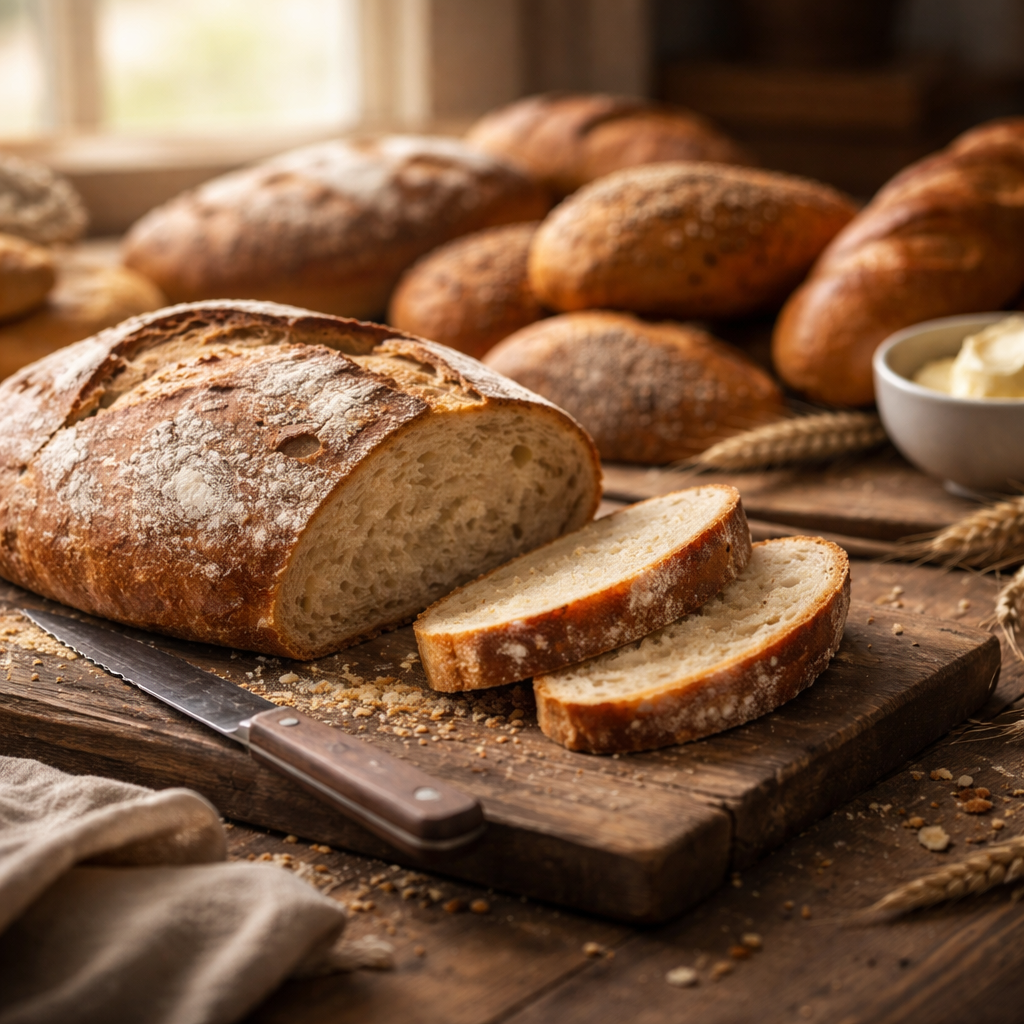
Most people wake up from a dream about bread and brush it off as random noise from the day before. But if you’ve ever wondered what does dreaming about bread mean, you’re not alone — and the answer is far more layered than “you were hungry before bed.” Dream interpretation has been studied across cultures for centuries, and bread, as one of the oldest symbols in human symbolism, carries a surprisingly rich range of meanings depending on context, condition, and emotion within the dream.
Why bread shows up in dreams at all
Bread is one of the most universal foods in human history. It appears in religious texts, folklore, and daily rituals across nearly every culture. Because of this deep cultural embedding, bread tends to surface in dreams during periods of change, need, or reflection — not just when your stomach is growling at midnight.
From a psychological standpoint, dream analysts often link bread to concepts of sustenance, provision, and basic security. It’s not glamorous food — it’s foundational food. So when it appears in your subconscious, it usually points to something equally fundamental in your waking life.
Common bread dream scenarios and what they suggest
Dreams rarely come in isolation. The meaning shifts dramatically based on what’s happening in the dream itself — whether you’re baking, eating, sharing, or watching bread go stale. Here are some of the most frequently reported scenarios:
| Dream scenario | Possible interpretation |
|---|---|
| Eating fresh bread | Satisfaction, comfort, or fulfillment of a current need |
| Baking bread | Creativity, effort toward a goal, or nurturing others |
| Stale or moldy bread | Neglected opportunities, stagnation, or unresolved concerns |
| Sharing bread with others | Generosity, social connection, or desire for community |
| Receiving bread as a gift | Support from others, feeling cared for |
| Burning bread | Anxiety about failure, fear of losing something important |
| Buying bread | Practical focus, concern about financial or material stability |
Keep in mind that these are patterns drawn from dream symbolism traditions — not psychological diagnoses. The emotion you feel during the dream often matters more than the object itself.
The emotional tone is everything
Two people can dream of the same loaf of bread and walk away with completely opposite experiences. One person feels warm and nourished; another feels panic because they can’t find enough. That emotional coloring is the real interpretive clue.
In many dream analysis frameworks, the feeling you carry out of the dream is considered more diagnostically useful than the image itself. Bread is the canvas — your emotional state is the painting.
If you woke up feeling calm and content after dreaming of bread, this typically reflects a period of stability or gratitude in your life. If the dream left you uneasy — say, you couldn’t find bread, or it kept disappearing — it may signal underlying worries about security, belonging, or being enough for those around you.
Cultural and spiritual dimensions of bread in dreams
Across different traditions, bread carries spiritual weight that can influence how people interpret these dreams:
- In Christian symbolism, bread is deeply tied to concepts of grace, communion, and divine provision. A dream about bread in this context may feel spiritually significant rather than psychological.
- In many Eastern European folk traditions, dreaming of bread is considered a positive omen — a sign of incoming prosperity or household harmony.
- In Jungian psychology, bread as a dream symbol often represents the “self” in its most basic form — the need to nourish not just the body, but the inner life.
- In Islamic dream interpretation, bread is frequently associated with wealth, livelihood, and blessing when it appears in a positive light.
Your personal relationship with bread — whether it’s comfort food, something you avoid, or tied to a specific memory — also plays a role. Dreams pull heavily from personal associations, not just universal archetypes.
When to pay closer attention to this type of dream
Not every dream demands deep reflection. But certain patterns are worth noticing, especially if bread-related dreams recur over time or come with a strong emotional charge. Here are some situations where it’s worth sitting with the image a little longer:
- You’re going through a financial transition or career change and dreaming of scarce or stale bread repeatedly
- You’re in a period of burnout, and the dream involves baking endlessly without the bread ever being done
- You’ve recently experienced a loss, and the dream involves sharing bread with someone who is no longer in your life
- You feel disconnected from your daily routine and dream of bread that you cannot eat or reach
These patterns don’t predict anything — but they can act as a gentle mirror, reflecting what your waking mind may be processing beneath the surface.
What your bread dream might actually be telling you
Ultimately, bread in dreams tends to circle around a handful of core human concerns: security, nourishment, connection, and effort. Whether you’re dreaming of a warm sourdough loaf straight from the oven or watching a sandwich fall apart in your hands, the subconscious is rarely being random. It’s speaking in metaphor — the way it always does.
Rather than searching for a single fixed meaning, try treating the dream as a question. What area of your life feels nourishing right now? What feels scarce? Where are you pouring effort without seeing results? The answers you arrive at on your own are usually far more accurate than any dream dictionary entry — because they’re grounded in your actual lived experience.
Dreams about bread won’t tell you what to do. But they can point you toward what you already know.
