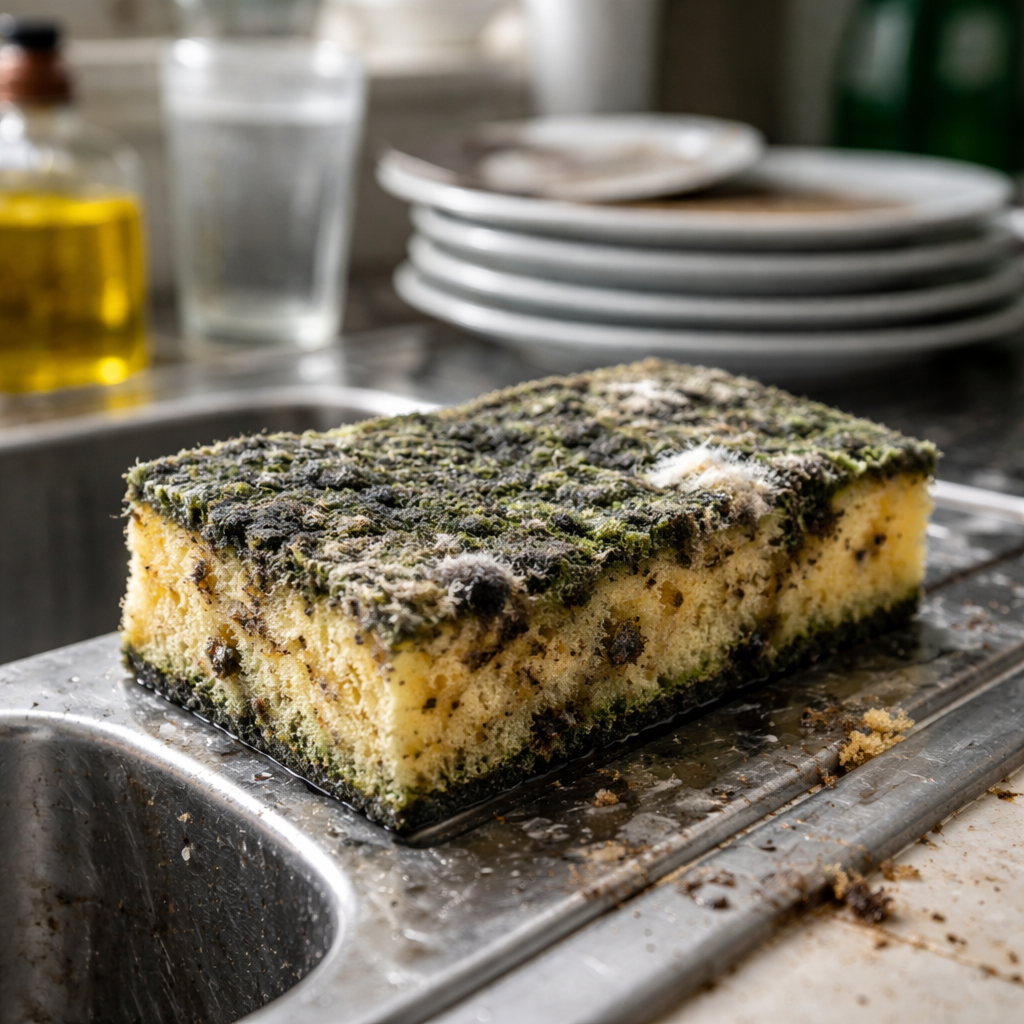
Most people have grabbed a slightly questionable sponge to rinse off a plate without giving it much thought — but is it safe to wash dishes with a moldy sponge, or are you actually spreading more bacteria than you’re removing? The answer might change how you look at that sponge holder next to your sink.
What actually lives inside a kitchen sponge
Kitchen sponges are among the most microbially dense objects in the average home. Their porous structure, constant moisture, and regular exposure to food residue create near-perfect conditions for microbial growth. Research published in scientific journals has identified hundreds of bacterial species thriving inside used sponges, with some studies placing the bacterial count in the billions per square centimeter.
Mold adds a different layer to this picture. When you notice dark spots, a musty smell, or fuzzy patches on your sponge, that’s visible fungal growth — which means the contamination has already progressed well beyond the surface. Mold reproduces through spores, and those spores transfer easily to wet surfaces, including your dishes, glasses, and utensils.
Why using a moldy sponge on dishes is a genuine health concern
Wiping dishes with a mold-contaminated sponge doesn’t clean them — it redistributes microorganisms across every surface you touch. Here’s what actually happens during that process:
- Mold spores transfer from the sponge onto dish surfaces, even after rinsing with water
- Bacteria embedded in the sponge get reintroduced to plates, bowls, and cutlery
- Warm water doesn’t kill mold — it can actually help it spread more effectively
- Dish soap reduces grease but does not eliminate mold or its spores
- Cross-contamination becomes a risk, especially when washing items used for raw proteins or produce
For most healthy adults, occasional exposure to common household mold through contaminated dishes may not cause an immediate reaction. However, people with respiratory conditions, allergies, compromised immune systems, or young children in the household face a meaningfully higher risk. Mycotoxins — toxic compounds produced by certain mold species — are a separate concern when food contact surfaces are involved.
According to the USDA Food Safety and Inspection Service, kitchen sponges should be replaced regularly and kept as dry as possible between uses to reduce microbial buildup — mold included.
Can you disinfect a moldy sponge instead of throwing it out
This is where a lot of well-meaning kitchen hygiene advice gets complicated. Several popular methods circulate online, and it’s worth being clear about what works and what doesn’t.
| Method | Effectiveness against bacteria | Effectiveness against mold |
|---|---|---|
| Microwaving (wet sponge, 2 min) | High — kills most bacteria | Partial — may not eliminate all spores |
| Soaking in bleach solution | High | Moderate to high, but sponge degrades faster |
| Boiling in water | High | Moderate — heat-resistant spores may survive |
| Dishwasher (hot cycle) | Moderate to high | Low to moderate |
| Rinsing with dish soap and water | Low | Very low |
The honest takeaway from this comparison is that once visible mold has developed on a sponge, no home disinfection method reliably removes it to a level that makes the sponge safe for food contact surfaces. Sanitizing methods like microwaving can reduce bacterial load significantly, but mold spores are more resilient and can persist even after heat treatment.
How to recognize when a sponge has crossed the line
You don’t always need to see black or green spots to know something is off. A sponge that smells sour or musty even after rinsing has already accumulated enough organic material and microbial growth to be a contamination risk. Visible discoloration, a slimy texture that doesn’t go away with washing, or patches that don’t look like food stains are all signs the sponge should go straight to the bin.
A useful rule of thumb: if you’d hesitate to let someone see you using it, that instinct is probably correct.
Practical habits that actually slow down sponge contamination
Rather than focusing only on when to discard a sponge, it helps to understand what makes them deteriorate so quickly in the first place. Most of the microbial growth isn’t about the sponge itself — it’s about the conditions you keep it in.
- Wring out the sponge completely after each use and store it in a well-ventilated spot, not trapped in a sealed holder or lying flat in a puddle of water
- Avoid using the same sponge for dishes and for wiping countertops — separate tasks, separate tools
- Rinse the sponge thoroughly after contact with meat, fish, or egg residue
- Microwave a damp sponge for 90 seconds to two minutes every few days as a routine measure — this reduces bacterial load, though it isn’t a solution for visible mold
- Replace sponges at least every one to two weeks under normal household use, or sooner if odor or discoloration appears
What to use instead when you’re between sponges
If your current sponge has clearly seen better days and you don’t have a replacement on hand, a few alternatives work reasonably well in the short term. A clean dishcloth that’s been through a hot wash cycle is a safer choice than a moldy sponge. Silicone scrubbers are less prone to harboring bacteria and mold because they don’t retain moisture the same way cellulose sponges do. A soft-bristle dish brush that dries quickly is another option that many food safety professionals actually prefer over traditional sponges for everyday use.
None of these options are perfect, but they all present a meaningfully lower contamination risk than continuing to use a sponge that has visible mold growth on it.
The simple decision that protects more than just your dishes
Kitchen hygiene rarely gets the same attention as food preparation safety, but the tools you use to clean your dishes are part of the same chain. A moldy sponge isn’t just unpleasant — it actively works against the goal of having clean, safe dishware. The cost of replacing a sponge is negligible compared to the risk of spreading mold spores and bacteria across every surface you eat from.
Keeping a small stock of replacement sponges, establishing a regular swap schedule, and paying attention to smell and texture rather than just appearance are genuinely low-effort habits with real benefits. Your dishes will be cleaner, your kitchen will smell better, and you’ll have one less invisible variable affecting the health of everyone eating at your table.
