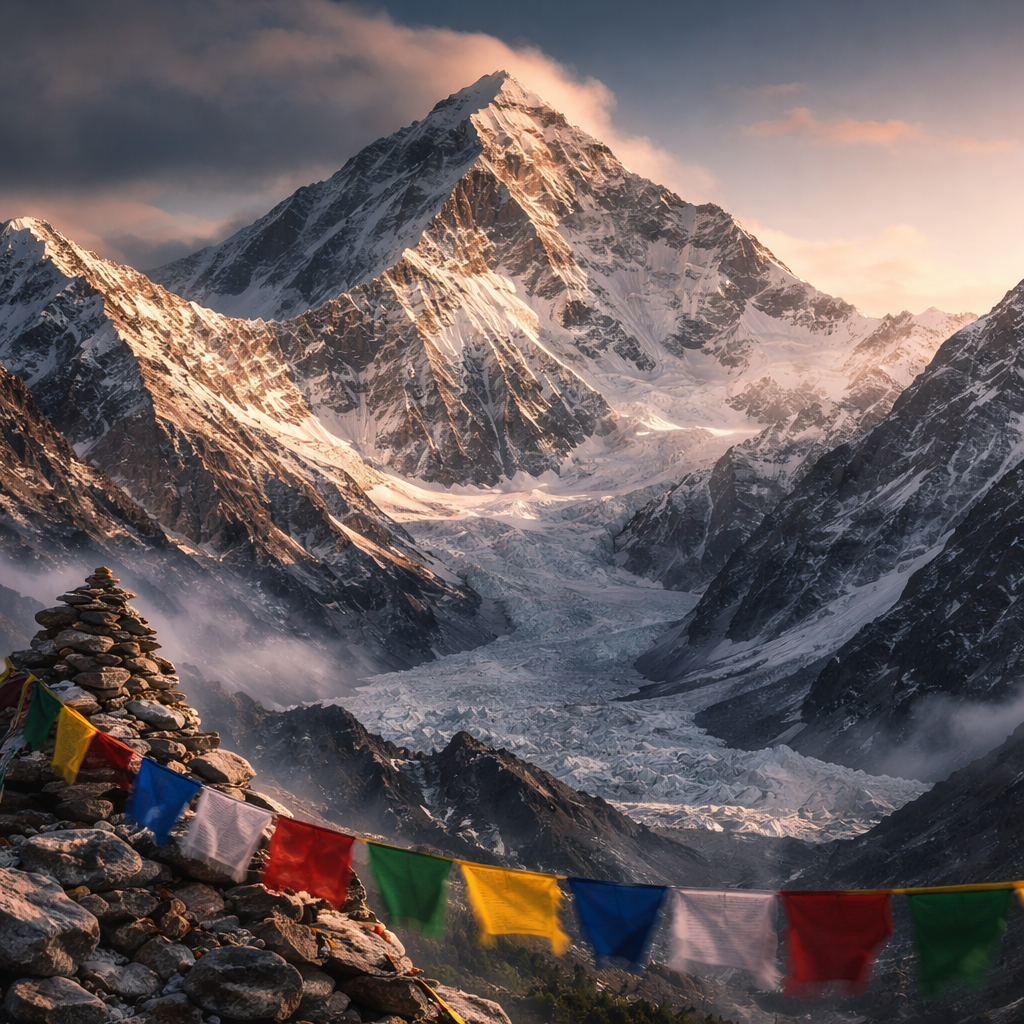
Standing at 8,848.86 meters above sea level, Everest does not simply dominate the skyline — it redefines what humans consider possible. The facts about Mount Everest go far beyond its raw altitude, touching geology, weather science, human endurance, and even environmental policy. Whether you are planning a trek, writing a research paper, or simply chasing curiosity, what you are about to read covers the mountain in a way that goes well past the usual numbers.
How the mountain was measured — and why the number keeps changing
The elevation of Everest is not as fixed as most people assume. The figure recognized by official surveying bodies has been revised more than once over the decades, largely because modern GPS and satellite geodesy allow far greater precision than the trigonometric surveys of earlier centuries. The mountain sits on the Eurasian and Indian tectonic plates, and their ongoing collision — which originally pushed Everest skyward — continues to this day at a rate of a few millimeters per year. Seismic events can also cause measurable shifts, which is exactly why major earthquakes in the Himalayan region have prompted new surveying expeditions.
There is also a genuine scientific debate about what “height” means. The commonly cited figure refers to the distance from mean sea level to the summit snowpack. The bedrock summit, stripped of its permanent snow layer, sits slightly lower. Neither measurement is wrong — they simply answer different questions.
Geography and geology you probably never learned in school
Everest straddles the border between Nepal and the Tibet Autonomous Region of China. Its Nepali name is Sagarmatha, meaning “Goddess of the Sky,” while in Tibetan it is known as Chomolungma, roughly translated as “Mother Goddess of the Universe.” The mountain was named after Sir George Everest, a British surveyor-general of India, although he never actually saw it in person and reportedly objected to the naming.
The summit itself is covered in marine limestone — rock that was once part of an ancient seabed. Fossils of sea creatures have been found at extreme altitudes on Everest’s flanks, offering a vivid reminder that the Himalayas were formed by the collision of tectonic plates that pushed an ancient ocean floor toward the sky over millions of years.
| Feature | Detail |
|---|---|
| Official height | 8,848.86 m (29,031.7 ft) |
| Location | Nepal / Tibet (China) border |
| Mountain range | Mahalangur Himal, Himalayas |
| Nepali name | Sagarmatha |
| Tibetan name | Chomolungma |
| First confirmed ascent | Edmund Hillary and Tenzing Norgay, 1953 |
The weather at the summit is its own extreme science
Temperatures at the top of Everest can plunge to around −60°C (−76°F) in winter. Wind speeds regularly exceed 200 km/h during the jet stream season, which is why climbing windows are tightly limited. The two primary summit seasons are spring (April to early June) and autumn (September to October), when the jet stream shifts position and allows brief periods of more tolerable conditions.
The atmospheric pressure at the summit is roughly one-third of what it is at sea level. This means the available oxygen is equally reduced, which is why most climbers use supplemental oxygen above 8,000 meters — a zone commonly referred to as the “death zone.” At this altitude, the human body consumes more oxygen than it can absorb, making prolonged stays genuinely life-threatening regardless of physical fitness.
“Above 8,000 meters, the human body is in a state of slow deterioration. Every hour spent there without supplemental oxygen accelerates that process significantly.” — a principle widely acknowledged in high-altitude medicine.
Climbing Everest: the route, the risks, and the reality
There are two primary climbing routes used today. The Southeast Ridge, accessed from Nepal through the South Col, was the route taken by Hillary and Norgay on the first ascent and remains the most frequently used path. The Northeast Ridge, approached from Tibet, is technically demanding and sees fewer climbers annually. Both routes require acclimatization periods of several weeks and involve multiple camps established progressively higher on the mountain.
Some commonly overlooked facts about Everest climbing logistics include the sheer cost and bureaucratic complexity involved. A standard expedition from the Nepal side requires a government-issued permit, the cost of which has been adjusted upward over recent years. Factor in guide fees, equipment, Sherpa support, insurance, and base camp logistics, and the total cost for a single attempt can reach anywhere from $30,000 to over $100,000 USD depending on the service level chosen.
- More than 300 people have died on Everest, and many bodies remain on the mountain due to the near-impossibility of retrieval at extreme altitude.
- The Khumbu Icefall — a moving, collapsing section of glacier near base camp — is considered one of the most dangerous sections of the entire route.
- Altitude sickness can affect anyone, regardless of previous fitness or climbing experience.
- Successful summit attempts depend heavily on weather forecasting, and expeditions have been cancelled or turned back mere hours from the top due to sudden weather changes.
Environmental impact and conservation challenges
Everest is also a story of environmental tension. Decades of commercial expeditions have left behind significant amounts of waste, including discarded oxygen cylinders, tents, food packaging, and human waste deposited at high camps where decomposition is virtually impossible due to freezing temperatures. Nepali authorities and various NGOs have run cleanup campaigns at regular intervals, with teams bringing down hundreds of kilograms of garbage per season.
The glaciers feeding the Khumbu region are measurably retreating due to rising global temperatures. Scientists studying the Himalayan cryosphere have documented changes in snowpack, glacial melt rates, and seasonal water supply for communities living downstream. Everest, in this sense, is not just a climbing destination — it is a sensitive environmental indicator watched closely by climate researchers worldwide.
What makes Everest genuinely extraordinary beyond the height
Perhaps the most striking thing about Everest is not the altitude itself, but the ecosystem of human achievement and failure that has built up around it. The Sherpa community — particularly from the Khumbu Valley — has played an irreplaceable role in every major ascent in Everest’s climbing history. Kami Rita Sherpa holds the record for the highest number of successful summits, demonstrating a depth of expertise and physical adaptation that remains unmatched.
Beyond records and firsts, Everest continues to draw people because it represents a genuine boundary of human capability. The high-altitude physiology, the logistics of survival in the death zone, the unpredictability of Himalayan weather — all of it combines into something that is more than sport or adventure. For researchers in medicine, geology, meteorology, and ecology, the mountain is an ongoing laboratory. For the rest of us, it is proof that the planet still holds places where nothing is guaranteed and everything demands respect.
