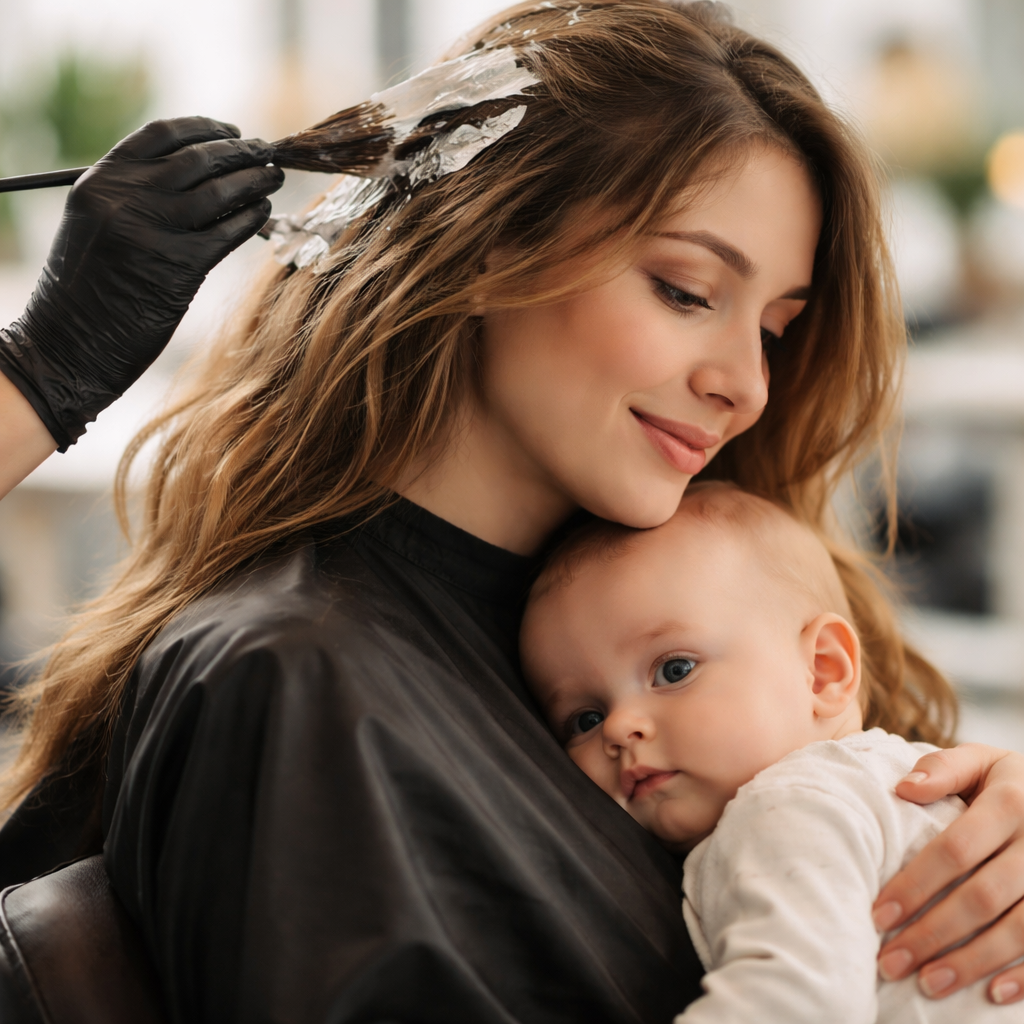
Many new mothers wonder: is it safe to dye your hair while breastfeeding? The concern is completely understandable — you want to look like yourself again, but you also want to protect your baby. The good news is that the scientific and medical consensus on this topic is more reassuring than most people expect.
What actually happens when you dye your hair
Hair dye — whether permanent, semi-permanent, or highlights — works primarily on the hair shaft and the scalp surface. The chemicals involved, such as hydrogen peroxide and ammonia, do come into contact with your skin, but the amount that gets absorbed into the bloodstream is minimal. This is a key point that many breastfeeding mothers are not aware of: skin absorption of hair dye chemicals is very low, and the quantity that could potentially pass into breast milk is considered negligible by most health authorities.
That said, “negligible” is not the same as “zero,” and it’s worth understanding the nuance before you book your salon appointment.
What health organizations actually say
Major health bodies including the American College of Obstetricians and Gynecologists (ACOG) and the UK’s National Health Service (NHS) have both indicated that coloring your hair while nursing is generally considered safe. There is no conclusive scientific evidence showing that chemicals from hair dye reach breast milk in amounts harmful to a baby.
“The chemicals in hair dye are poorly absorbed through the skin. It’s very unlikely that a significant amount would be passed on through your breast milk.” — NHS guidance on hair treatments during breastfeeding and pregnancy.
That being said, most professionals recommend taking a few sensible precautions, especially in the early postpartum weeks when both mother and baby are still adjusting.
Practical precautions worth following
Even when something is considered safe, minimizing unnecessary chemical exposure is always a reasonable choice. Here are the precautions most commonly recommended by dermatologists and lactation consultants:
- Make sure the room is well-ventilated during coloring — inhaling fumes is a separate concern from skin absorption.
- Avoid leaving dye on the scalp longer than the recommended time on the product label.
- Wear gloves when applying dye at home, or let a professional handle the application.
- Consider highlights or balayage techniques that avoid direct scalp contact entirely — these are often considered the most conservative choice.
- Do a patch test first, since hormonal changes postpartum can affect how your skin and hair respond to products.
- Wait until your baby is a bit older if you feel more comfortable — many mothers choose to wait until breastfeeding is fully established, around 6–8 weeks postpartum.
Hair dye types: not all are created equal
It’s worth knowing that different types of hair color carry different chemical profiles. Permanent dyes typically contain ammonia and peroxide, which are the most discussed in terms of chemical exposure. Semi-permanent and demi-permanent dyes generally have a gentler formula with lower peroxide concentrations. Vegetable-based or henna dyes are often considered an even lower-exposure option — though pure henna and compound henna are very different products, so always check the ingredient list.
| Dye Type | Scalp Contact | Chemical Load | Common Recommendation |
|---|---|---|---|
| Permanent color | Yes | Higher (ammonia, peroxide) | Use with ventilation and gloves |
| Semi-permanent | Yes | Moderate | Generally considered low risk |
| Highlights / Balayage | Minimal to none | Lower overall exposure | Often the most recommended option |
| Henna (pure) | Yes | Very low | Check for additives before use |
The hormonal factor: why your hair might behave differently now
One thing that often surprises new mothers is that hair can react differently to color treatments in the postpartum period. Estrogen levels drop sharply after birth, which affects the hair growth cycle and the overall texture and porosity of your strands. This means a color formula that worked perfectly before pregnancy might now produce a different result — either in tone or in how quickly the color fades.
If you’re going to a salon, it’s a good idea to let your stylist know you’re breastfeeding and that your hormones are still adjusting. An experienced colorist will factor this into the formulation and processing time.
A note on anxiety around this topic
The breastfeeding period can feel like a minefield of dos and don’ts, and it’s easy to feel guilty about something as personal as wanting to color your hair. But taking care of your appearance and sense of identity is genuinely part of postpartum wellbeing. If feeling like yourself contributes to your emotional health, that matters too.
When in doubt, a quick conversation with your OB-GYN, midwife, or a certified lactation consultant can give you personalized guidance. They’re the best people to help you weigh any individual factors specific to your health, your baby’s age, and your feeding routine.
Making the decision that feels right for you
There’s no single right answer here that applies to every breastfeeding mother. The evidence suggests that occasional hair coloring during lactation poses very little risk, if any, to a nursing baby. At the same time, choosing to wait, opting for lower-exposure techniques, or using gentler formulas are all valid and thoughtful choices.
What matters most is that you have accurate information rather than fear-based assumptions. Talk to your healthcare provider, choose a well-ventilated space, and feel confident that wanting to take care of yourself during this demanding season of life is not only okay — it’s important.
