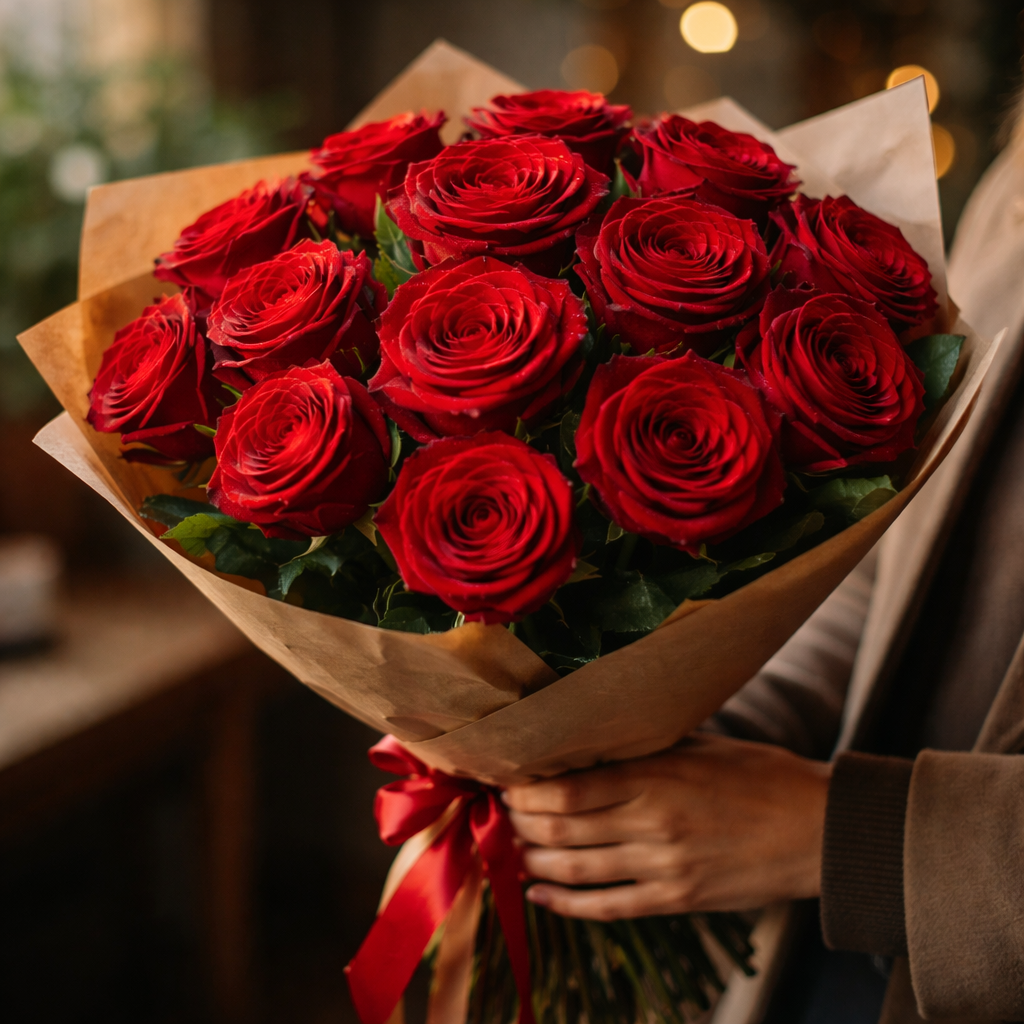
Few gestures in romantic history carry as much weight as a bouquet of red roses — and understanding the meaning of red roses in relationships goes far deeper than a simple “I love you.” The color, the number, even the way they’re presented all communicate something specific, and getting familiar with this unspoken language can genuinely change how you express and receive affection.
Where the symbolism actually comes from
Red roses have been associated with love and desire for centuries, but the connection wasn’t always as straightforward as it seems today. In ancient Greek and Roman mythology, the red rose was linked to Aphrodite and Venus — goddesses of love — and was believed to have grown from the blood of Adonis. This mythological origin gave the flower a deeply emotional, almost sacred quality that poets and artists carried forward through the Renaissance and beyond.
By the Victorian era, the practice of floriography — communicating through flowers — turned red roses into a precise emotional signal. Sending a red rose wasn’t just romantic; it was a declaration. People used flower arrangements to say things they couldn’t speak aloud in polite society, and red roses sat at the top of that emotional vocabulary.
What different numbers of red roses actually mean
One of the most overlooked aspects of gifting roses is the number. This tradition has roots in both Eastern and Western cultures, and while interpretations vary slightly by region, some meanings have become widely accepted.
| Number of roses | Common meaning |
|---|---|
| 1 | Love at first sight; you are the one |
| 3 | “I love you” — a simple, direct declaration |
| 6 | I want to be yours; mutual affection |
| 12 | Complete devotion; “be mine” |
| 24 | I think about you every hour of the day |
| 50+ | Unconditional, boundless love |
These aren’t rigid rules, of course. Context always matters. A single rose left on a kitchen counter by a long-term partner can say more than a dozen given out of obligation.
Red roses across different relationship stages
The meaning a red rose carries shifts depending on where two people are in their relationship. It’s worth thinking about this rather than treating roses as a one-size-fits-all symbol.
- Early dating: A red rose signals strong romantic interest and intention. It communicates that the person sees this as more than casual.
- New relationships: Gifting red roses here affirms emotional investment and deepens the sense of connection being built.
- Long-term partnerships: A red rose can serve as a reminder — a deliberate act of appreciation that says “I still choose you.”
- Reconciliation: After conflict, red roses are often used to express sincere regret and a desire to reconnect emotionally.
- Milestones and anniversaries: Here, roses become a ritual — a way of honoring the time and love shared.
“The red rose whispers of passion, and the white rose breathes of love.” — John Boyle O’Reilly
This quote captures something real: red roses don’t whisper — they speak directly. That’s precisely why they’re chosen for moments that require clarity of feeling rather than subtlety.
Beyond romance: other emotional dimensions
It’s a misconception that red roses are exclusively a romantic flower. Their symbolism extends into admiration, courage, and deep respect. In some cultural contexts, they’re given to people who’ve shown bravery or sacrifice. In others, a red rose placed at a memorial expresses profound grief mixed with love.
Within relationships specifically, red roses can also carry non-romantic weight. A parent giving a red rose to their child on a graduation day, or close friends exchanging roses to mark a meaningful milestone — these gestures aren’t about romantic love, but about the intensity of feeling that red roses naturally communicate.
A few things worth knowing before you give red roses
If you’re thinking about incorporating red roses into how you express yourself in a relationship, a little awareness goes a long way.
First, consider cultural context. In some parts of Eastern Europe, giving an even number of flowers is associated with funerals, so an odd number is generally preferred for romantic occasions. In Japan, the language of flowers — hanakotoba — also assigns specific meanings to red roses, generally centered on love and beauty, but the act of gifting flowers carries its own etiquette.
Second, freshness matters symbolically as well as practically. Wilted or dying roses, even red ones, can unintentionally communicate the opposite of what you intend. If you’re giving roses as a romantic gesture, the condition of the flower reinforces the message.
Third, pairing red roses with other colors changes the meaning entirely. Red and white roses together traditionally symbolize unity. Red and yellow can represent celebration of a joyful relationship. Mixing red with pink softens the intensity slightly, pointing more toward admiration and emerging love.
When a red rose says exactly what words can’t
There’s a reason red roses have lasted as a symbol across cultures and centuries — they fill a gap that language sometimes leaves open. Not everyone finds it easy to articulate deep feelings, and a well-chosen gesture like a single red rose on an ordinary Tuesday can communicate sincerity in a way that a rehearsed speech simply can’t replicate.
What makes red roses genuinely powerful in relationships is the intention behind them. The flower itself is a vehicle. The meaning lives in the moment, the choice, and the person giving it. Knowing the history and symbolism behind red roses doesn’t make the gesture more mechanical — it actually makes it more conscious and more meaningful.
So whether you’re at the start of something new or decades into a relationship that still matters deeply to you, a red rose remains one of the clearest ways humans have found to say: this person is significant to me.
