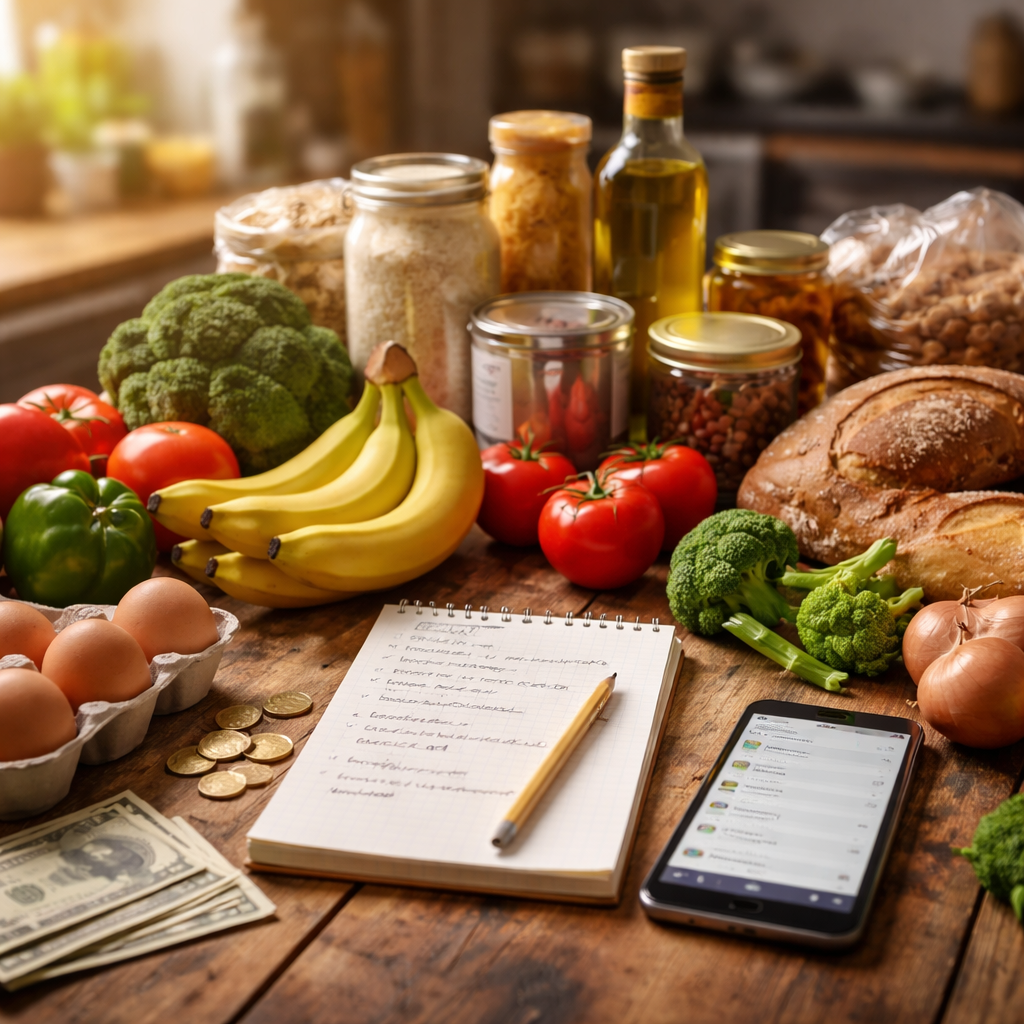
Most households spend a significant chunk of their budget on food without realizing how much of it quietly disappears on impulse buys, poor planning, and overlooked waste. Knowing how to save money on groceries is less about extreme couponing and more about building a few sharp habits that compound over time — and that’s exactly what this guide is about.
The Real Reason Your Grocery Bill Stays High
Before jumping into tactics, it’s worth pausing on the “why.” Most overspending at the supermarket isn’t random — it’s by design. Store layouts are engineered to maximize exposure to higher-margin products. End caps, eye-level shelving, and strategic lighting all nudge you toward unplanned purchases. Understanding this doesn’t make you paranoid; it makes you a more deliberate shopper.
The other quiet culprit is food waste. Studies consistently show that a large portion of fresh produce and perishables gets thrown away before being eaten. That’s not just an environmental issue — it’s money leaving your wallet in a trash bag.
Planning Is the Sharpest Tool You Have
A meal plan doesn’t need to be elaborate. Even a rough idea of what you’ll cook Monday through Friday can cut your grocery bill noticeably, because you stop buying things “just in case” and start buying with purpose.
- Check what’s already in your fridge and pantry before writing a list.
- Build meals around ingredients that overlap — for example, a rotisserie chicken can become a salad topping, a soup base, and a sandwich filling across three days.
- Keep a running shopping list on your phone so you add items as you run out, not when you’re already standing in the aisle trying to remember.
- Plan one or two flexible “pantry meals” per week to use up whatever’s left before it spoils.
“The grocery store is not a place to make decisions — it’s a place to execute them.”
Where to Actually Cut Costs Without Cutting Quality
There’s a common assumption that saving money on food means eating worse. That’s not accurate. The gap between brand loyalty and smart substitution is often just habit, not flavor or nutrition.
Store brands vs. name brands
For the vast majority of pantry staples — pasta, canned tomatoes, olive oil, oats, frozen vegetables — store-brand products are manufactured to the same food safety standards and often in the same facilities as their name-brand counterparts. Switching just these items can reduce your total bill by 20–30% without any noticeable difference in quality.
Seasonal and local produce
Buying fruit and vegetables in season isn’t just a food trend — it’s one of the most consistent ways to get better quality at lower prices. Out-of-season produce travels further, costs more to store, and often tastes less vibrant. Farmers markets, when accessible, can offer competitive pricing especially toward the end of the day when vendors prefer to sell than carry stock home.
Frozen and canned alternatives
Frozen vegetables are typically harvested and frozen at peak ripeness, which means their nutritional value is often comparable to — or higher than — fresh produce that’s been sitting in transit for days. For soups, stews, stir-fries, and sauces, they’re a practical and budget-friendly option.
| Category | Budget-friendly swap | Estimated savings |
|---|---|---|
| Breakfast cereals | Store-brand oats or muesli | Up to 40% |
| Protein | Legumes, eggs, canned fish | Up to 60% vs. fresh meat |
| Snacks | Bulk nuts, homemade popcorn | 30–50% |
| Beverages | Water with fruit, herbal tea | Significant vs. juice/soda |
| Fresh herbs | Dried or frozen alternatives | Up to 70% |
Shopping Smarter in Practice
The way you shop matters as much as what you buy. A few behavioral shifts can have a surprisingly large impact on what ends up in your cart — and your total at checkout.
Never shop hungry. This is repeated so often it risks sounding trivial, but hunger genuinely alters decision-making and increases impulsive purchases of high-margin snack and convenience items. Eat something before you go, or at minimum, don’t shop when you’re running on empty.
Stick to the perimeter of large supermarkets where whole foods — produce, dairy, meat, bread — tend to live. The inner aisles are where heavily processed, more expensive packaged goods are concentrated.
Unit pricing is your friend. Most shelf labels include a price per 100g or per unit alongside the overall price. This is the number that actually tells you whether the bulk pack is genuinely cheaper or just looks like a better deal because it’s bigger.
Bulk Buying: When It Helps and When It Doesn’t
Buying in bulk makes sense for items with a long shelf life that you genuinely use regularly: dried legumes, rice, pasta, canned goods, coffee, cleaning products. For anything perishable, bulk purchasing only saves money if you can realistically consume it before it spoils. A 3kg bag of salad greens is not a deal if half of it ends up composted.
Shared bulk buying with a neighbor, roommate, or family member is worth considering for households where a single large quantity would go to waste but splitting it makes sense for both parties.
Loyalty Programs, Cashback Apps, and Coupons
Store loyalty programs are genuinely worth using — not because the points system will change your life, but because they often unlock member-only prices that aren’t available otherwise. Sign up for the stores you already shop at regularly; it takes minutes and costs nothing.
Cashback grocery apps allow you to earn small rebates on specific products you were likely already going to buy. The key is to use them reactively — browse the offers after you’ve made your list, not before. If you start buying things just to claim a cashback reward, you’ve reversed the benefit entirely.
Coupons follow the same logic: they save money on products you need, and cost money on products you didn’t plan to buy. The discipline of using them selectively is what makes them useful.
Small Shifts That Add Up Faster Than You’d Expect
None of the strategies above require dramatic lifestyle changes. The households that consistently spend less on food aren’t doing anything extraordinary — they’ve simply made a handful of low-effort habits automatic: they shop with a list, they notice unit prices, they use what they buy, and they don’t let the store make decisions for them.
Start with one or two changes this week. Track your spending for a month with whatever method is comfortable — a notes app, a spreadsheet, or even a rough mental tally. The awareness alone tends to shift behavior in a useful direction, and the savings tend to follow.
