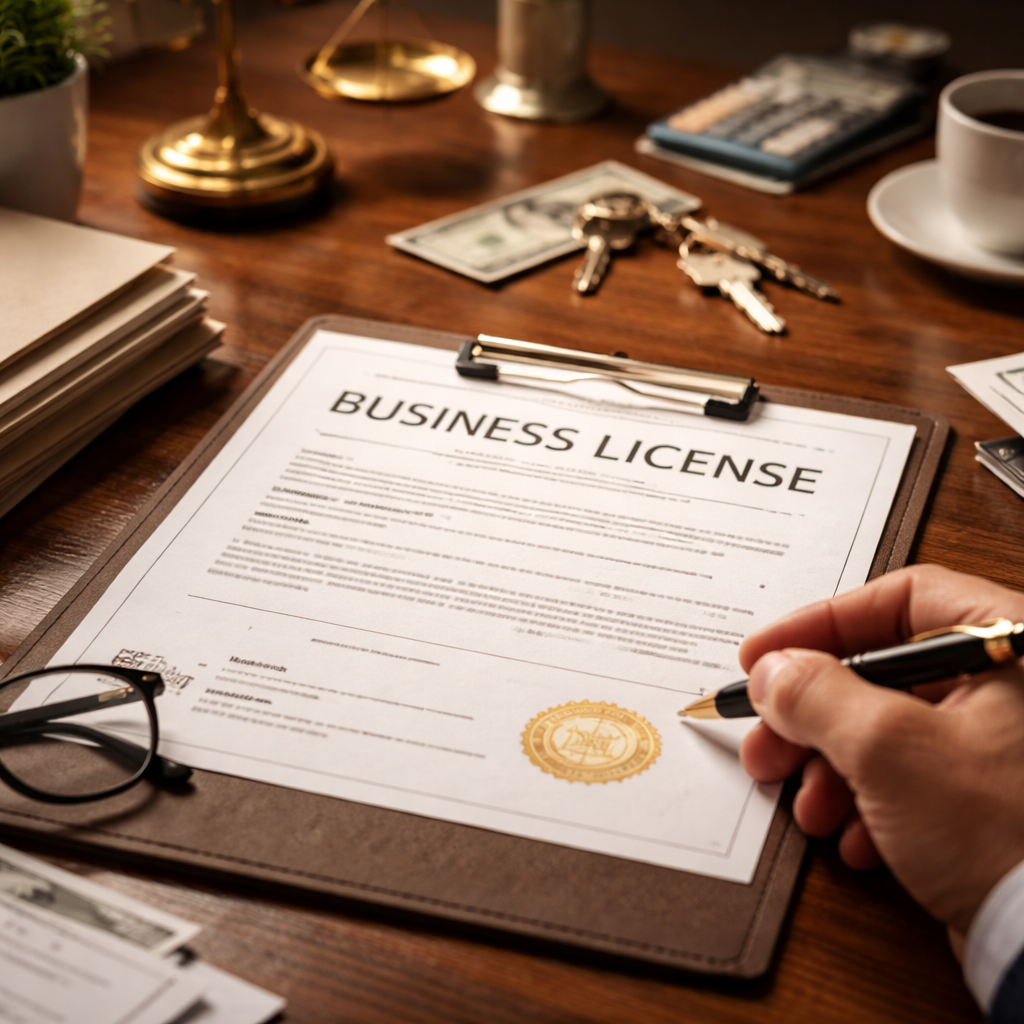
Most people are surprised to find out that getting a business license is not a single universal process — it varies significantly depending on your location, business type, and the industry you operate in. If you’ve been putting off figuring out how to get a business license because it seemed overwhelming, this guide breaks the entire process into clear, manageable steps without the bureaucratic confusion.
Why a business license actually matters
Operating without the proper licensing isn’t just a technicality. It can lead to fines, forced closure, and even personal liability. Beyond the legal side, having a valid license builds trust with customers, allows you to open a business bank account, apply for loans, and sign contracts as a legitimate entity. Think of it less as a formality and more as the foundation your business stands on.
Different types of businesses require different types of licenses. A freelance graphic designer working from home faces completely different requirements than someone opening a restaurant or a childcare center. Understanding which licenses apply to your specific situation is the first real step.
Types of licenses and permits you may need
The term “business license” is often used as a catch-all phrase, but in practice, there are several distinct types of authorizations a business might need:
- General business license — issued by your city or county to legally operate within that jurisdiction
- Professional license — required for regulated professions such as medicine, law, real estate, or cosmetology
- Sales tax permit — needed if you sell physical goods or taxable services
- Health and safety permits — required for food-related businesses, childcare facilities, or any premises serving the public
- Zoning and land use permits — confirm that your business location is approved for commercial activity
- Federal licenses — necessary for industries regulated at the federal level, such as firearms, alcohol, or broadcasting
Many small businesses end up needing more than one of these. A bakery, for example, might need a general business license, a food handler’s permit, a sales tax permit, and a zoning approval — all at the same time.
Step-by-step: how the licensing process typically works
While exact procedures differ by country and state, the general path follows a recognizable pattern. Here’s what the process usually looks like from start to finish:
| Step | What it involves |
|---|---|
| 1. Choose your business structure | Decide whether you’re a sole proprietor, LLC, corporation, or partnership — this affects which licenses apply |
| 2. Register your business name | File a DBA (“doing business as”) if your business name differs from your legal name |
| 3. Get an EIN (if in the US) | An Employer Identification Number is required for most business licenses and tax registration |
| 4. Identify required licenses | Check federal, state, and local requirements for your specific industry and location |
| 5. Submit your application | Apply through the relevant government portal or office, pay the required fee |
| 6. Await approval and display your license | Some licenses are issued immediately; others require inspections or background checks |
Where to actually apply
For businesses in the United States, the Small Business Administration (SBA) website at sba.gov is one of the most reliable starting points. It provides a license and permit tool that filters requirements by state and business type. At the state level, most licensing is handled through the Secretary of State’s office or a dedicated business services portal.
Local city or county clerk offices handle general business licenses and zoning permits. If you’re unsure where to start, calling your local city hall is often the fastest way to get pointed in the right direction — many municipalities have dedicated small business support lines for exactly this reason.
When in doubt, over-research rather than under-prepare. Applying for a license you didn’t need wastes a little time. Operating without one you did need can cost you everything.
Common mistakes people make during the process
Even well-prepared entrepreneurs tend to stumble in a few predictable places. Knowing these pitfalls in advance can save you weeks of delays:
- Assuming one license covers everything — many businesses need multiple permits from different agencies
- Skipping the local level — city and county requirements are often overlooked when people only research state or federal rules
- Not renewing on time — most licenses expire annually or biennially, and late renewals often carry penalties
- Using a home address for a business that requires a commercial location — zoning laws can restrict this
- Starting operations before the license is approved — even if approval seems certain, operating prematurely is a risk
Costs and timelines: what to realistically expect
Licensing fees vary enormously. A basic general business license in a small US city might cost between $50 and $150, while professional licenses in regulated industries can run into hundreds or even thousands of dollars, especially when exam fees and continuing education requirements are factored in.
Processing times also differ widely. Some online applications are approved within minutes. Others — particularly those requiring physical inspections, background checks, or review by a licensing board — can take anywhere from a few weeks to several months. If your business launch depends on receiving a specific permit, build that timeline into your planning from day one.
A quick tip on staying organized
Keep a dedicated folder — physical or digital — for every license, permit, registration number, renewal date, and related correspondence. Businesses that get into trouble during audits or renewals often do so not because they didn’t comply, but because they couldn’t locate their documentation when needed.
Online businesses aren’t exempt
A common misconception is that digital-only businesses don’t need licenses. In reality, an ecommerce store, a freelance consulting service, or a remote software company still needs to be properly registered and licensed in the jurisdiction where the owner resides — and sometimes in jurisdictions where customers are located, depending on sales volume and local laws.
If you’re selling products across state lines in the US, sales tax nexus rules may require you to collect and remit taxes in multiple states, which in turn may trigger additional permit requirements. This is an area where speaking with a tax professional or business attorney early on pays off significantly.
The right time to revisit your licensing is now
Whether you’re just starting out or have been running a business informally for a while, it’s never too early — or too late — to make sure your licensing is in order. The process isn’t glamorous, but it’s one of the most practical investments you can make in the longevity and credibility of what you’re building. Starting with solid, legal ground means one less thing to worry about as your business grows.
