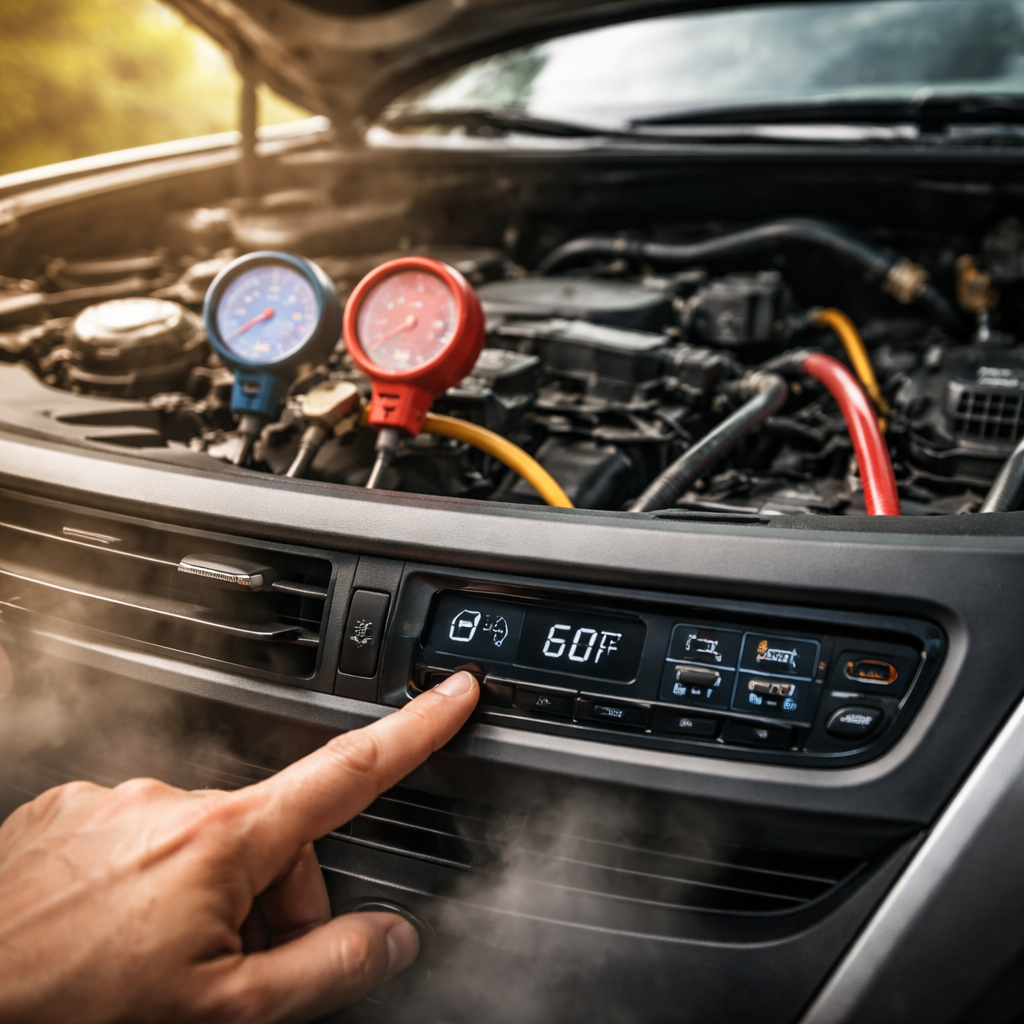
Picture this: it’s a sweltering afternoon, you slide into your car, hit the AC button — and nothing happens. If your car air conditioner not working is the situation you’re dealing with right now, you’re not alone, and more importantly, the problem is almost always diagnosable without heading straight to a repair shop.
Why the AC Stops Cooling — and What’s Actually Happening Inside
Your car’s air conditioning system is more complex than it looks. It’s a closed loop of components working together — the compressor, condenser, expansion valve, evaporator, and refrigerant. When any single part of that chain breaks down, the whole system stops doing its job. Understanding which link has failed is the key to fixing it efficiently.
The most common culprit is low refrigerant, often called Freon. Over time, even a perfectly sealed system can lose refrigerant through microscopic leaks. When the refrigerant level drops below a certain point, the compressor won’t engage at all — it’s a built-in protection mechanism. So if you’re getting only warm air, low refrigerant is the first thing worth checking.
The Most Frequent Reasons Your Car AC Isn’t Working
Before you assume the worst, run through this list of common causes. Most of these can be identified with basic observation — no tools required.
- Low or depleted refrigerant due to a slow leak
- A faulty or seized AC compressor
- Blown fuse or damaged relay in the AC circuit
- Clogged or dirty cabin air filter restricting airflow
- Condenser blockage from debris, bugs, or road grime
- Electrical issues — broken wires, bad sensors, or a failed pressure switch
- Leaking or damaged evaporator
- Broken serpentine belt that drives the compressor
Each of these has its own set of symptoms. For example, if the AC blows air but it’s not cold, suspect refrigerant or the compressor. If the fan doesn’t even run, look at the fuse box first. If you hear a clicking or grinding noise when the AC engages, the compressor may be failing mechanically.
How to Read the Symptoms Before You Touch Anything
Good diagnosis starts with paying attention. Here’s a quick breakdown of what different symptoms typically point to:
| Symptom | Likely Cause |
|---|---|
| AC blows warm air only | Low refrigerant or compressor not engaging |
| No airflow at all | Blown fuse, failed blower motor |
| Weak airflow but cool air | Clogged cabin air filter or blocked evaporator |
| AC works intermittently | Faulty pressure switch, electrical issue |
| Unusual noise when AC is on | Compressor bearing failure |
| Bad smell from vents | Mold or bacteria on the evaporator |
These patterns won’t give you a definitive answer in every case, but they narrow things down considerably — which saves time, money, and frustration at the mechanic.
What You Can Check Yourself at Home
You don’t need to be a certified technician to do some meaningful troubleshooting. Several checks are genuinely accessible to any car owner.
Start with the fuse box. Your owner’s manual will show you exactly which fuse controls the AC system. A blown fuse is a five-minute fix and costs almost nothing. If the fuse looks intact, move on to the cabin air filter — it’s usually located behind the glove compartment and can be swapped in minutes. A filter that’s thick with dust and debris can dramatically reduce airflow and make the system feel like it’s failing when it’s technically operational.
Next, with the engine running and AC turned on, open the hood and look at the compressor. The front clutch of the compressor should be spinning when the AC is active. If the outer pulley spins but the center clutch plate doesn’t engage, you likely have a refrigerant issue or a failed clutch — both of which need professional attention.
A quick visual check under the hood takes less than two minutes and can save you from paying a diagnostic fee just to hear what you could have spotted yourself.
When to Stop DIY and Call a Professional
There’s a clear line between what’s safe to handle yourself and what requires specialized equipment. Refrigerant handling, for instance, is regulated in most countries — adding or recovering refrigerant requires certified tools and, in many places, a license. Attempting to recharge the system with a DIY kit from a parts store can sometimes mask a larger leak problem or introduce air and moisture into the system, which causes additional damage.
Similarly, if the compressor itself has failed, it’s not just a matter of swapping the part. Metal debris from a failed compressor can contaminate the entire AC circuit — condenser, expansion valve, lines — meaning a full system flush is often necessary. Skipping that step usually results in the new compressor failing within a short period.
Signs that definitely require a shop visit:
- Oily stains around AC hose connections (refrigerant leak with lubricant)
- The compressor makes grinding or rattling sounds
- The AC worked after a recharge but stopped again within weeks
- You notice ice forming on the evaporator or AC lines
- Dashboard warning lights related to engine temperature or HVAC controls
Keeping Your AC in Shape So This Doesn’t Happen Again
Prevention is dramatically cheaper than repair. A few simple habits can extend the life of your car’s air conditioning system and reduce the chances of it failing during a heatwave.
Run the AC for at least ten minutes every couple of weeks, even in cooler months. This keeps the compressor seals lubricated and prevents them from drying out and cracking — which is one of the most common causes of refrigerant leaks. It also keeps the refrigerant circulating, which helps identify any pressure drops early.
Replace the cabin air filter on schedule — typically every 15,000 to 25,000 kilometers, or once a year if you drive in dusty conditions. And at least once every two or three years, have a qualified technician perform a full AC service: pressure check, leak test, and refrigerant top-up if needed. Catching a slow leak early costs a fraction of what a compressor replacement runs.
The Real Cost of Ignoring a Failing Car AC
It’s tempting to drive with windows down and put off the repair, especially if the AC issue seems minor. But a small refrigerant leak that costs relatively little to fix can, if ignored, allow moisture into the system — leading to corrosion of the evaporator, blockage in the expansion valve, and eventually compressor seizure. What starts as a modest repair bill can escalate into a complete system overhaul.
Beyond cost, there’s a comfort and safety dimension. In extreme heat, a non-functional AC isn’t just inconvenient — it contributes to driver fatigue and reduced concentration, particularly on long drives. Keeping the cabin temperature regulated is a legitimate part of driving safely.
Getting Back to Cool — Your Next Practical Steps
If you’re dealing with a car AC that’s not doing its job, start simple: check the fuse, inspect the cabin filter, observe the compressor clutch. If those basics check out and the problem persists, get a professional to do a refrigerant pressure test — that one diagnostic step will point you toward the root cause faster than anything else.
Don’t treat AC issues as something to put off until next season. The system is interconnected, and what begins as a minor inefficiency rarely stays minor. Act on the symptoms early, and you’ll spend less, stress less, and keep your drives genuinely comfortable regardless of what the weather decides to do.
