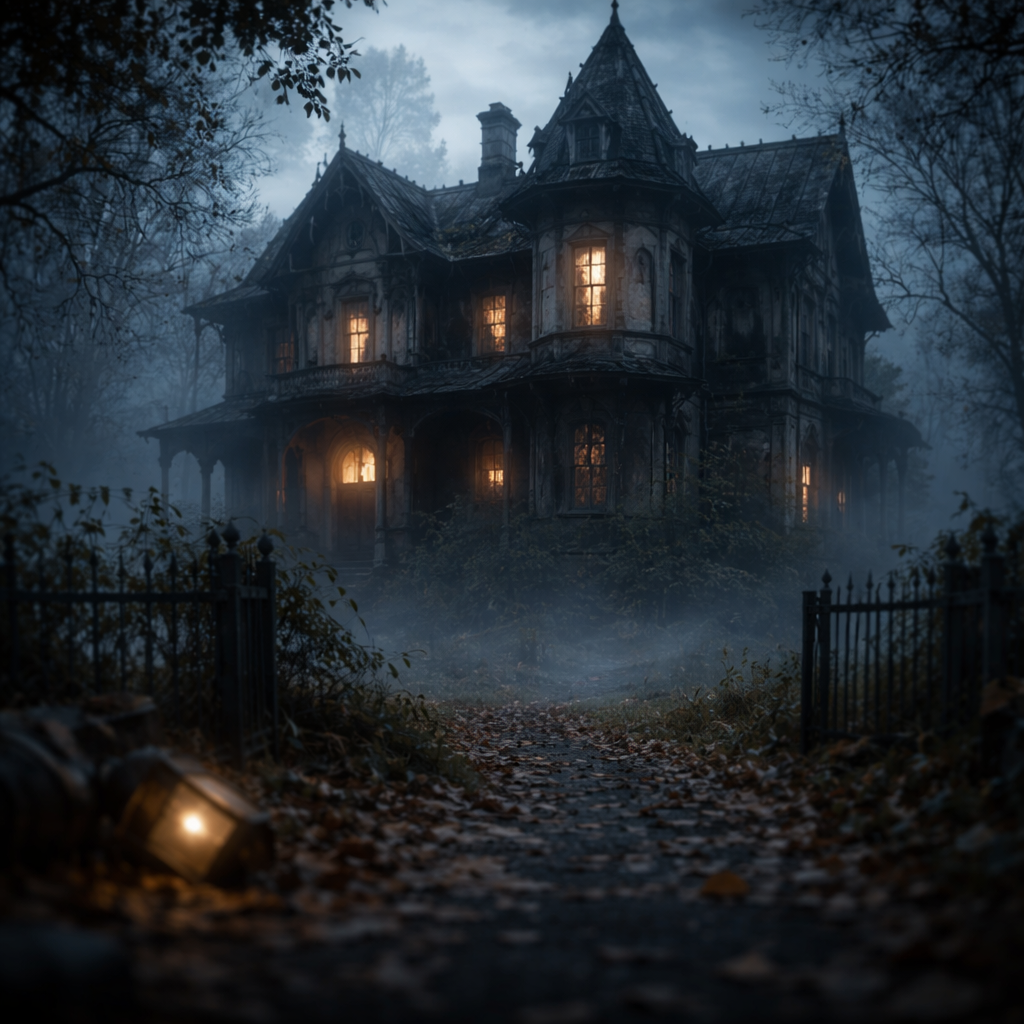
Most people wake up from a haunted house dream with their heart racing — and then spend the rest of the morning wondering what it was actually about. If you’ve ever asked yourself what does dreaming about a haunted house mean, you’re not alone, and the answer goes deeper than just “you watched too many horror movies.”
Why haunted houses show up in dreams at all
In dream psychology, a house almost universally represents the self — your mind, your inner world, your sense of identity. Different rooms tend to correspond to different aspects of your personality or life experience. When that house becomes haunted in a dream, something in that inner world is no longer quiet. Something is asking for attention.
The “haunting” element specifically points to the past. Ghosts, after all, are remnants of what was. In this context, a haunted house dream often surfaces when a person is carrying unresolved emotions, unprocessed memories, or old patterns of thinking that keep interfering with present life — even when they’re not consciously aware of it.
What the details of your dream actually tell you
Not all haunted house dreams are the same, and the details matter quite a bit. Psychologists and dream researchers often emphasize that the emotional tone of a dream — how you felt during it — is just as important as the imagery itself.
| Dream scenario | Possible interpretation |
|---|---|
| You’re trapped inside the haunted house | Feeling stuck in a situation, relationship, or emotional pattern |
| You’re exploring the house willingly | A readiness to confront something from your past |
| The house belongs to someone else | Unresolved feelings connected to that person or what they represent |
| You recognize the house as your childhood home | Early life experiences or family dynamics resurfacing |
| You can’t find the exit | Anxiety about a current situation with no clear resolution |
These aren’t rigid formulas — they’re starting points. The meaning of any dream is always filtered through your personal history and current circumstances.
The psychological lens: what researchers and therapists say
From a Jungian perspective, haunted houses in dreams are often linked to the concept of the “shadow” — the parts of ourselves we suppress, deny, or haven’t yet integrated. Carl Jung believed that what we refuse to acknowledge consciously tends to appear symbolically in dreams, often in unsettling forms.
“Until you make the unconscious conscious, it will direct your life and you will call it fate.”
— Carl Jung
Modern cognitive dream researchers take a slightly different angle. They suggest that unsettling recurring dreams — including haunted house scenarios — often reflect the brain’s attempt to simulate and rehearse threatening situations as a way of processing anxiety. In other words, your dreaming brain might be running “what if” scenarios related to something in waking life that feels threatening or unresolved.
Either way, both approaches agree on one thing: the dream isn’t random noise. It’s connected to something real in your emotional life.
Common emotional triggers behind this type of dream
People tend to report haunted house dreams more frequently during certain life periods. While everyone’s experience is different, there are patterns worth noting:
- Going through a major life transition — a new job, moving cities, ending or starting a relationship
- Periods of heightened stress or chronic anxiety
- After a significant loss or grief experience
- When old relationship dynamics or family conflicts start resurfacing
- During therapy or any intentional process of self-examination
It’s worth noting that having this dream during therapy, for instance, can actually be a sign that you’re making progress — not that something is wrong. The psyche sometimes becomes more active symbolically when it’s being engaged with directly.
How to work with a haunted house dream instead of just shaking it off
Many people dismiss vivid dreams the moment they get out of bed. But if a haunted house dream keeps recurring — or if it left a strong emotional impression — there are some practical ways to engage with it more meaningfully.
Beyond journaling, some people find it helpful to revisit the dream in a calm, waking state and mentally “walk through” the house again — this time with curiosity rather than fear. What rooms feel most charged? What are you avoiding? What do you feel drawn toward? This kind of reflective engagement is sometimes used in therapeutic contexts and can bring surprising clarity.
If the dreams are frequent and causing significant distress, speaking with a therapist — especially one familiar with somatic or psychodynamic approaches — can be genuinely useful. Dreams like these often carry real emotional content that benefits from being worked through with support.
When the haunted house dream is actually about someone else
Sometimes the house in the dream feels connected to another person — a parent, an ex-partner, someone who has passed away. In those cases, the haunting may represent unfinished emotional business with that relationship rather than a purely internal conflict. Grief, guilt, longing, and unspoken things can all take shape as ghostly presences in a dream house.
This doesn’t mean the dream is literally “about” that person in a supernatural sense. It means your mind is using the imagery of haunting to express the weight of something that hasn’t been fully processed or released.
There’s no single answer — and that’s actually the point
Dreams resist neat explanations, and that’s part of what makes them worth paying attention to. A haunted house dream won’t mean the same thing to everyone. For one person, it might be about childhood experiences they’ve never fully examined. For another, it might reflect present-day anxiety wearing an old costume. For someone else, it could be the mind’s way of processing grief.
What these dreams consistently do is point inward. They’re not omens or predictions. They’re mirrors — sometimes uncomfortable ones. And like any mirror, they’re most useful when you’re willing to actually look.
