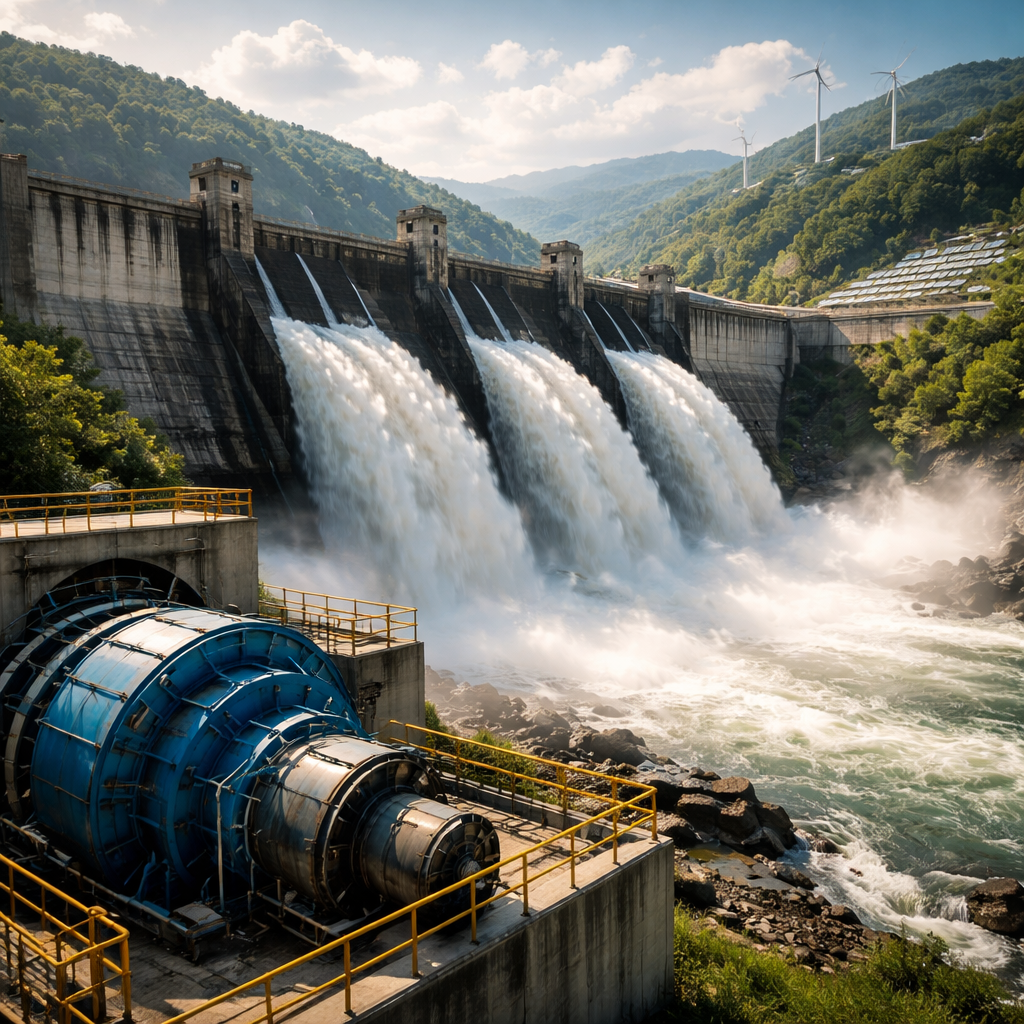
Water has been generating electricity for over a century, yet the advantages of hydroelectric power continue to surprise even those who follow energy topics closely. Unlike many other sources, hydro doesn’t just produce electricity — it reshapes how entire grids operate, how countries manage water, and how communities plan for long-term energy security.
How hydropower actually works — and why it matters
At its core, a hydroelectric plant converts the kinetic and potential energy of flowing or falling water into electrical energy. A dam holds back a reservoir; water is released through turbines, which spin generators. The physics are simple, but the scale and reliability of this process are what make it genuinely powerful.
What sets hydropower apart from solar or wind is its dispatchability — meaning operators can increase or reduce output almost instantly by adjusting water flow. This controllability makes it an invaluable stabilizer for modern electricity grids, especially as intermittent renewables like solar and wind become more prevalent.
The core benefits that make hydro hard to replace
There’s a reason hydroelectric generation accounts for the majority of renewable electricity worldwide. It combines several qualities that no single energy technology has managed to replicate all at once.
- Long operational lifespan — most large hydro facilities operate for 50 to 100 years with proper maintenance, far outlasting wind turbines or solar panels.
- Low operating costs — once construction is complete, fuel costs are zero, and maintenance expenses are relatively modest compared to thermal plants.
- No direct greenhouse gas emissions during operation — hydroelectric generation produces electricity without burning fossil fuels.
- Flexible output — unlike nuclear or coal plants, hydro can ramp up and down quickly, matching real-time demand.
- Multi-purpose infrastructure — dams serve not only energy production but also flood control, irrigation, and drinking water supply.
This combination of longevity, low cost, and grid flexibility is why countries like Norway, Brazil, Canada, and China have built their power systems heavily around hydroelectric capacity.
Renewable energy storage: hydro’s hidden superpower
One aspect that often gets overlooked in public discussions is pumped-storage hydropower. This technology works like a giant rechargeable battery: during periods of excess electricity (say, a windy night when turbines generate more than the grid needs), water is pumped uphill into a reservoir. When demand spikes, that water is released back through turbines to generate power on cue.
Pumped-storage facilities represent the largest form of grid-scale energy storage in the world, accounting for over 90% of all stored electricity capacity globally.
This makes hydropower not just a generator but a critical buffer that allows solar and wind energy to function more reliably within national grids. Without this kind of storage, the transition to fully renewable electricity systems would be significantly harder to manage.
Economic and social dimensions worth knowing
The economic footprint of hydroelectric projects extends well beyond kilowatt-hours. Construction creates significant employment, and once operational, plants provide stable, long-term jobs in regions that might otherwise have limited industrial activity. In rural or remote areas, small-scale and micro-hydro systems can bring electricity to communities entirely off the national grid.
| Scale | Typical capacity | Common application |
|---|---|---|
| Micro-hydro | Up to 100 kW | Remote villages, farms |
| Small hydro | 100 kW – 10 MW | Local communities, small towns |
| Large hydro | Over 10 MW | National grids, export |
Micro and small-scale hydro installations are particularly valuable in developing regions where extending the national grid is economically unfeasible. A small river or stream with sufficient flow can power a school, clinic, or irrigation system year-round without diesel fuel or battery replacements.
Honest look at the limitations
A fair discussion of hydropower has to acknowledge where it falls short. Large dam construction can displace local communities, alter river ecosystems, and affect fish migration routes. Reservoir creation can also lead to methane emissions from decomposing organic matter — particularly in tropical regions — which complicates the “zero emissions” narrative in specific contexts.
Additionally, hydropower is vulnerable to climate variability. Prolonged droughts reduce reservoir levels and generation capacity, as seen in parts of southern Europe, the western United States, and sub-Saharan Africa in recent decades. This dependency on precipitation patterns is a genuine risk for countries that rely heavily on hydro as their primary energy source.
Modern engineering and environmental planning have significantly mitigated many of these issues — fish ladders, minimum flow requirements, and community compensation frameworks are now standard in responsible project development. But these challenges deserve honest acknowledgment rather than dismissal.
Practical tips for understanding hydro in your region
If you want to understand how hydropower fits into your country’s energy mix, a few practical steps can help you build a clearer picture.
- Check your national grid operator’s website — most publish real-time generation data by source, including hydro.
- Look at seasonal patterns: hydro output often peaks in spring (snowmelt) and dips in late summer or dry seasons.
- Research whether your electricity provider offers tariffs specifically tied to renewable or hydro sources.
- For rural property owners near streams, micro-hydro feasibility assessments are available through many regional energy agencies.
Why hydro remains a foundation of clean energy planning
Despite the rapid growth of solar and wind, hydroelectric power holds a structural role that neither can easily replicate. Its ability to store energy, respond instantly to grid demands, and operate for decades without fuel makes it a cornerstone of energy transition strategies in countries that have the geography to support it.
The challenge going forward isn’t choosing between hydro and other renewables — it’s designing energy systems that use each source where it performs best. Hydropower, with its unique blend of reliability, longevity, and storage capability, isn’t fading from the picture. If anything, as grids grow more complex and the need for flexible clean energy increases, its value is becoming clearer than ever.
