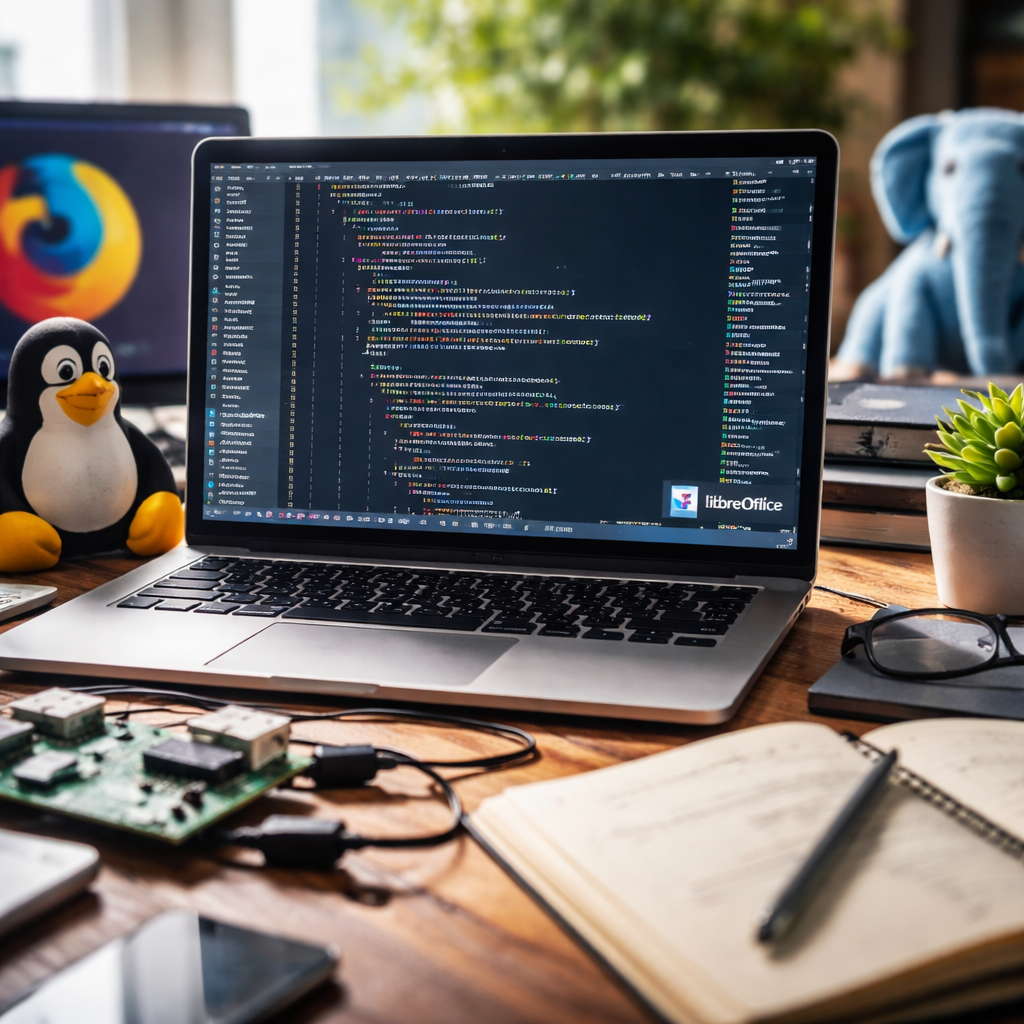
Most people assume that free automatically means limited — but when it comes to the advantages of open source software, that assumption falls apart pretty quickly. Projects like Linux, Firefox, LibreOffice, and PostgreSQL power some of the most critical infrastructure on the planet, and they were built without a single proprietary license fee attached.
What actually makes open source different from proprietary software
The defining feature of open source is access to the source code. Anyone can read it, study it, modify it, and redistribute it. That openness changes the entire dynamic between software developers and the people who use their products. With proprietary software, you are essentially trusting a vendor to do the right thing. With open source, you can verify it yourself — or hire someone to do it for you.
This is not just a philosophical point. It has real consequences for security, cost, flexibility, and longevity — all of which we will get into below.
Transparency as a security feature, not just a principle
A common misconception is that hiding source code makes software more secure. In practice, the opposite is often true. When thousands of developers worldwide can inspect a codebase, vulnerabilities tend to get found and fixed faster than in closed environments where only a small internal team has visibility.
“Given enough eyeballs, all bugs are shallow.” — Eric S. Raymond, The Cathedral and the Bazaar
This principle, known as Linus’s Law, is not just theoretical. The open source community has repeatedly demonstrated that peer review at scale catches issues that internal audits miss. Projects like OpenSSL, despite having their challenges, benefit from continuous scrutiny that no single company could replicate internally.
There is also the question of backdoors and hidden data collection. With proprietary software, you cannot always know what is being tracked or transmitted. Open source code can be audited by independent researchers, governments, or enterprise security teams before deployment.
The cost picture is more nuanced than “free to download”
Yes, most open source software carries no licensing fee. But the real financial advantage goes deeper than that. Consider what organizations typically spend on proprietary software ecosystems: per-seat licensing, annual renewals, upgrade fees, vendor lock-in that makes switching prohibitively expensive.
| Cost factor | Proprietary software | Open source software |
|---|---|---|
| License fee | Often per user or per device | Typically none |
| Customization | Limited, vendor-dependent | Fully customizable |
| Vendor dependency | High | Low to none |
| Support options | Single vendor | Community + commercial options |
| Audit rights | Rarely available | Full code access |
Small businesses and nonprofits benefit most directly from zero licensing costs. But enterprises running large-scale deployments often find that the elimination of per-seat fees alone justifies migration, even when factoring in the cost of internal expertise or third-party support contracts.
Flexibility that proprietary platforms simply cannot match
When a proprietary vendor decides to discontinue a feature, change a pricing model, or sunset a product entirely, users have no choice but to adapt. Open source removes that power dynamic entirely. If a project stops being maintained, the community can fork it and continue development independently.
This has happened many times. When Oracle acquired Sun Microsystems and the future of MySQL became uncertain, the MariaDB fork emerged as a fully community-controlled alternative. When concerns arose about OpenOffice’s development pace, LibreOffice was created and quickly became the more actively developed option.
Community-driven development produces software that reflects real needs
Open source projects are typically shaped by the people who actually use them. Feature requests, bug reports, and pull requests come from developers and users who have firsthand experience with the problems they are trying to solve. This feedback loop tends to produce software that is genuinely useful rather than software designed to satisfy quarterly product roadmaps.
The diversity of contributors also matters. A global community of developers brings a wider range of use cases, languages, hardware configurations, and edge cases than any single company’s engineering team. This is part of why open source software often runs reliably on a much broader set of systems and environments.
Learning and career development in the open
For developers, open source is one of the most effective learning environments available. Reading production-quality code from experienced engineers, contributing fixes, participating in code reviews — these experiences accelerate technical growth in ways that tutorials and courses rarely match.
- Contributing to open source projects builds a public, verifiable portfolio of work
- Working within real codebases teaches collaboration and version control practices
- Many hiring managers actively look for open source contributions when evaluating candidates
- Exposure to diverse coding styles and architectural decisions broadens technical perspective
Beyond individual career development, organizations that encourage employees to contribute to open source often find that those teams stay sharper, more engaged with the broader developer community, and better informed about emerging tools and practices.
Open source in the real world: it is already everywhere
It is worth stepping back to recognize just how embedded open source software already is in everyday digital life. The Android operating system is built on Linux. The majority of web servers run on Apache or Nginx. Most of the internet’s routing infrastructure depends on open source networking software. Kubernetes, which underpins much of modern cloud infrastructure, is open source. So is the programming language Python, which drives everything from data science to automation to web development.
In other words, open source is not an alternative to mainstream technology — it largely is mainstream technology. The question for most people and organizations is not whether to use it, but how to use it strategically and responsibly.
Understanding its real advantages — transparency, cost efficiency, flexibility, community resilience, and educational value — makes it easier to make informed decisions about when open source tools are the right fit and when a proprietary solution might still make sense for a specific context.
