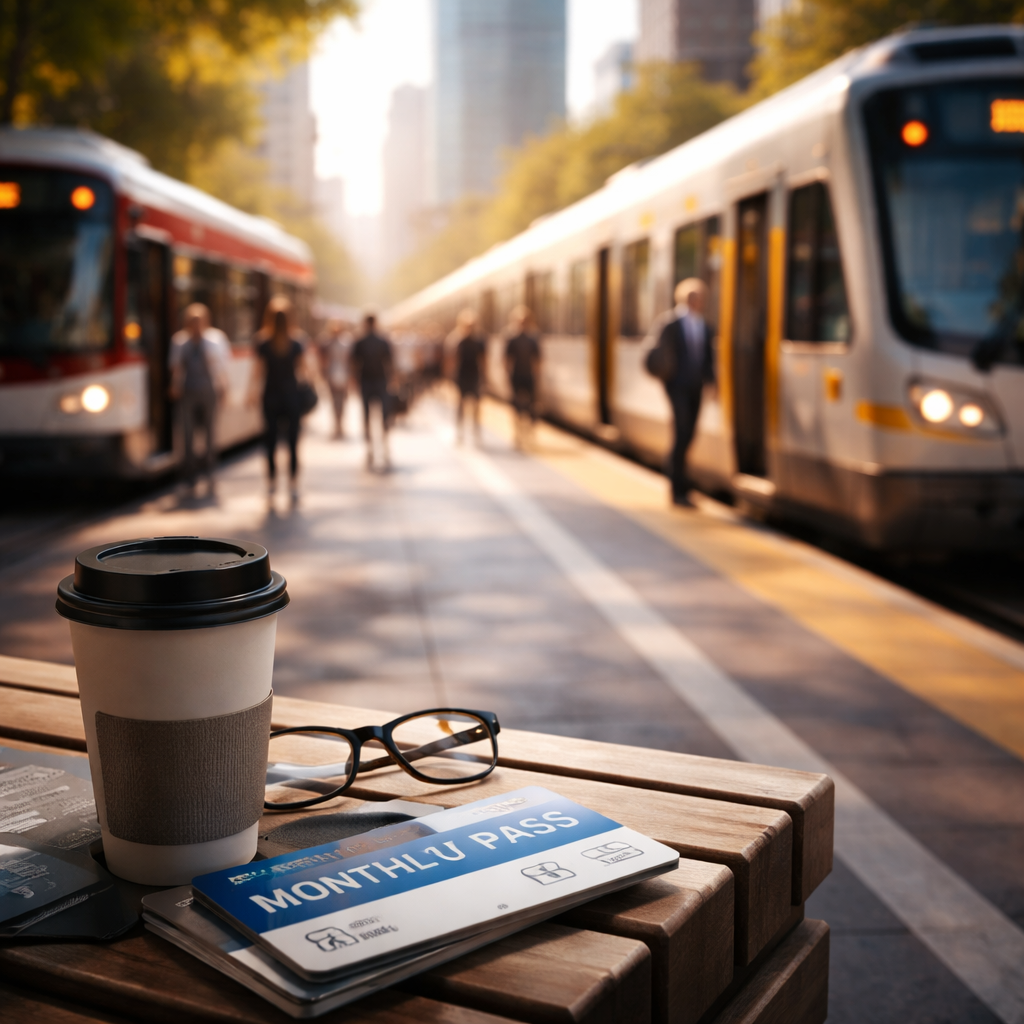
Most people underestimate just how much their daily commute shapes their quality of life — and that’s exactly where the advantages of public transportation start to reveal themselves in ways that go far beyond simply getting from point A to point B. Buses, trains, trams, and metro systems quietly do the heavy lifting for millions of urban and suburban residents every single day, yet their full value rarely gets the recognition it deserves.
Why your wallet notices the difference first
Let’s be honest — owning a private car is expensive in ways that aren’t always obvious upfront. Beyond the purchase price, there’s fuel, insurance, parking fees, maintenance, and the occasional unexpected repair that throws off your entire monthly budget. Public transit cuts through most of that financial burden with a single monthly pass or pay-per-ride system.
Studies consistently show that households without a car — or with only one car instead of two — save thousands annually. That’s money that can go toward housing, education, travel, or simply building a financial cushion. For younger adults especially, choosing transit over car ownership in cities with solid public networks is increasingly a deliberate lifestyle decision, not just a financial compromise.
| Transportation type | Average annual cost (estimate) | Key variable |
|---|---|---|
| Private car (full ownership) | $8,000–$12,000+ | Fuel, insurance, depreciation |
| Public transit (city pass) | $600–$1,500 | City, frequency of use |
| Ridesharing (frequent use) | $3,000–$6,000 | Distance, surge pricing |
The environmental case that actually holds up
One bus carrying 50 passengers produces a fraction of the emissions that 50 individual cars would generate on the same route. This isn’t a theoretical calculation — it’s a straightforward reality of how mass transit works. When cities invest in electric buses, hybrid trains, and expanded metro lines, the reduction in urban air pollution becomes measurable within years, not decades.
Carbon emissions per passenger mile on public transit are significantly lower than those of a single-occupancy vehicle. And when transit is electrified and powered by renewable energy sources, that gap becomes even wider. For anyone genuinely concerned about their personal carbon footprint, switching to public transport on even a part-time basis makes a real, quantifiable difference.
According to the American Public Transportation Association, public transit use in the United States saves approximately 37 million metric tons of carbon dioxide annually compared to driving alone.
Traffic congestion and the hidden cost of sitting still
Traffic jams aren’t just annoying — they represent a massive economic drain. Commuters stuck in gridlock waste fuel, lose productive time, and arrive at work already stressed. Cities with high rates of public transit use consistently show lower levels of road congestion, because fewer cars on the road means traffic moves more freely for everyone, including emergency vehicles.
There’s also something worth noting about the mental load of driving. Navigating traffic, searching for parking, and staying alert at the wheel for extended periods takes real cognitive energy. Public transit passengers, by contrast, can read, listen to podcasts, catch up on messages, or simply rest during their commute. It’s a small but genuine shift in daily wellbeing that compounds over time.
Urban planning and how transit shapes cities
Cities built around public transportation tend to be more walkable, more compact, and more economically vibrant in their central areas. When residents don’t need to own a car to function, urban neighborhoods can be designed with people in mind rather than parking lots. This creates denser, more livable communities where shops, services, and green spaces are within easy reach.
Transit-oriented development — a planning approach that clusters housing, retail, and workplaces around transit hubs — has become a major strategy in cities across Europe, Asia, and increasingly North America. The logic is simple: when people can reliably get around without a car, the physical layout of cities can prioritize human experience over vehicle throughput.
Accessibility and social equity — the angle that often gets skipped
Not everyone can drive. Seniors, people with disabilities, teenagers, and those who simply cannot afford a vehicle all depend on public transit as their primary connection to employment, healthcare, education, and social life. A robust public transportation network is, in this sense, an equity infrastructure — it determines who gets to participate fully in city life and who gets left out.
- Elderly residents maintain independence longer when reliable transit exists nearby
- Low-income workers can access job markets beyond their immediate neighborhood
- Students without family vehicles can reach educational institutions independently
- People with certain disabilities benefit from accessible transit vehicles and dedicated stops
This dimension of public transportation doesn’t always appear in economic analyses, but it’s deeply tied to a city’s overall health and social cohesion. Communities with strong transit networks tend to have lower rates of social isolation among vulnerable populations.
Safety statistics that challenge common assumptions
Many people instinctively feel safer inside a personal vehicle than on a bus or train, but the data tells a different story. Per mile traveled, public transportation is statistically much safer than private car travel. Road accidents involving personal vehicles are one of the leading causes of injury and death globally, whereas transit systems — despite carrying enormous passenger volumes — have comparatively low accident rates.
Professional drivers, maintained fleets, fixed routes, and regulatory oversight all contribute to this safety advantage. It’s a counterintuitive finding for many people, but one that holds up consistently across transportation research.
What cities get right — and what still needs work
The benefits of public transit are real and well-documented, but they’re also contingent on quality. A poorly maintained bus system with infrequent schedules and unreliable service pushes people back toward cars — not because transit is inherently inferior, but because bad transit fails its riders. The difference between cities like Tokyo, Amsterdam, or Zurich and cities with struggling transit systems often comes down to sustained investment, political will, and genuine prioritization of public transport as critical infrastructure.
For transit to deliver on its potential — environmental, economic, social — it has to be fast, reliable, affordable, and genuinely integrated into how a city is planned. When those conditions are met, ridership grows naturally and the full range of benefits follows. That’s not wishful thinking; it’s a pattern visible in city after city around the world where transit has been consistently and seriously funded.
The next time you’re weighing whether to take the bus or drive, it’s worth considering that the choice isn’t just about your individual commute. It’s a small piece of a much larger picture — one that touches energy use, urban design, public health, and the kind of cities we’re collectively building for the future.
