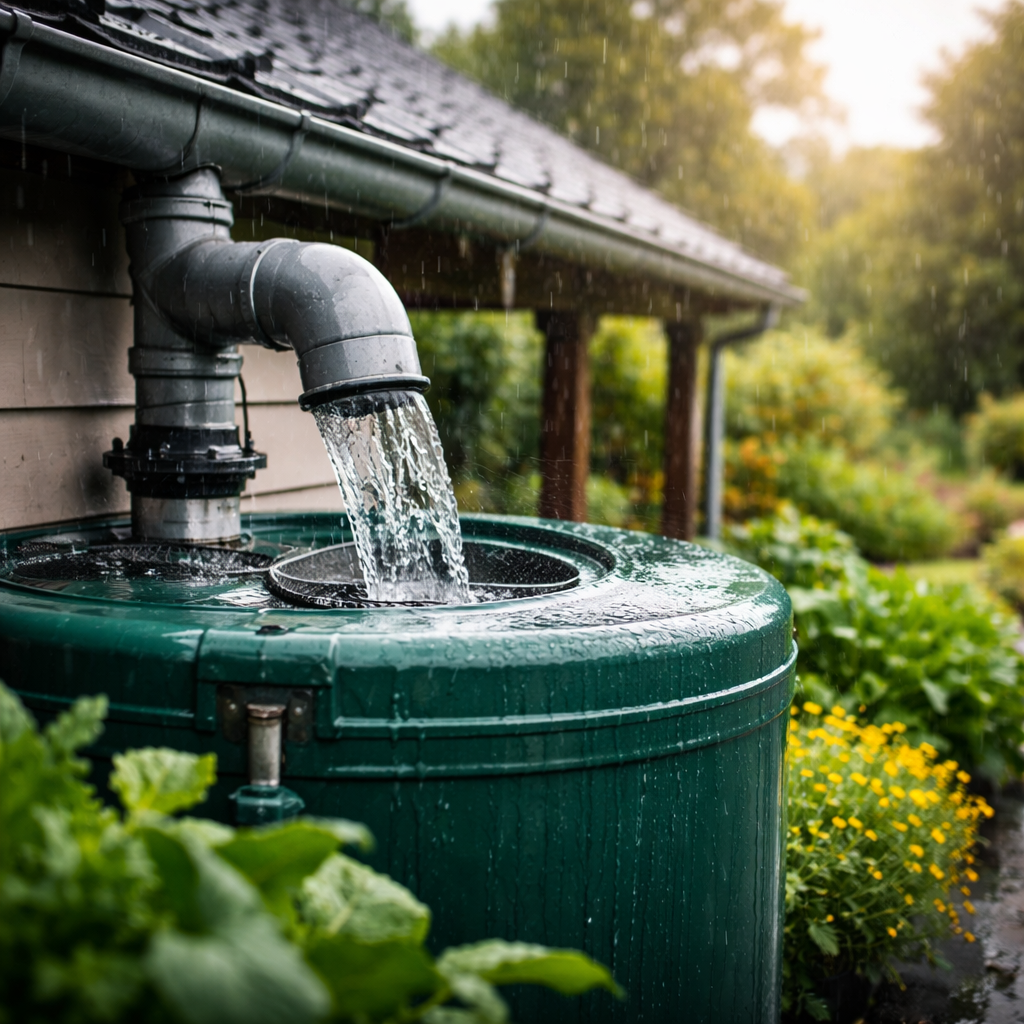
Most people underestimate just how much rainwater falls on an average rooftop in a single year — enough, in many regions, to cover a household’s non-drinking water needs almost entirely. Understanding the real advantages of rainwater harvesting goes far beyond saving a few dollars on a water bill; it touches on water security, environmental responsibility, and surprisingly practical everyday benefits that homeowners, farmers, and urban planners are increasingly taking seriously.
What actually happens when you collect rainwater
A rainwater harvesting system, at its core, captures precipitation from surfaces — typically rooftops — channels it through gutters and filters, and stores it in tanks or underground cisterns for later use. The concept is ancient, but modern implementations range from simple barrel setups in a backyard to sophisticated multi-tank systems with filtration and UV purification that make the water safe for drinking.
What makes the system genuinely useful is its independence from municipal supply. Once installed, it operates passively. Rain falls, water is collected, and a reserve builds up over time. That stored water can then serve irrigation, toilet flushing, laundry, cleaning, and — with proper treatment — even consumption.
Environmental impact you can actually measure
One of the most tangible ecological benefits is the reduction in stormwater runoff. When rain hits impermeable surfaces like roads and pavements, it rushes into drainage systems, picking up pollutants along the way and often overwhelming infrastructure during heavy rainfall events. By capturing that water before it becomes runoff, harvesting systems help reduce flooding risk and decrease the load of sediment, oil, and chemical residues entering rivers and streams.
In areas with groundwater depletion concerns, collected rainwater also reduces over-reliance on aquifers. Instead of drilling deeper wells or drawing from increasingly stressed underground reserves, households and farms can supplement their supply with what falls naturally from the sky.
According to the Food and Agriculture Organization of the United Nations, water scarcity already affects more than 40% of the global population — a figure projected to rise. Decentralized solutions like rainwater collection are increasingly considered part of the answer.
Practical benefits broken down by use case
The versatility of harvested rainwater is one of its strongest selling points. Depending on the level of filtration applied, the water can serve very different purposes:
| Use | Filtration required | Notes |
|---|---|---|
| Garden irrigation | Basic mesh filter | Plants often respond better to rainwater due to its low mineral content |
| Toilet flushing | Sediment filter | Accounts for roughly 30% of household water use |
| Laundry | Sediment + carbon filter | Soft rainwater is gentler on fabrics and uses less detergent |
| Drinking water | Multi-stage + UV purification | Requires regular system maintenance and testing |
For gardeners especially, rainwater is noticeably better than tap water. Municipal water is typically treated with chlorine and often contains fluoride and other minerals. Collected rainwater is naturally soft and slightly acidic, which many plants — particularly acid-loving species like tomatoes, blueberries, and ferns — genuinely prefer.
The financial side of rainwater collection
Initial setup costs vary considerably depending on system complexity. A basic diverter kit and storage barrel can cost as little as $50–$100. A properly designed whole-house system with underground cisterns and pump infrastructure might run into several thousand dollars. That said, the return on investment tends to be real and measurable.
Households that use harvested rainwater for toilet flushing and outdoor irrigation commonly report reductions in their municipal water consumption. In regions where water tariffs are high or where tiered pricing penalizes heavy usage, those savings compound quickly. Agricultural users often see the most dramatic financial impact, particularly in dry seasons when irrigation demands spike and water costs rise.
Resilience in times of drought and supply disruption
Water supply disruptions — whether caused by drought, infrastructure failure, or contamination events — are more common than most people expect. A filled storage tank provides a meaningful buffer. For households in rural or semi-rural areas where water is supplied by a single well or a small local network, that buffer can be the difference between managing comfortably and facing a genuine crisis.
This resilience factor is particularly relevant for small farms and homesteads. Crop loss during dry spells can be devastating, and even modest irrigation capability from a stored reserve can protect vulnerable plants during the critical days when municipal or well water access is restricted.
Common questions worth addressing
People new to the idea often raise a few recurring concerns. Here are the honest answers:
- Is rainwater safe to collect? In most regions, yes — especially for non-potable uses. For drinking, proper filtration and regular water quality testing are essential.
- Is it legal everywhere? Regulations vary by country and even by state or municipality. In some U.S. states, rainwater collection was historically restricted but is now widely permitted. Always verify local rules before installing a system.
- Does it work in low-rainfall areas? Even regions with modest annual rainfall can benefit, provided storage capacity is sized to capture and hold water efficiently during rainy periods for use during dry ones.
- How much maintenance does a system need? Basic systems require periodic cleaning of filters and tank inspection. More complex setups with pumps and UV purification need more regular attention.
Why more people are making the switch right now
Water is not as abundant or as reliable as it once seemed. Changing precipitation patterns, aging municipal infrastructure, and growing populations are all putting pressure on conventional water sources. Rainwater harvesting does not solve all of these challenges on its own, but it contributes meaningfully to a more distributed, resilient approach to water management — one that works at the household level without waiting for large-scale systemic change.
The appeal is also partly about agency. There is something genuinely satisfying about reducing dependence on external systems, cutting utility costs through a one-time infrastructure investment, and doing something concrete for water conservation at the same time. For many households, that combination of practicality and purpose is more than enough reason to get started.
