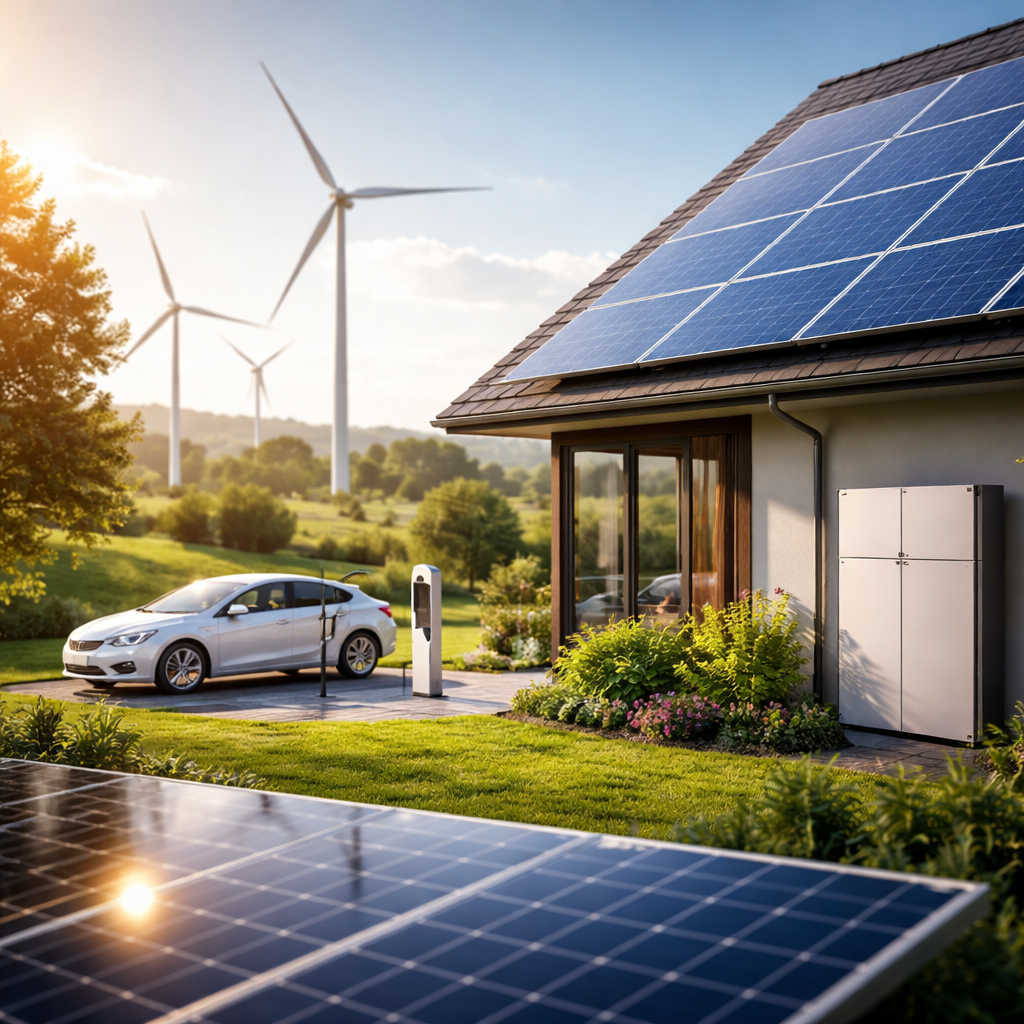
What if switching to cleaner energy didn’t just benefit the planet, but also cut your electricity bill and made your home more resilient during outages? The advantages of renewable energy sources go far beyond environmental slogans — they touch on economics, national security, public health, and the way communities are built. And the more you dig into the details, the more compelling the picture becomes.
Why fossil fuels are losing the argument
For decades, coal, oil, and natural gas powered nearly everything — factories, homes, transportation networks. But these resources share a fundamental weakness: they run out. Their prices spike with geopolitical tensions, supply chain disruptions, or extreme weather events. Renewables, by contrast, draw from sources that are replenished naturally — sunlight, wind, water movement, geothermal heat, and organic matter.
This isn’t just an idealistic shift. It’s a pragmatic response to finite supply, volatile pricing, and mounting environmental costs that traditional energy can no longer ignore.
The economic case is stronger than most people expect
One of the most persistent myths is that clean energy is expensive. In reality, the levelized cost of electricity from solar photovoltaic panels and onshore wind has dropped dramatically over the past fifteen years, making them competitive with — and often cheaper than — new fossil fuel plants in many regions of the world.
| Energy Source | Fuel Cost Volatility | Operational Lifespan | Local Job Creation |
|---|---|---|---|
| Solar PV | None (sunlight is free) | 25–30 years | High (installation, maintenance) |
| Wind (onshore) | None | 20–25 years | High (manufacturing, servicing) |
| Natural Gas | High | 30–40 years | Moderate |
| Coal | Moderate to High | 40+ years | Declining |
Beyond electricity costs, the renewable energy sector is one of the fastest-growing job markets globally. Solar installers, wind turbine technicians, energy storage engineers, and grid planners — these roles are expanding in regions that once depended heavily on extractive industries.
What renewables actually do for air quality and health
Burning fossil fuels releases nitrogen oxides, sulfur dioxide, particulate matter, and a range of toxic compounds into the air. These aren’t abstract concerns — they translate directly into higher rates of asthma, cardiovascular disease, and premature death in communities near power plants and high-traffic areas.
Renewable energy systems, once installed, produce electricity without combustion. No smoke, no particulates, no ground-level ozone. Research published by health and environmental agencies consistently links the expansion of clean energy with measurable improvements in air quality, particularly in urban areas where pollution is concentrated.
According to the U.S. Environmental Protection Agency, electricity generation is one of the largest sources of air pollution in the country. Transitioning to renewables directly reduces this burden on communities and healthcare systems.
Energy independence: why it matters at the national level
Countries that rely heavily on imported fossil fuels are exposed to price shocks and political pressure from supplying nations. A disruption in oil supply — whether from a conflict, a sanctions regime, or a production cut — can send energy prices soaring and strain entire economies.
Renewables change this equation fundamentally. Sun and wind don’t cross borders in tankers or pipelines. A country that invests in domestic solar farms, wind parks, and hydroelectric capacity reduces its exposure to external energy markets and gains a degree of strategic autonomy that was simply unavailable under a fossil-fuel-dependent model.
This is why energy security policy in many countries now explicitly includes renewable development targets — not only as climate policy, but as national security strategy.
How renewables support grid resilience and decentralization
Traditional power grids rely on large, centralized plants that distribute electricity across long transmission lines. When one major plant fails — due to equipment breakdown, extreme weather, or cyberattack — large areas can lose power simultaneously.
Distributed renewable energy systems work differently. Rooftop solar panels, community wind farms, and local battery storage create a more resilient network where failure in one node doesn’t cascade through the entire system. Homes and businesses with solar-plus-storage setups can maintain power even during grid outages — a practical advantage that became very visible during recent extreme weather events around the world.
Practical tip: If you’re considering solar panels for your home, pairing them with a battery storage system significantly increases your energy independence. You’ll store surplus daytime generation and use it at night or during outages — reducing both your grid reliance and your monthly bill.
Land use, ecosystems, and the bigger environmental picture
It’s fair to acknowledge that renewable infrastructure isn’t without environmental trade-offs. Wind farms can affect bird and bat populations if poorly sited. Large hydroelectric dams alter river ecosystems significantly. Solar installations require land that might otherwise support habitat.
However, these impacts are site-specific and manageable through planning and regulation. They don’t compare in scale to the systemic effects of fossil fuel extraction — oil spills, mountaintop removal mining, methane leaks, acid rain, and the long-term transformation of climate systems that affects every ecosystem on Earth.
- Solar panels can be installed on rooftops, parking structures, and degraded land — minimizing habitat displacement
- Offshore wind avoids many land-use conflicts and benefits from stronger, more consistent wind patterns
- Agrivoltaics — combining agriculture with solar generation — is an emerging approach that demonstrates dual land use is possible
- Small-scale hydropower and run-of-river systems carry far lower ecological impact than large reservoirs
The role of innovation in making clean energy smarter
One of the most exciting dimensions of the renewable energy transition is how rapidly the supporting technologies are evolving. Grid-scale battery storage, green hydrogen production, smart inverters, AI-driven demand forecasting, and vehicle-to-grid integration are all moving from pilot projects to commercial deployment.
This innovation loop is self-reinforcing: as more renewable capacity is installed, investment in complementary technologies increases, which makes the overall system more efficient and cost-effective, which drives further adoption. The renewable energy sector rewards early movers — both countries and individual consumers who adopt these technologies benefit from falling costs as the market matures.
Clean energy isn’t the future — it’s already reshaping the present
The transition to renewable energy is already well underway across every inhabited continent. Utility companies, industrial manufacturers, municipalities, and individual households are making decisions based on long-term cost projections, regulatory direction, and a growing understanding that energy generated from clean sources is simply a better deal — financially, environmentally, and strategically.
Whether you’re evaluating solar for your rooftop, researching the energy policies of candidates in an upcoming election, or simply trying to understand why electricity prices behave the way they do — knowing how renewable energy works and what it delivers puts you in a far better position to make informed decisions. The shift is real, it’s measurable, and it’s happening in places you can see and verify for yourself.
