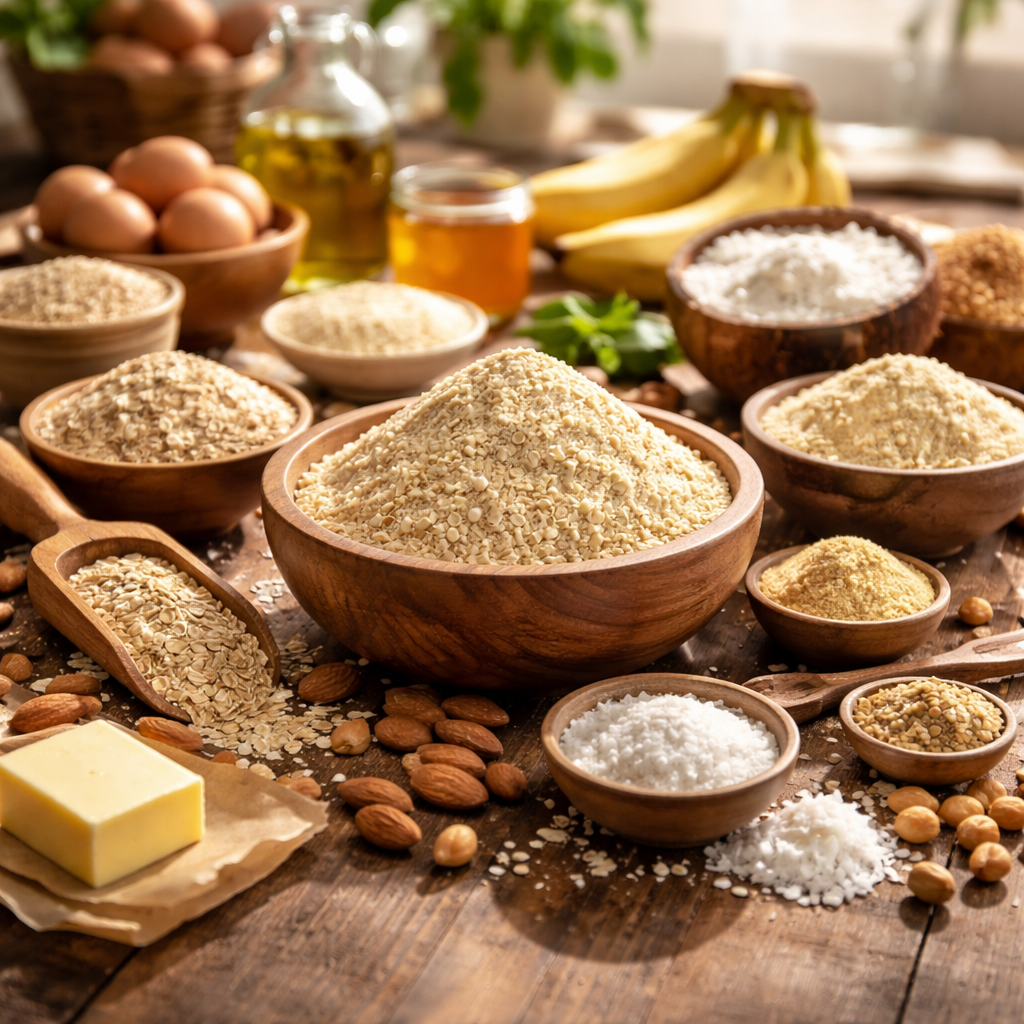
Most baked goods can turn out just as tender, flavorful, and satisfying without a single gram of wheat flour — and that is not an exaggeration. Finding the right alternative to flour in baking comes down to understanding what flour actually does in a recipe: it provides structure, absorbs moisture, binds ingredients together, and affects the final texture. Once you know that, swapping it becomes a logical process rather than a guessing game.
Why People Look Beyond All-Purpose Flour
The reasons vary widely. Some people manage celiac disease or gluten sensitivity and have no choice but to avoid wheat. Others follow low-carb or ketogenic diets and need to reduce the carbohydrate load in their desserts and breads. And a growing number of home bakers are simply curious — they want more nutritional value, a different flavor profile, or they ran out of flour mid-recipe and need a quick fix.
Whatever the motivation, the good news is that the pantry options are broader than most people expect. Each substitute behaves differently in the oven, so knowing their properties ahead of time saves a lot of failed batches.
Almond Flour: The Most Versatile Swap
Made from blanched, ground almonds, almond flour is probably the most widely used gluten-free flour substitute on the market. It is naturally moist, slightly sweet, and rich in healthy fats and protein. Because it lacks gluten, baked goods made with it tend to be denser and more crumbly — but in cookies, muffins, and pancakes, that quality is often a bonus rather than a flaw.
Almond flour absorbs less liquid than wheat flour. As a general rule, use ¾ cup of almond flour for every 1 cup of all-purpose flour, and consider adding an extra egg to help bind the batter.
It works especially well in chocolate chip cookies, banana bread, and almond cakes. However, it is not ideal for yeast-based breads where gluten development is essential for the rise and chewy texture.
Oat Flour, Coconut Flour, and the Others Worth Knowing
Beyond almonds, several other flour alternatives bring their own personality to baking. Here is a practical breakdown of the most commonly used options and their key characteristics:
| Flour Alternative | Best Used For | Key Notes |
|---|---|---|
| Oat flour | Pancakes, muffins, cookies | Mild flavor; use 1:1 ratio in most recipes |
| Coconut flour | Dense cakes, brownies | Highly absorbent; use ¼ cup per 1 cup wheat flour |
| Rice flour | Crackers, shortbread, coatings | Light texture; great in gluten-free blends |
| Chickpea flour | Savory bakes, flatbreads | High protein; earthy flavor |
| Cassava flour | Tortillas, cookies, wraps | Closest texture to wheat flour; 1:1 swap |
Oat flour is a particularly friendly option for beginners. You can even make it at home by blending rolled oats in a food processor until fine. It behaves predictably in most quick bread recipes and adds a subtle, nutty warmth to the final product. Just keep in mind that store-bought oat flour labeled gluten-free is the safer choice for those with celiac disease, since oats are often processed in shared facilities.
Coconut flour is the wildcard of the group. It soaks up liquid at an almost alarming rate, which means recipes written specifically for coconut flour work reliably — but substituting it into a standard wheat-flour recipe without adjustments usually results in a dry, dense brick. When used correctly, though, it produces beautifully moist brownies and rich, grain-free cakes.
How to Build a Reliable Gluten-Free Flour Blend
Professional gluten-free bakers rarely rely on a single flour. Instead, they combine several alternatives to mimic the properties of wheat flour more closely. A basic homemade blend that works well across many recipes looks like this:
- 2 cups rice flour (white or brown) — provides a neutral base
- ⅔ cup potato starch — adds lightness and moisture retention
- ⅓ cup tapioca starch — improves elasticity and gives a slight chew
This combination can replace all-purpose flour at a 1:1 ratio in most non-yeast recipes. Adding a small amount of xanthan gum — about ¼ teaspoon per cup of this blend — helps with binding and prevents crumbling, which is a common issue when baking without gluten.
What Changes When You Remove Wheat Flour
Switching to a wheat flour substitute is not always a seamless swap, and it helps to go in with realistic expectations. Gluten-free and low-carb baked goods often behave differently during mixing and baking — batters can look too thick or too runny compared to what you are used to, and baking times may shift slightly.
A few adjustments that frequently make the difference:
- Add an extra egg or a flax egg (1 tablespoon ground flaxseed mixed with 3 tablespoons water) to improve binding
- Let the batter rest for 5–10 minutes before baking — some flours need time to hydrate fully
- Reduce the oven temperature by about 25°F and check for doneness earlier, since nut-based flours can brown faster
- Store finished baked goods in the refrigerator, as the higher fat content in alternatives like almond flour shortens shelf life at room temperature
Choosing the Right Substitute Depends on the Recipe
There is no single best flour alternative — the right choice depends on the specific dish you are making. Almond flour shines in cookies and coffee cakes. Cassava flour handles tortillas and wraps remarkably well. Chickpea flour lends itself to savory scones and flatbreads. Oat flour is the everyday workhorse for quick breads and muffins. And a well-balanced commercial gluten-free blend handles layer cakes and loaf breads with the least amount of recipe modification.
The most important thing is to treat the first attempt as a learning experience. Gluten-free and alternative-flour baking rewards patience and small adjustments more than any other area of cooking. Once you find what works in your kitchen with your oven and your preferred brands, the results can be genuinely impressive — not just “good for gluten-free,” but good by any standard.
