Every cell in your body holds roughly six feet of DNA tightly coiled inside a nucleus smaller than a grain of sand — and that single fact barely scratches the surface of what scientists have uncovered about the human genome. The real facts about human DNA go far deeper, touching on evolution, identity, health, and what it genuinely means to be human.
Your genome is both unique and surprisingly shared
Human DNA contains approximately 3.2 billion base pairs, yet roughly 99.9% of that sequence is identical across all people on Earth. That remaining 0.1% — about 3 million base pair differences — is what makes each person genetically distinct. It influences everything from eye color and metabolism to disease susceptibility and how your body responds to certain medications.
What surprises many people is how much genetic material we share with other living organisms. Humans share about 98.7% of their DNA with chimpanzees, around 85% with mice, and even roughly 60% with a banana. These numbers are not a quirky internet fact — they reflect the deep evolutionary continuity of life on Earth, where core biological processes like cell division and energy production have been conserved for hundreds of millions of years.
The structure that changed everything
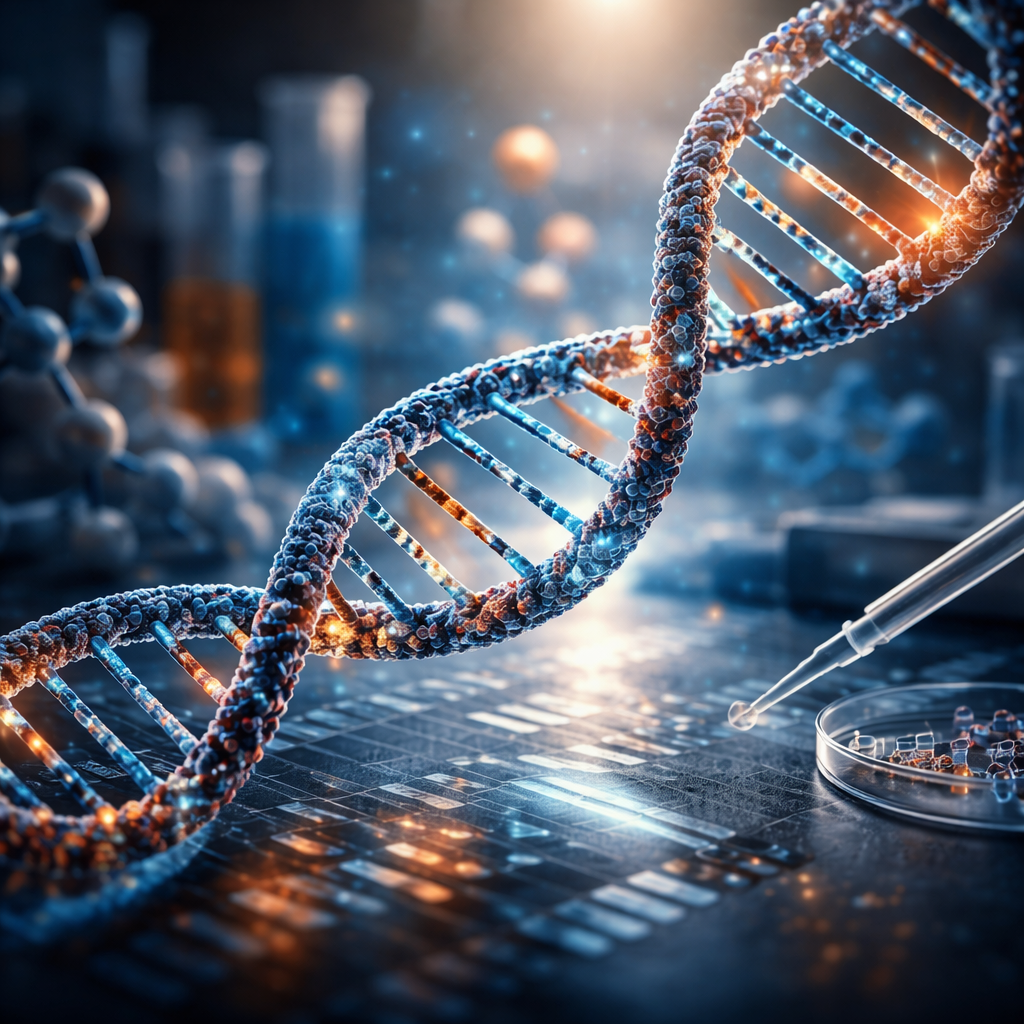
DNA — deoxyribonucleic acid — is a double-stranded molecule twisted into a double helix. Each strand is a chain of nucleotides, and each nucleotide contains one of four chemical bases: adenine (A), thymine (T), guanine (G), and cytosine (C). The specific sequence of these bases encodes genetic information the way letters form words and sentences.
Only about 1.5–2% of human DNA actually codes for proteins. For years, the remaining portion was dismissed as “junk DNA.” That view has shifted significantly. Large-scale genomic research has demonstrated that much of this non-coding DNA plays regulatory roles — switching genes on or off, influencing when and how proteins are made, and contributing to the three-dimensional architecture of chromosomes inside the nucleus.
“The human genome is not a blueprint — it is more like a dynamic instruction manual that responds to the environment it finds itself in.”
DNA replication: precision at a staggering scale
Every time a human cell divides, it must copy the entire genome — all 3.2 billion base pairs — with extraordinary accuracy. The molecular machinery responsible for this process makes roughly one error per billion base pairs copied. Cells also have built-in proofreading and repair mechanisms that catch and fix most of those errors before they become permanent mutations.
However, not all mutations are harmful. Many are neutral, some are beneficial, and the accumulation of mutations over generations is precisely what drives genetic variation and evolution. Understanding DNA repair pathways has also become central to cancer research, since many cancers arise when these repair systems break down.
| Organism | DNA shared with humans |
|---|---|
| Chimpanzee | ~98.7% |
| Mouse | ~85% |
| Zebrafish | ~73% |
| Fruit fly | ~60% |
| Banana | ~60% |
Epigenetics: when environment talks to your genes
Your DNA sequence stays largely fixed throughout your life, but how your genes are expressed can change dramatically based on lifestyle, environment, stress, and nutrition. This is the domain of epigenetics — the study of heritable changes in gene activity that do not involve alterations to the underlying DNA sequence itself.
Chemical modifications like methylation can effectively “silence” certain genes, while other modifications can make genes more active. Research in this field has shown that factors such as diet, physical activity, sleep quality, and chronic stress leave measurable marks on the genome — and some of these marks can even be passed on to future generations.
Mitochondrial DNA and what it reveals about ancestry
Not all human DNA lives in the cell nucleus. Mitochondria — the energy-producing organelles inside cells — carry their own small circular genome of about 16,500 base pairs. Mitochondrial DNA is inherited almost exclusively through the maternal line, which makes it a powerful tool for tracing ancestral lineages across thousands of generations.
By analyzing mitochondrial DNA from populations around the world, geneticists have been able to map ancient human migration routes and trace all modern humans back to a common maternal ancestor who lived in Africa. This individual is often referred to in genetics literature as “Mitochondrial Eve” — not a single person who was the only woman alive, but the most recent common matrilineal ancestor of every living human being.
Practical applications you probably encounter already
Understanding human DNA is no longer confined to research laboratories. Genetic knowledge now shapes everyday medicine, forensic science, nutrition, and direct-to-consumer health services. Here are some real-world areas where DNA science is already making a tangible difference:
- Pharmacogenomics: matching drug types and dosages to a patient’s genetic profile to reduce side effects and improve outcomes
- Carrier screening: identifying whether individuals carry gene variants associated with heritable conditions before or during pregnancy
- Forensic DNA profiling: used in criminal investigations and identifying victims of disasters
- Ancestry and genealogy testing: tracing ethnic backgrounds and finding biological relatives through commercial DNA databases
- Nutrigenomics: exploring how genetic variants influence responses to specific nutrients and dietary patterns
The genome is not a fixed destiny
One of the most important things modern genetics has clarified is that having a genetic predisposition to a condition does not mean that condition is inevitable. Most common diseases — heart disease, type 2 diabetes, certain cancers — are influenced by dozens or even hundreds of genetic variants, each contributing a small amount of risk. Environmental and lifestyle factors interact with those variants in complex, often modifiable ways.
This understanding shifts the conversation away from genetic fatalism and toward informed, personalized health strategies. Knowing your genetic profile is increasingly seen not as a verdict, but as one valuable layer of information that helps build a clearer picture of your health alongside clinical assessments, family history, and lifestyle habits.
The science of human DNA continues to evolve rapidly, and so does our capacity to read, interpret, and in some cases, edit the genome. Technologies like CRISPR-Cas9 have opened possibilities that were theoretical just a decade ago. What remains constant is the fundamental truth written into every strand: that biology is complex, human variation is vast, and the more we learn about our genetic blueprint, the more questions worth asking emerge.
