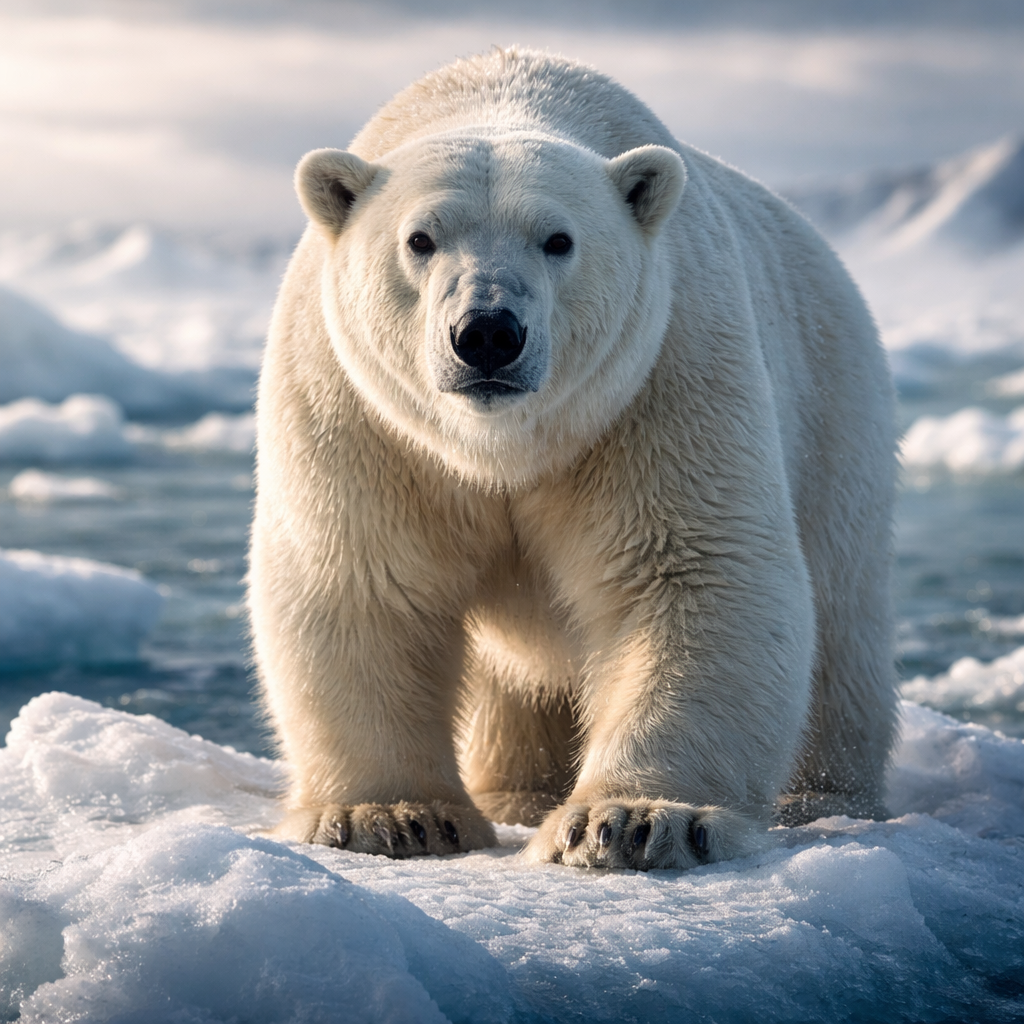
Most people know polar bears as massive white predators roaming Arctic ice — but the facts about polar bears go far deeper than their iconic appearance. These animals have evolved over millennia into one of the most specialized hunters on the planet, with biology that genuinely defies expectations.
They Are Classified as Marine Mammals — and That Changes Everything
Unlike grizzlies or black bears, polar bears hold an official classification as marine mammals. The U.S. Marine Mammal Protection Act recognizes them alongside seals and walruses — not because they live in the ocean, but because their survival depends entirely on the sea ice ecosystem. They spend the majority of their lives on frozen Arctic waters, hunting ringed and bearded seals through gaps in the ice.
This dependency on sea ice is what makes climate change such a direct threat to their population. As ice seasons shorten, polar bears have less time to hunt and build the fat reserves they need to survive leaner months on land.
The Biology Behind Their Cold-Weather Survival
Polar bear fur is one of the most misunderstood features in the animal kingdom. Each hair shaft is hollow and transparent — not white. The appearance of white color comes from light reflection and scattering. Their skin underneath is actually black, which helps absorb solar radiation and retain heat.
Their fat layer, which can reach up to 11 centimeters thick, acts as insulation and an energy reserve simultaneously. When food is scarce, polar bears enter a state called “walking hibernation” — they reduce their metabolic rate without fully entering deep sleep, which allows them to stay active and alert even during fasting periods that can last months.
