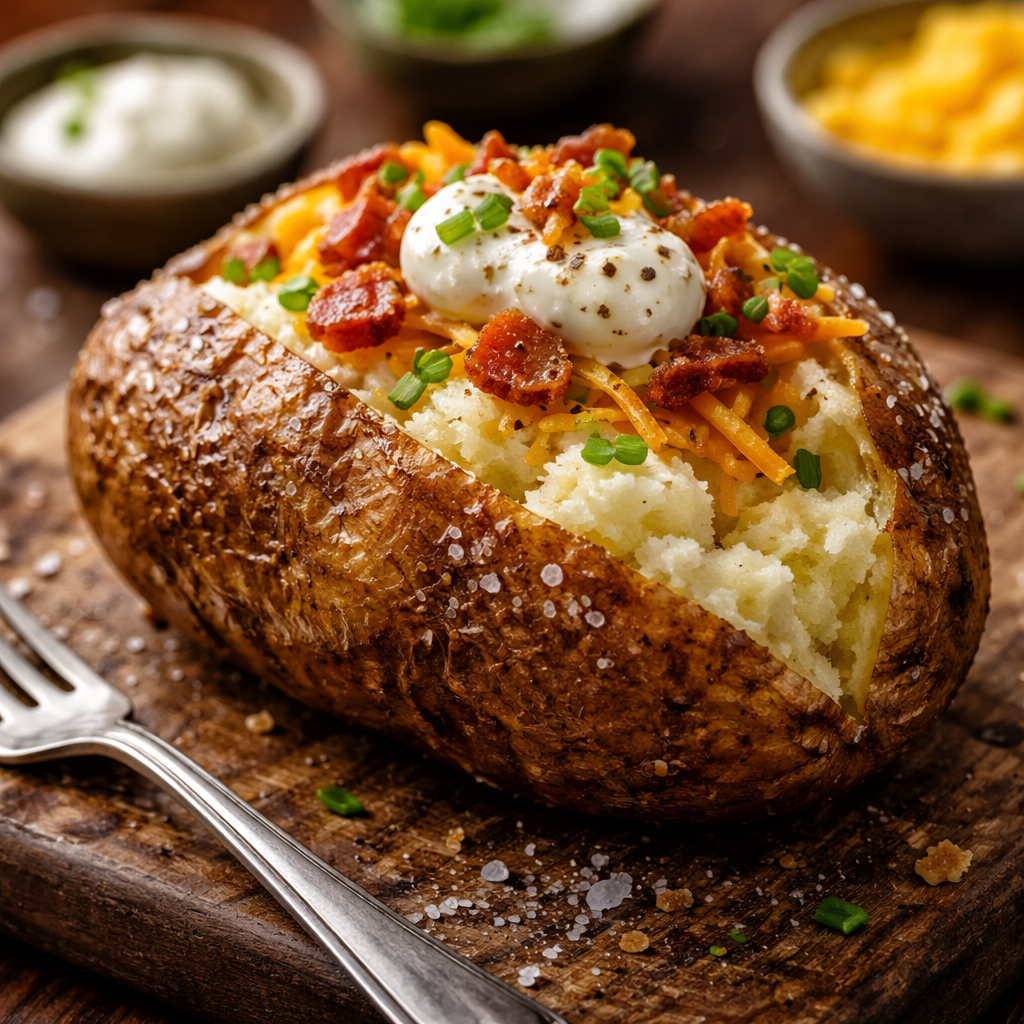
Most people underestimate how much technique matters when it comes to how to bake a potato in the oven — a dish that looks deceptively simple but has a handful of details that separate a truly great result from a disappointing, soggy, or unevenly cooked one. The skin should crackle when you press it. The inside should be fluffy, not dense. And none of that happens by accident.
Why the potato variety actually matters
Not every potato behaves the same in the oven. Starchy varieties like Russet or Idaho are the classic choices for a reason — their high starch content breaks down into that light, airy texture inside. Waxy potatoes, on the other hand, hold their moisture and stay firm, which makes them great for boiling or roasting in chunks but less ideal for the classic baked version where you want fluffiness.
If you can only find one type at your local store, go with whatever is labeled “baking potato.” In most cases, it will be a high-starch variety, and that is exactly what you need.
Preparation: the steps most people skip
The prep work takes less than five minutes, but skipping even one step can noticeably affect the final result. Here is a straightforward process to follow before the potato even enters the oven:
- Scrub the skin thoroughly under cold running water. Since you will likely eat the skin, removing all dirt and residue is worth the extra minute.
- Pat the potato completely dry with a kitchen towel. Moisture on the surface creates steam, which softens the skin instead of crisping it.
- Rub the outside with a neutral oil — olive oil or vegetable oil both work well. This helps the skin crisp evenly during baking.
- Season the skin generously with coarse salt. This draws out a small amount of moisture and creates a flavorful, textured crust.
- Pierce the potato several times with a fork all around. This allows steam to escape from inside, which prevents the potato from bursting and helps it cook more evenly.
One detail worth noting: do not wrap the potato in aluminum foil. It is a common habit, but foil traps steam and essentially turns the baking process into steaming — the result is a soft skin with none of that satisfying crisp texture.
Temperature and timing: finding the right balance
The oven temperature you choose directly affects both the texture of the skin and how evenly the inside cooks. There is no single “correct” answer, but there are clear trade-offs depending on what you prioritize.
| Oven Temperature | Approximate Time (medium potato) | Result |
|---|---|---|
| 375°F / 190°C | 60–75 minutes | Softer skin, evenly cooked interior |
| 400°F / 200°C | 50–60 minutes | Good balance of crispy skin and fluffy center |
| 425°F / 220°C | 45–50 minutes | Crispier skin, slightly denser interior |
Most home cooks land somewhere around 400°F as a reliable middle ground. The size of the potato matters too — a large Russet will need closer to 70 minutes at that temperature, while a medium one is usually done in about 55 minutes. The only reliable way to check doneness is to insert a thin skewer or fork into the thickest part: it should slide in with no resistance at all.
Place the potatoes directly on the oven rack rather than on a baking sheet. This allows hot air to circulate around the entire surface, which is one of the simplest ways to get a more evenly crisped skin without any extra effort.
The finishing touch that changes everything
Once the potato comes out of the oven, do not cut it open immediately. Let it rest for about five minutes — this allows the steam inside to redistribute slightly and makes the interior even fluffier when you finally open it.
When you do open it, use both hands to squeeze the ends inward and upward at the same time. This pushes the flesh up through the cut and creates that classic, fluffy mound that holds toppings well. Cutting with a knife and scooping does not give the same result — the texture comes from breaking the interior structure rather than slicing through it.
Toppings worth trying beyond butter and sour cream
The classic combination of butter, sour cream, chives, and shredded cheddar is popular for a reason — it works. But a well-baked potato is also a versatile base for a proper meal rather than just a side dish. A few combinations that hold up well both in terms of flavor and nutrition:
- Canned or cooked black beans with salsa, shredded cheese, and a dollop of Greek yogurt as a stand-in for sour cream
- Steamed broccoli with a cheese sauce made from sharp cheddar and a little mustard
- Pulled chicken or turkey with a drizzle of hot sauce and thinly sliced green onions
- Cottage cheese with fresh herbs like dill and chive for a lighter, protein-rich option
- A fried or soft-boiled egg with smoked paprika and olive oil for a quick, satisfying meal
The potato itself is naturally gluten-free, relatively low in fat before toppings, and a solid source of potassium and complex carbohydrates — which makes it a practical base for a balanced plate when topped thoughtfully.
When something goes wrong
Even with the right technique, baked potatoes can disappoint. Here are a few common problems and what actually causes them:
- Skin is soft and chewy instead of crispy — the potato was likely wrapped in foil, placed on a solid baking sheet without airflow, or not dried properly before oiling.
- Interior is dense and slightly gluey — this usually means the potato was undercooked, or it was a waxy variety that does not break down the same way starchy potatoes do.
- Skin is overly dry or slightly burned while the inside is still firm — the oven temperature was too high, or the potato was too close to the heating element.
- Uneven cooking throughout — inconsistent potato size is usually the culprit. Try to choose potatoes that are as uniform in size as possible when baking multiple at once.
A reliable result, every single time
The gap between a mediocre baked potato and a genuinely good one comes down to a few decisions made before it goes into the oven: the right variety, dry skin, oil and salt on the outside, no foil, and enough time at a steady temperature. None of it is complicated, but all of it adds up.
Once you bake a potato this way and taste the difference — the crackling skin, the steam that rises when you open it, the cloud-like interior — it becomes one of those techniques you never forget. Simple food done right tends to stay with you like that.
