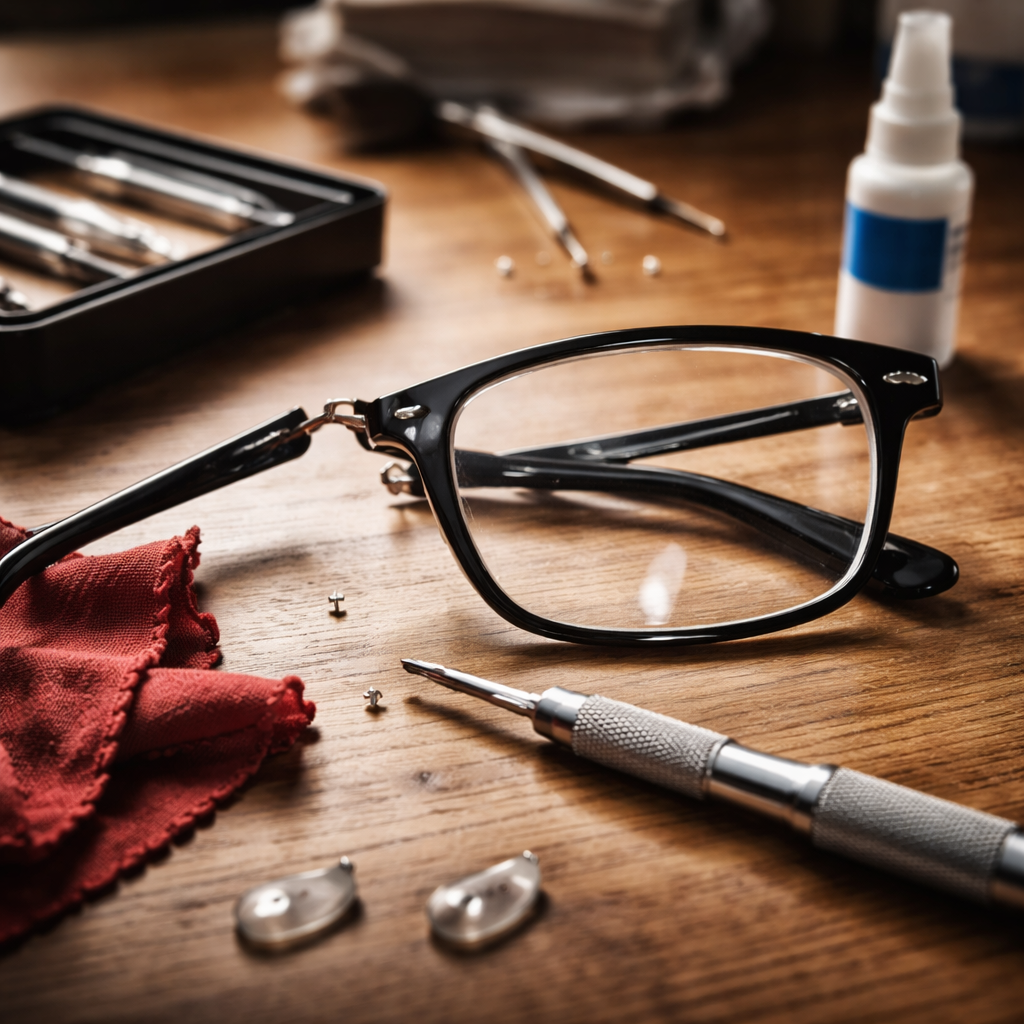
Most people have been there — you reach for your glasses and notice the frame is cracked, a hinge is loose, or a nose pad has snapped off. Knowing how to fix a broken glasses frame before heading to the optician can save you both time and money, and in many cases the repair is surprisingly straightforward if you approach it the right way.
Assess the damage before you do anything else
Not every broken frame calls for the same solution. Before grabbing glue or a screwdriver, take a close look at what exactly went wrong. The type of material your frames are made from matters enormously here — plastic, acetate, metal, and titanium each behave differently under stress and respond to different repair methods.
Common issues you might be dealing with include a snapped bridge, a detached temple arm, a stripped or missing screw, a cracked lens rim, or a bent nose bridge. Identifying the specific problem narrows down your options and prevents you from accidentally making things worse.
Quick fixes you can do at home right now
Some repairs genuinely require nothing more than a small toolkit and five minutes of patience. Here is what works well depending on the situation:
- Loose or missing screw: Use a precision eyeglass screwdriver — the tiny flathead or Phillips type — to tighten a loose hinge screw. If the screw is gone, most pharmacies and opticians sell small eyeglass repair kits that include replacement screws in various sizes.
- Screw that keeps falling out: Apply a tiny drop of clear nail polish to the screw thread before reinserting it. This acts as a mild thread-locking agent without permanently fixing the screw.
- Bent metal frame: Gently warm the affected area with warm (not boiling) water or a hairdryer on a low setting, then carefully bend it back into shape using your fingers or a soft cloth for grip. Metal frames, especially those made from stainless steel or monel, respond well to gradual, controlled bending.
- Loose nose pad: Nose pads on metal frames are usually attached with a small screw or a push-in clip. A replacement set costs very little and can be swapped at home without specialist tools.
A precision screwdriver set designed for eyewear is one of the most underrated household tools. It handles the majority of hinge and nose pad issues in under two minutes.
When glue is — and is not — your friend
Adhesive repairs are tempting because they feel immediate and decisive. The reality is more nuanced. Using the wrong type of glue on eyeglass frames can warp the material, cloud the lenses, or create a bond that makes professional repair impossible later on.
| Frame Material | Recommended Adhesive | What to Avoid |
|---|---|---|
| Acetate / Plastic | Acetone-free super glue (cyanoacrylate) in very small amounts | Acetone-based solvents, epoxy resins |
| Metal | Two-part epoxy for a structural crack | Super glue on hinges — it locks moving parts |
| Titanium | Professional soldering only | Any DIY glue — surface is non-porous |
If you do use super glue on a cracked plastic frame, apply it with a toothpick rather than directly from the tube. This level of precision prevents overflow onto the lens surface, which is one of the most common mistakes people make during a DIY eyeglass frame repair.
Repairing acetate frames — a closer look
Acetate is one of the most popular frame materials and also one of the trickiest to repair at home because it is thermoplastic — meaning it softens with heat and hardens as it cools. This property is actually useful. If your acetate frame has a stress crack or a slightly detached temple, carefully warming the area with a hairdryer on a low heat setting (or dipping it in warm water around 60°C) allows you to press the pieces together and hold them firmly while the material re-hardens.
This technique works best for minor cracks and separations rather than full breaks. For a completely snapped acetate bridge, a glue repair is rarely durable enough for everyday wear — at that point, professional frame welding or a replacement frame becomes the more sensible path.
Temporary solutions when you need your glasses now
Sometimes you cannot get to an optician immediately and a DIY fix needs to last just a day or two. In these situations, a few practical workarounds hold up well:
- Dental floss threaded through a broken hinge can act as a temporary hinge pin and keeps the temple arm functional for short-term use.
- A small piece of clear adhesive tape wrapped tightly around a crack keeps the frame stable without obscuring vision if applied carefully to the bridge or temple.
- A rubber band looped around both temples at the back of the head distributes pressure evenly when a hinge is too loose to hold the frame in place on its own.
These are not permanent repairs — treating them as anything more leads to frustration. Their purpose is purely to get you through until a proper solution is available.
Knowing when to hand it to a professional
There is no shame in recognising the limits of a home repair. Certain situations call for an optician or specialist frame repair service, and attempting a fix yourself in these cases risks damaging lenses that are often worth far more than the frame itself.
Take your frames to a professional when you are dealing with a titanium or memory metal frame (both require specialist equipment), when the lens groove or rim is cracked and the lens itself is at risk of popping out, or when a previous glue repair has failed and left residue that complicates any further work. Most opticians offer basic repairs free of charge or for a small fee, particularly if you purchased your glasses from them — it is always worth asking before attempting anything yourself.
An optician can often solder a broken metal frame in under ten minutes with equipment that costs more than most people’s cars. It genuinely is the right tool for the job.
Making repairs last — and preventing future breaks
Once your frames are back in shape, a few habits dramatically extend their lifespan. Always use both hands when putting on and removing glasses — single-handed use is the leading cause of stretched or broken hinges over time. Store frames in a hard case when not in use, and avoid leaving them in environments with extreme heat such as a car dashboard in summer, which can warp acetate and weaken adhesives.
Spring hinges, which flex outward slightly to accommodate different head shapes, are worth considering when you next replace your frames if you have a history of broken hinges. They significantly reduce the mechanical stress that causes hinge screws to loosen and frame arms to crack at the joint.
Taking care of small issues early — tightening a slightly loose screw, replacing a worn nose pad — prevents the kind of sudden complete failure that leaves you genuinely stuck. A two-minute check every few weeks is all it takes to stay ahead of the most common problems.
