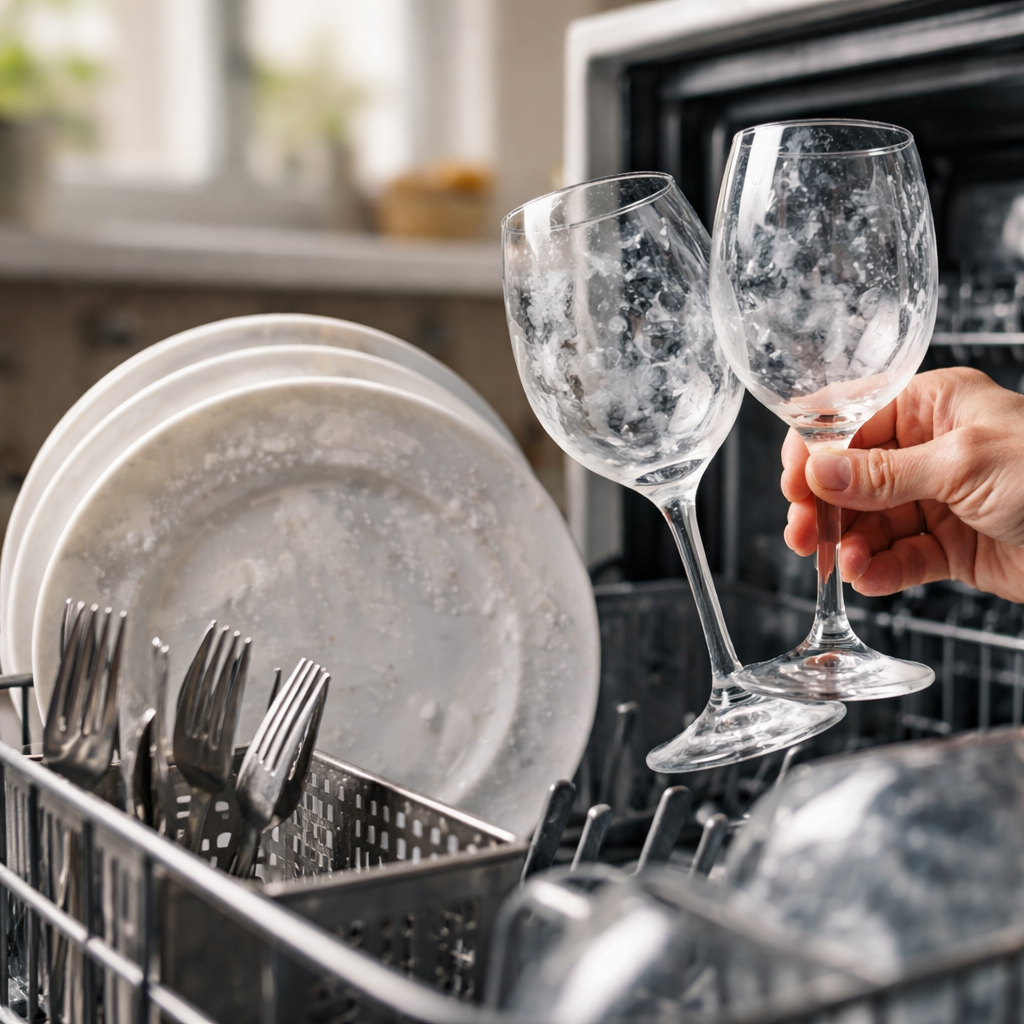
Spotty glasses and cloudy plates fresh out of the dishwasher are one of those small but genuinely annoying household problems — and if you’ve been trying to figure out how to fix a dishwasher that leaves spots, you’re not alone. The good news is that in most cases, the cause is completely fixable without calling a technician.
Why spots appear in the first place
Before jumping to solutions, it helps to understand what’s actually happening. Those white, filmy marks on your dishes are almost always caused by one of two things: mineral deposits from hard water or detergent residue that didn’t rinse away properly. Hard water contains dissolved calcium and magnesium. When water evaporates during the drying cycle, these minerals stay behind and form visible spots — especially noticeable on glassware and dark-colored dishes.
Detergent residue is a separate issue and often gets confused with hard water spots. If you’re using too much detergent, or a formula that doesn’t dissolve well in your water temperature, it can leave a white haze rather than individual droplet marks. Knowing which type of residue you’re dealing with changes the approach entirely.
Start with the rinse aid — it matters more than most people think
Rinse aid is one of the most underestimated components of a good dishwasher cycle. It works by reducing the surface tension of water, which causes it to sheet off dishes rather than bead up and dry as individual droplets. Without it — or with a depleted reservoir — you’ll almost certainly get spots, even if everything else is working perfectly.
Many people skip rinse aid thinking it’s an unnecessary extra. In hard water areas especially, it’s not optional — it’s the difference between spotless and streaky.
Check your dishwasher’s rinse aid indicator and refill it if needed. Then adjust the rinse aid dosage setting — most dishwashers allow you to increase or decrease the amount dispensed per cycle. If you live in an area with particularly hard water, try setting it to the higher end of the recommended range.
Hard water and what you can actually do about it
Hard water is the root cause behind the majority of dishwasher spotting complaints. The solution depends on how severe the problem is in your area.
- Use a dishwasher detergent specifically formulated for hard water — these typically contain water softening agents that help prevent mineral buildup.
- Add a dishwasher salt to your machine if it has a dedicated salt compartment. Salt regenerates the built-in water softener and significantly reduces mineral deposits on dishes.
- Run a monthly cleaning cycle with a citric acid-based dishwasher cleaner — citric acid dissolves calcium deposits effectively without damaging the interior.
- Consider installing a whole-home or under-sink water softener if spotting is a persistent problem across all appliances.
A simple way to test your water hardness at home is to fill a clean plastic bottle halfway with tap water, add a few drops of pure liquid soap, shake it, and observe the lather. Soft water produces lots of bubbles quickly; hard water produces very little foam and may leave a cloudy residue.
Detergent: type, amount, and placement all count
Switching detergents can make a surprising difference. Powder detergents tend to leave more residue than gel or pod formats because they don’t always dissolve fully, especially in shorter or cooler wash cycles. Pods and tablets generally offer better consistency, but they’re not universally ideal either — in very hard water, some tablets struggle to work effectively without additional rinse aid.
| Detergent Type | Dissolves Easily | Works Well in Hard Water | Risk of Residue |
|---|---|---|---|
| Powder | Moderate | With hard water formula | Higher |
| Gel | Good | Moderate | Medium |
| Pods / Tablets | Very Good | Good (with rinse aid) | Lower |
Also check that the detergent dispenser door is opening correctly during the cycle. If it’s stuck or blocked by a large dish, the detergent releases at the wrong time and won’t rinse away properly — leaving both residue and poor cleaning results.
Don’t overlook the dishwasher itself
Sometimes the machine itself is contributing to the problem. A clogged spray arm means water isn’t reaching all areas of the dishwasher evenly, which leads to inconsistent rinsing and more spots. Remove the spray arms and check the small holes — they can get blocked with food particles or mineral deposits over time. A toothpick or thin wire can clear them out.
The filter is another commonly neglected component. Most modern dishwashers have a manual filter at the bottom of the tub that needs to be cleaned regularly — typically every two to four weeks depending on usage. A dirty filter reduces water flow and can redeposit debris back onto dishes during the cycle.
- Clean the dishwasher filter every 2–4 weeks
- Inspect and clear spray arm holes monthly
- Refill rinse aid before the indicator light appears
- Run an empty hot cycle with a dishwasher cleaner once a month
- Check that the door seal is clean and free of mold or buildup
Loading habits that quietly make things worse
Even with the right detergent, correct rinse aid levels, and a clean machine, poor loading habits can bring back spotting. Overcrowding prevents water and rinse aid from circulating properly. Glasses placed at angles that allow water to pool inside will dry with visible watermarks. Dishes that touch each other create shaded areas where rinsing is incomplete.
Angle cups and glasses slightly downward so water drains off naturally. Leave space between items — particularly in the top rack where glassware tends to be most affected by spots. This simple change in how you load the machine can produce noticeably cleaner results even before adjusting anything else.
When cleaner dishes are a few adjustments away
Most dishwasher spot problems come down to a combination of factors rather than a single dramatic fault. Hard water, low rinse aid, the wrong detergent format, a clogged filter, or even just how dishes are stacked — any one of these can cause the issue, and several together make it much worse. Working through them methodically, starting with the rinse aid and water hardness, resolves the problem for the vast majority of households without needing any repairs at all. Give each change a few cycles to evaluate properly before moving on to the next, and you’ll likely have spotless results sooner than expected.
