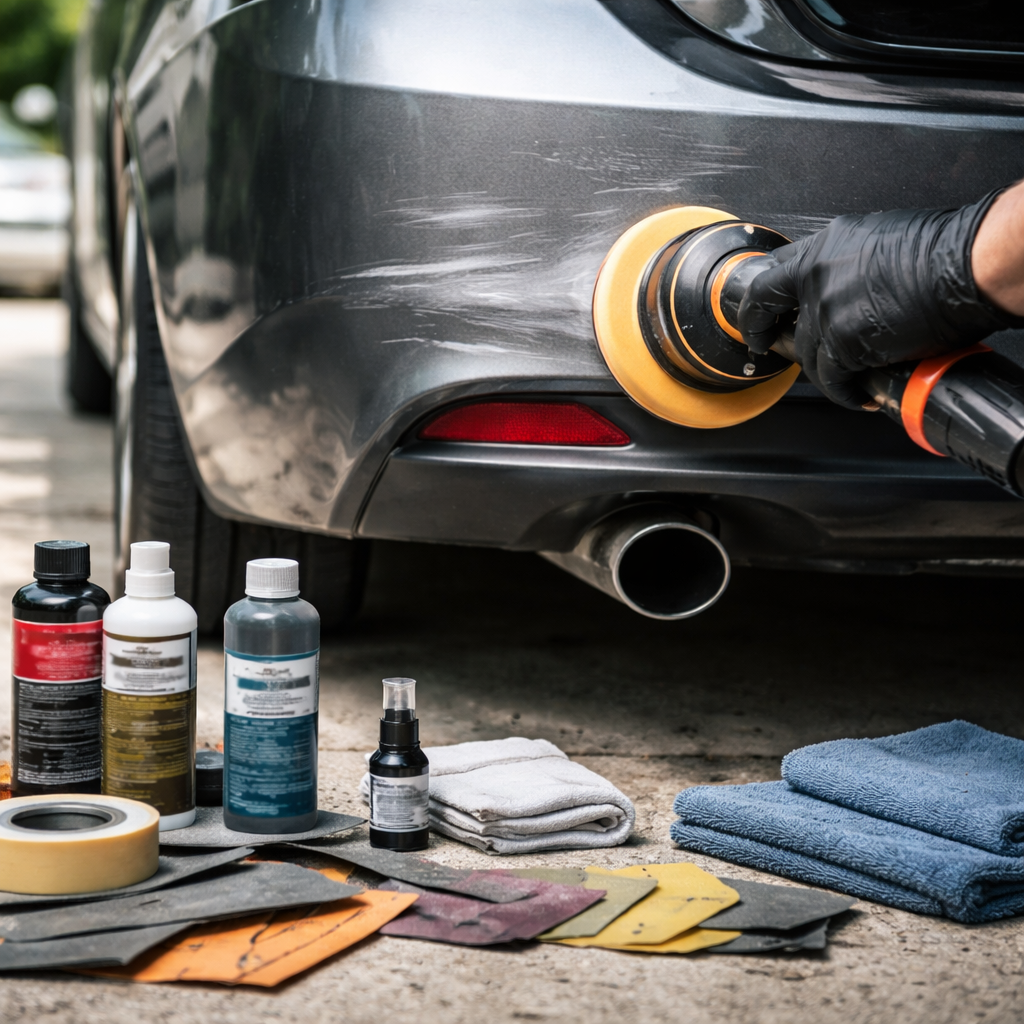
Most scratches on a bumper look worse than they actually are — and knowing how to fix a scratched car bumper yourself can save you a significant amount of money while giving you a genuine sense of accomplishment. Whether it happened in a parking lot, from a stray shopping cart, or just the result of years of everyday use, bumper scratches are one of the most common cosmetic issues car owners deal with.
Understanding what you’re actually dealing with
Before grabbing sandpaper or a touch-up pen, it’s worth taking a moment to understand what type of scratch you have. Not all scratches are equal, and the repair approach depends entirely on how deep the damage goes.
Car bumpers are typically made from plastic — either polypropylene, ABS, or a blend — and have several layers above the base material: primer, base coat (color), and clear coat. A scratch may affect only the clear coat, reach the color layer, or cut all the way through to the plastic itself.
| Scratch depth | What you’ll see | Repair difficulty |
|---|---|---|
| Clear coat only | Light haze or swirl marks, no color change | Easy — polish or compound |
| Into base coat | Visible color difference, white or gray line | Moderate — touch-up paint needed |
| Down to primer or plastic | Deep groove, plastic visible | More involved — filler may be required |
Run your fingernail across the scratch. If it glides over without catching, you’re likely dealing with a surface-level clear coat scratch — the easiest kind to fix. If your nail catches or the groove has noticeable depth, the repair will take a few more steps.
What you’ll need before you start
Gathering the right materials beforehand makes the whole process smoother and helps you avoid stopping midway through. The specific products depend on scratch depth, but here’s a general toolkit that covers most situations:
- Automotive soap and microfiber cloths for cleaning
- Isopropyl alcohol (70% or higher) for degreasing
- Wet/dry sandpaper in various grits (800, 1500, 2000, 3000)
- Rubbing compound and polishing compound
- Matching touch-up paint or spray paint (check your car’s paint code)
- Clear coat spray
- Plastic adhesion promoter (for deeper scratches)
- Painter’s tape and plastic sheeting for masking
- Dual-action polisher or foam pad (optional but helpful)
Your car’s paint code is usually found on a sticker inside the driver’s door jamb. This code lets you order or buy an exact color match, which is crucial for anything deeper than a clear coat scratch.
Fixing light surface scratches: the polishing route
If the scratch is superficial — sitting only in the clear coat — you may not need any paint at all. This is the most satisfying scenario, because the fix is relatively quick and the results can be impressive.
Start by washing the bumper thoroughly and drying it completely. Apply a small amount of rubbing compound to a foam applicator or microfiber cloth and work it into the scratch using circular motions with moderate pressure. Rubbing compound is mildly abrasive and essentially levels the surrounding clear coat down to match the depth of the scratch.
After working the compound in for a minute or two, wipe it off with a clean cloth and inspect the area. In many cases, the scratch will be significantly reduced or completely gone. Follow up with a polishing compound to restore the gloss, then apply a coat of car wax or paint sealant to protect the area.
Patience during the polishing stage matters more than pressure. Letting the compound do its job with consistent motion beats scrubbing hard and potentially swirling the paint further.
Repairing deeper scratches with touch-up paint
When a scratch has broken through to the color layer, polishing alone won’t make it disappear. You’ll need to restore the missing paint before finishing the surface. This takes more time and care, but it’s entirely doable with the right approach.
Clean and degrease the area first. Use fine-grit sandpaper (starting around 1500 grit) to lightly smooth the edges of the scratch — this helps the new paint bond better and prevents a raised edge. Wipe down with isopropyl alcohol and let it dry fully.
Apply touch-up paint in thin layers. This is a step where people often go wrong — applying too much at once creates runs and an uneven surface. Thin coats, with drying time in between, give a far better result. Depending on the product, you may need three to five coats to fully cover the scratch.
Once the base coat has dried (usually 24 hours for full cure), apply a clear coat over the area to seal and protect it. After the clear coat cures, wet sand the repaired area starting with 2000 grit, moving up to 3000, then finish with polishing compound to blend the repair into the surrounding paint.
A note on spray painting vs. touch-up pens
Touch-up pens are convenient for small, narrow scratches. Spray paint (either aerosol cans or professional spray) covers larger areas more evenly. For bumper scratches longer than a few centimeters or wider than a few millimeters, spray application tends to produce better blending results — but it requires more careful masking to protect the surrounding panels.
When the plastic itself is damaged
Deep gouges that cut into the bumper plastic require one additional step: filling. Plastic body filler or flexible bumper repair filler (specifically designed for plastic, not metal) is applied to the groove, allowed to cure, then sanded flush with the bumper surface. Using a filler designed for rigid metal on a flexible plastic bumper is a common mistake — it will crack over time because plastic flexes during normal driving.
After filling and sanding, apply an adhesion promoter before priming and painting. Adhesion promoters chemically prepare the plastic surface to hold primer and paint more reliably, which is especially important on bumpers that take a lot of temperature variation and vibration.
Skipping adhesion promoter on bare plastic is one of the top reasons DIY bumper repairs start peeling within months. It’s a small step that makes a significant long-term difference.
Keeping the repair looking good over time
A well-done repair can last years, but it does need some ongoing attention. Bumpers are exposed to road debris, UV rays, temperature swings, and frequent contact — all of which can wear down any repair faster than the rest of the vehicle’s finish.
Applying a quality car wax or paint protection film over the repaired area adds a layer of defense. Wax every few months in the repaired zone, especially if the bumper faces direct sun regularly. Some car owners opt for a clear paint protection film cut to fit the lower bumper, which acts as a physical barrier against future light scratches and stone chips.
It’s also worth inspecting the repair after the first winter or rainy season. If you notice any lifting edges or color fading in the repaired spot, addressing it early prevents the issue from spreading. Touch-up maintenance is always easier than a full redo.
When it makes sense to hand it over to a professional
Not every bumper scratch is worth tackling solo — and recognizing that boundary is part of making a smart decision, not a sign of defeat. There are specific situations where professional auto body work delivers results that are genuinely difficult to match at home:
- The scratch covers a large portion of the bumper or wraps around edges
- There is structural damage, cracking, or the bumper is partially detached
- The vehicle has a complex paint finish such as pearlescent, metallic flake, or a two-tone wrap
- Previous DIY attempts have left uneven texture or visible paint mismatches
- The car is newer or high-value and you want a seamless factory-quality result
Professional bumper respray costs vary widely depending on location, shop, and damage extent — but getting two or three quotes gives you a realistic picture. Some auto body shops also offer paintless dent repair for light damage, which is faster and less expensive than a full repaint.
The real value of doing it right the first time
A bumper scratch that gets properly repaired — rather than ignored or poorly patched — protects the underlying plastic from moisture, UV degradation, and further chipping. Left untreated, even a minor scratch can gradually widen as the clear coat around it continues to peel, eventually requiring a more expensive fix.
Taking the time to assess the damage accurately, use the right materials, and work through each step with care results in a repair that’s nearly invisible and holds up under real driving conditions. Whether you go the DIY route or hand it to a professional, the key is addressing the scratch rather than hoping it blends in with age — because it rarely does.
