Most sliding glass doors fail not because they’re broken beyond repair, but because of a handful of surprisingly simple issues that build up over time. If you’ve been wondering how to fix a stuck sliding glass door, the answer usually starts at floor level — and ends with a screwdriver and twenty minutes of focused effort.
Why Sliding Doors Get Stuck in the First Place
Before diving into fixes, it helps to understand what’s actually going wrong. Sliding glass doors operate on a track-and-roller system. The door glides along a bottom track using small wheels (rollers) mounted inside the bottom frame. Over time, three things happen: the track collects debris, the rollers wear down or get damaged, and the door frame itself may shift slightly due to house settling or temperature changes.
Understanding which of these is your culprit changes everything. A door that grinds and stutters is different from one that lifts and drops on one side, which is different again from a door that simply refuses to budge even an inch. Each symptom points to a different root cause.
Start With the Track — It’s Almost Always There
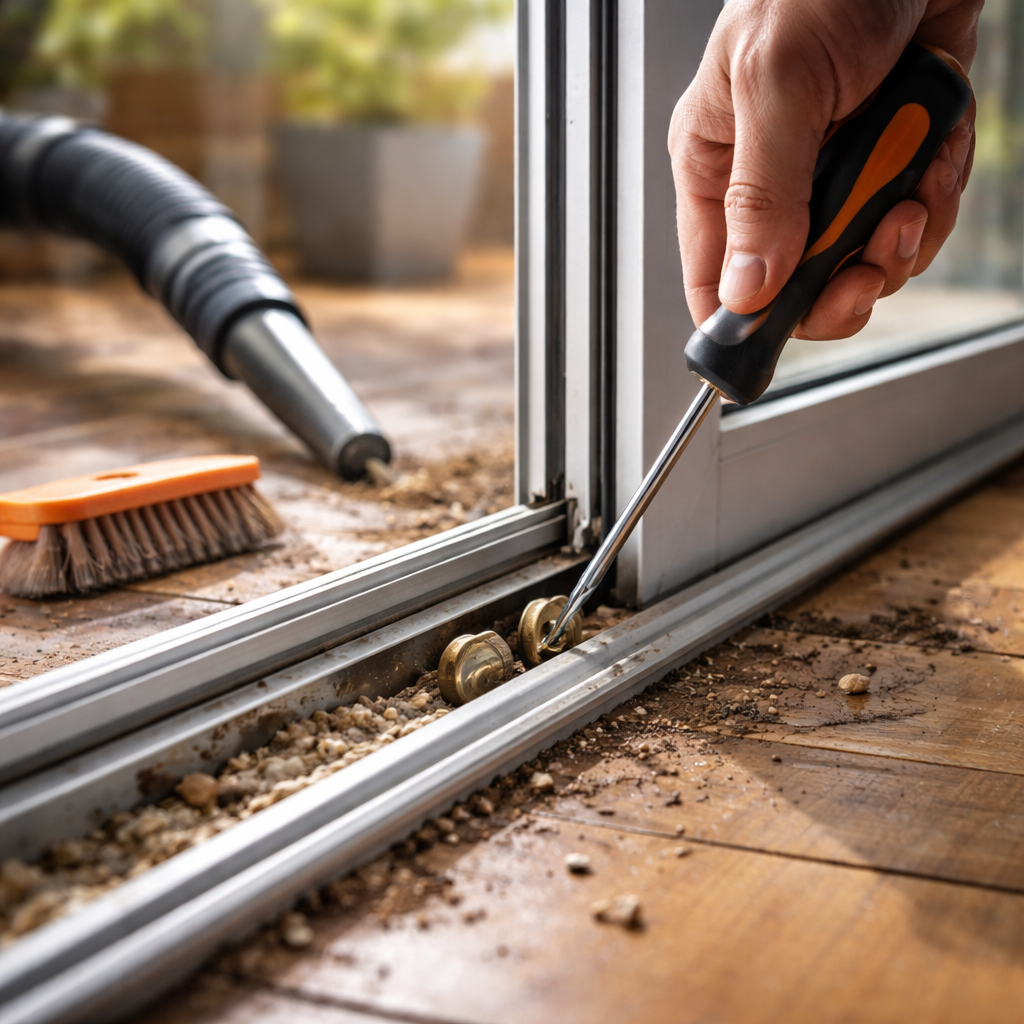
The bottom track on a sliding door is a dirt magnet. Sand, pet hair, leaves, and general household grime pack into the channel and create physical resistance that rollers can’t overcome. The fix here is straightforward, but it needs to be done properly.
- Use a stiff-bristle brush or an old toothbrush to loosen compacted debris from the track channel
- Vacuum out the loosened material thoroughly before adding any lubrication
- Wipe down the track with a damp cloth to remove fine dust and grime residue
- Apply a silicone-based lubricant along the entire length of the track — avoid WD-40, which attracts more dirt over time
- Test the door slowly before applying a second pass of lubricant if needed
One thing many people skip: cleaning the top track as well. The upper channel guides the door’s alignment, and built-up grime there can cause the door to tilt and drag against the frame.
Adjusting the Rollers — The Overlooked Fix
If cleaning the track doesn’t solve the problem, the rollers are the next place to look. Most sliding glass doors have adjustable rollers, accessible through small holes or slots at the bottom edge of the door panel. This is where a Phillips-head screwdriver becomes your best tool.
Roller height adjustment is one of the most underused fixes in home maintenance. Turning the adjustment screw just a quarter turn can completely transform how a door moves.
Turning the adjustment screw clockwise typically raises the door, while counterclockwise lowers it. The goal is to get the door sitting evenly in the track — high enough to glide freely, low enough to stay aligned with the frame. If the door scrapes along the top of the frame, you need to raise it. If it drags heavily on the bottom track, lower it slightly.
Do this adjustment gradually and test after each quarter turn. Having a second person hold the door steady while you adjust makes the process significantly easier.
When Rollers Are Damaged Beyond Adjustment
Sometimes adjustment isn’t enough because the rollers themselves are cracked, flattened, or corroded. This is especially common in doors exposed to coastal air or high humidity environments. Replacement rollers are widely available at hardware stores and are sold by door brand or roller diameter.
| Symptom | Likely Cause | Recommended Action |
|---|---|---|
| Door grinds and stutters | Debris in track or damaged roller | Clean track, inspect rollers |
| Door is heavy and hard to push | Worn rollers or misalignment | Adjust roller height, replace if worn |
| Door lifts unevenly on one side | One roller damaged or stuck | Replace the affected roller |
| Door scrapes against frame | House settling or roller height issue | Adjust rollers, check frame alignment |
| Door won’t move at all | Track blockage or warped frame | Deep-clean track, assess frame |
To replace rollers, you’ll need to remove the door from the track entirely. Lift the door up into the top channel first, then angle the bottom out and away. Lay the door on a padded surface to avoid glass damage. Rollers typically snap or screw into place — check your door’s model before purchasing replacements to ensure compatibility.
Dealing With a Warped Frame or Off-Track Door
If the door frame itself has warped — due to wood swelling, house foundation movement, or long-term moisture exposure — the issue goes beyond rollers and tracks. You’ll notice this if the door consistently binds at the same point regardless of how clean or well-lubricated the track is.
Minor warping can sometimes be addressed by adjusting the door’s strike plate or weatherstripping to reduce friction points. More significant warping may require professional assessment, particularly if the surrounding wall structure is involved.
An off-track door — one that has completely jumped its rollers — looks alarming but is often fixable without professional help. Lift the door back into the upper track channel, then carefully seat the bottom rollers back onto the lower track. Move slowly and make sure both rollers engage simultaneously to avoid re-derailing the door.
Practical Tips to Keep Your Door Moving Smoothly
A few minutes of maintenance every season can add years to a sliding door’s smooth operation — and save you from a full replacement down the road.
- Lubricate the track and rollers at least twice a year using silicone spray or a dry PTFE lubricant
- Keep the bottom track clear of sand and gravel, especially after outdoor foot traffic
- Check the door’s alignment after any significant temperature swings, as frames expand and contract seasonally
- Inspect weatherstripping annually — worn seals can create drag against the door frame
- Avoid forcing a stuck door open with excessive pressure, as this can bend the track or crack the rollers further
What to Do When DIY Reaches Its Limit
Most stuck sliding door problems fall well within the reach of an average homeowner with basic tools and a bit of patience. However, if the glass panel itself is cracked, the frame is severely bent, or the track has been damaged from forced operation, it’s worth calling a door specialist. Attempting to repair a structurally compromised sliding door can pose a genuine safety risk, particularly with large or heavy glass panels.
The good news: in the vast majority of cases, a thorough track cleaning, a roller adjustment, and proper lubrication are all it takes to bring a stuck door back to life. The door hasn’t necessarily failed — it just needs a little attention to do what it’s designed to do.
