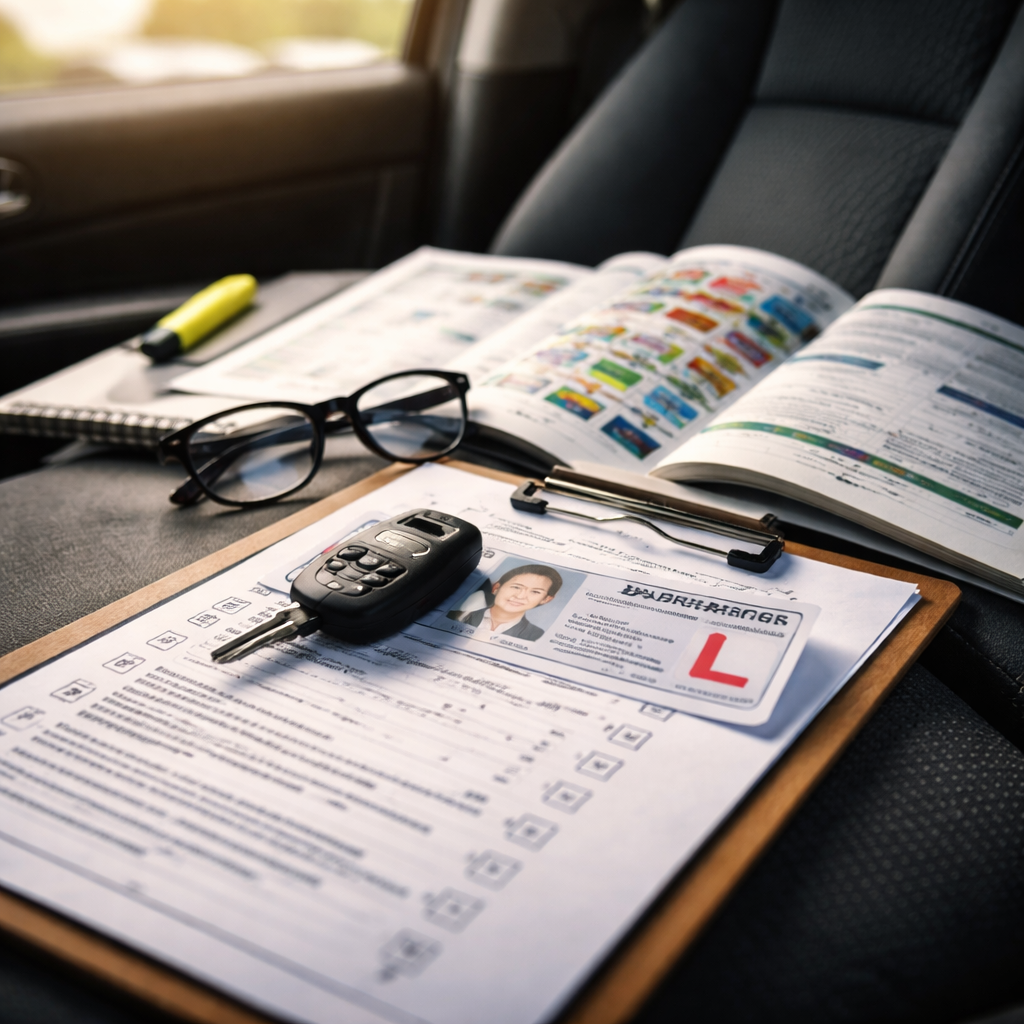
Most people underestimate how much preparation actually goes into getting a driver’s license — and then wonder why they failed the test on the first attempt. The process is more structured than it looks, and knowing each step in advance makes a real difference between passing confidently and repeating the whole thing from scratch.
What the licensing process actually looks like
In most countries, obtaining a driver’s license follows a similar pattern: a learner’s permit stage, a period of supervised or independent practice, a theory test, and a practical driving exam. The exact sequence and requirements vary depending on where you live, but the core logic is consistent — you need to demonstrate both theoretical knowledge and actual driving ability before getting behind the wheel on your own.
In the United States, for example, the process is regulated at the state level, so requirements differ from one state to another. In the UK, you apply for a provisional licence, pass a theory test (including a hazard perception section), and then take a practical driving test with an approved examiner. In most European countries, you go through a certified driving school, complete a set number of mandatory lessons, and pass both written and on-road examinations.
Starting with the learner’s permit
Before you can legally practice driving on public roads, you typically need a learner’s permit or provisional licence. This document confirms that you’re in the process of learning and allows you to drive under specific conditions — usually with a licensed adult in the passenger seat.
To get a learner’s permit, you’ll generally need to:
- Provide proof of identity and residency
- Pass a basic vision test
- Pass a written knowledge test covering traffic rules and road signs
- Pay an administrative fee
The knowledge test isn’t something you should walk into unprepared. Most licensing authorities provide an official driver’s handbook — read it carefully, take practice tests online, and don’t rush this part. A solid understanding of traffic laws will also help you during the practical exam, not just the written one.
How to prepare for the driving test
This is where most people either succeed confidently or struggle unnecessarily. Structured preparation matters more than simply accumulating hours behind the wheel.
Experienced driving instructors consistently say that the quality of practice sessions matters far more than the total number of hours. Twenty hours of focused, varied driving is worth more than fifty hours of the same familiar route.
Here’s what effective preparation looks like in practice:
| Area of focus | Why it matters |
|---|---|
| Parallel parking and reverse maneuvers | Commonly tested and often where candidates lose points |
| Merging onto highways and roundabouts | Requires confident speed judgment and awareness of other drivers |
| Emergency stops | Tested in many countries, including the UK and Ireland |
| Checking mirrors and blind spots | Examiners observe your eye movement — this is non-negotiable |
| Road sign recognition | You’ll encounter real signs during the test and must react correctly |
If you’re using a certified driving school, your instructor will guide you through all required maneuvers. If you’re practicing with a family member or friend, make sure they’re actually aware of current traffic rules — bad habits are easy to absorb without realizing it.
The theory test — more than just memorizing answers
Many candidates treat the theory test as a box to check rather than a genuine learning stage. That’s a mistake. A strong understanding of traffic laws directly improves how you perform during the practical test and, more importantly, how you drive for the rest of your life.
Most theory tests cover the following areas:
- Road signs and their meanings
- Right of way rules at intersections and roundabouts
- Safe following distances and speed limits
- Rules around alcohol, medication, and driving
- What to do in the event of an accident
- Hazard perception (in countries where this section is included)
Official practice tests from your country’s driving authority are the most reliable study resource. Third-party apps and websites can supplement your preparation, but always verify that the material is up to date and relevant to your specific region.
On the day of the practical exam
Nerves are completely normal, but they shouldn’t be the reason you fail. A few things that help candidates perform at their best on test day:
- Sleep well the night before — fatigue affects reaction time and decision-making
- Arrive early so you have time to settle, not scramble
- Do a short warm-up drive before the test if your schedule allows
- Listen carefully to the examiner’s instructions and don’t hesitate to ask for clarification
- If you make a minor error, keep driving calmly — one mistake doesn’t automatically mean failure
Examiners are not looking for a perfect driver. They’re assessing whether you’re safe, aware, and in control. Consistent mirror checks, smooth braking, appropriate speed, and clear communication through signals — these are the habits that get you through.
After the test — what happens next
If you pass, congratulations — but the learning doesn’t stop there. New drivers statistically have a higher risk of accidents in the first year, not because they don’t know the rules, but because real-world driving involves unpredictable situations that no test can fully replicate. Driving on unfamiliar roads, in heavy rain, at night, or in dense city traffic are all different experiences from a standard test route.
If you don’t pass on the first attempt, it’s worth understanding exactly where you lost points before booking the next test. Most examiners provide a written breakdown of the result. Use that feedback specifically — targeted practice on weak areas is far more effective than simply repeating the full test experience without changing anything.
The license is the beginning, not the destination
A driver’s license gives you legal permission to drive independently — but becoming a genuinely competent driver is a longer process. Defensive driving courses, night driving practice, and experience across different road types all contribute to real-world skill that goes well beyond what any exam measures. Many experienced drivers recommend continuing to challenge yourself with new driving scenarios even after passing, rather than settling into a narrow comfort zone of familiar routes and conditions.
The road ahead is wide open — and knowing how to navigate it well starts with taking each stage of the licensing process seriously, not just as a hurdle to clear, but as a foundation worth building carefully.
