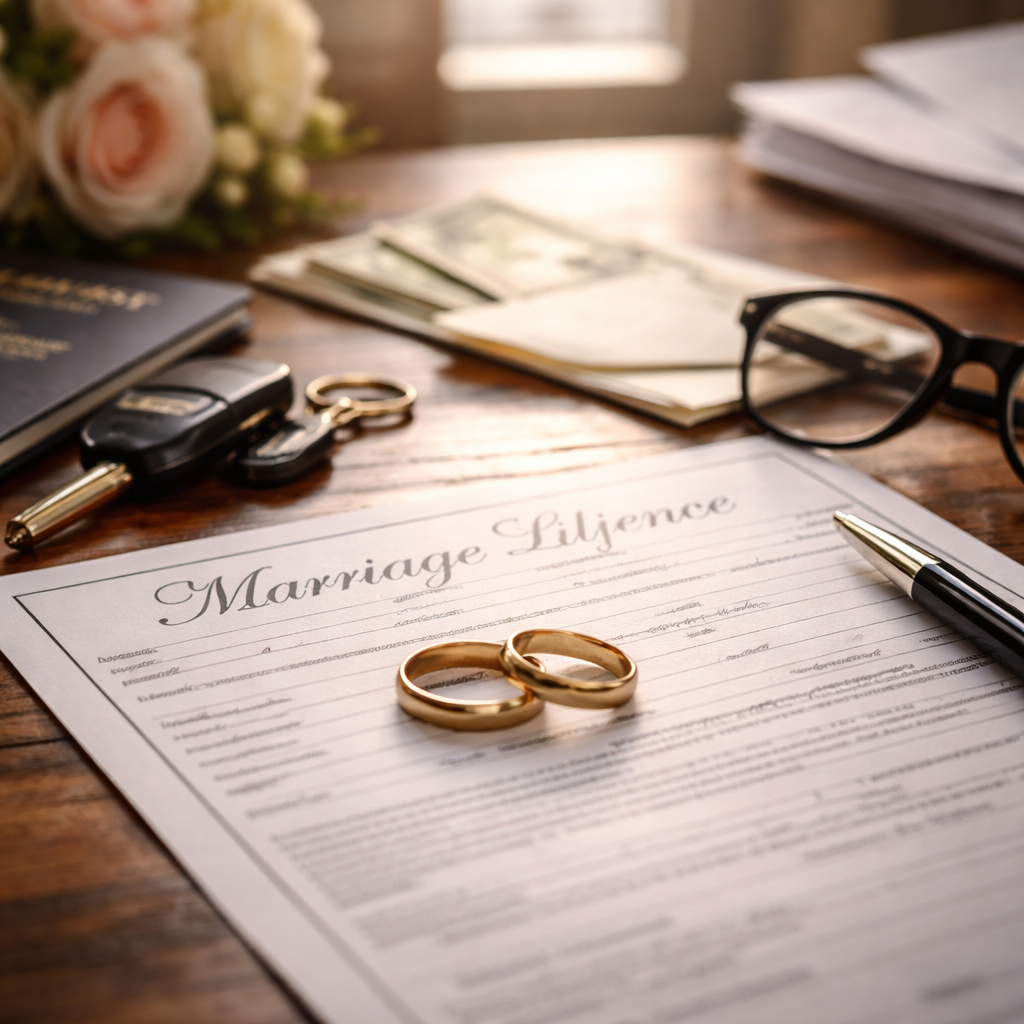
Planning a wedding involves dozens of moving parts, but knowing how to get a marriage license is one step you simply cannot skip — and it is often more straightforward than people expect. The process varies by location, but the core requirements are similar across most jurisdictions, and understanding them early saves you from last-minute stress.
What a marriage license actually is (and why it matters)
A marriage license is a legal document issued by a government authority — typically a county clerk’s office or a registrar — that gives two people official permission to marry. Without it, your ceremony has no legal standing, regardless of how beautiful it was or how many guests attended. Think of it as the administrative foundation beneath the emotional event.
It is worth knowing the difference between a marriage license and a marriage certificate. The license is what you obtain before the ceremony. The certificate is what you receive afterward, once the officiant and witnesses have signed the document and it has been filed with the appropriate authority. Both matter, but they serve different purposes at different stages.
Where to apply and what to bring
In most countries and U.S. states, you apply for a marriage license at your local county clerk’s office, city hall, or a designated civil registry office. Many jurisdictions now offer online appointment scheduling, which makes the process considerably smoother.
Before you head in, gather the documents that are commonly required. While exact requirements differ by location, you will almost always need the following:
- Valid government-issued photo ID (passport or driver’s license)
- Proof of age (birth certificate in some jurisdictions)
- Social Security number (required in the U.S.)
- Proof of divorce or death certificate if either applicant was previously married
- Payment for the license fee (typically between $25 and $100 in the U.S.)
Both partners usually need to appear in person together, though some jurisdictions allow one person to apply on behalf of both. Check with your local office to confirm what is required in your specific area before making the trip.
Waiting periods and expiration dates
Two timing factors catch many couples off guard. The first is the waiting period — some states require you to wait a set number of days after receiving the license before you can legally marry. In some U.S. states this is three days; in others there is no waiting period at all.
Always apply for your marriage license with enough lead time to account for any mandatory waiting period in your jurisdiction. Missing this window can delay your entire ceremony.
The second factor is expiration. A marriage license is not valid indefinitely. Most licenses expire between 30 and 90 days after issuance, depending on where you live. If you do not use it within that window, you will need to apply again and pay the fee a second time. Schedule your application accordingly — not too early, and not too late.
| Factor | Typical Range | What to Do |
|---|---|---|
| Waiting period | 0–6 days | Check your state or country rules |
| License validity | 30–90 days | Time your application carefully |
| Application fee | $25–$100 (U.S.) | Bring cash or card as accepted |
| Processing time | Same day to a few days | Book an appointment in advance |
Special situations worth knowing about
Not every application follows a standard path. Certain circumstances require additional steps or documentation, and it helps to know about them in advance.
If one or both applicants are under the legal marriage age (which is 18 in most U.S. states), parental consent and sometimes a court order may be required. Rules around this vary significantly by jurisdiction and are subject to ongoing legislative changes.
For couples where one or both partners are foreign nationals, additional documentation such as a valid visa, a certificate of no impediment, or translated and apostilled documents from another country may be necessary. This is particularly relevant for destination weddings or international couples marrying abroad.
Same-sex couples are legally permitted to marry and obtain a marriage license in all U.S. states following the Supreme Court’s ruling in Obergefell v. Hodges, as well as in many other countries worldwide. The application process is identical regardless of the genders of the applicants.
A practical tip that most guides overlook
After the ceremony, do not leave the signed license sitting in a drawer. The officiant is typically responsible for submitting it to the appropriate government office within a set number of days. Confirm this with your officiant before the wedding day, because if the document is not filed correctly, your marriage may not be legally recorded — even if the ceremony went perfectly.
Once the license has been filed, you can request certified copies of your marriage certificate. These copies are what you will actually use for legal purposes — changing your name on a passport, updating bank accounts, adjusting beneficiaries on insurance policies, and similar tasks. Order at least two or three copies when you request them, as different institutions often require an original certified copy rather than a photocopy.
Before you book the venue, sort the paperwork
Couples frequently focus so much energy on the celebration itself that the legal side feels like an afterthought. But the license is the one non-negotiable element — the flowers, the cake, the dress can all be changed, but without a valid marriage license properly filed, none of it counts in the eyes of the law.
Visit your local clerk’s office website or call ahead to verify the exact requirements for your jurisdiction. Requirements change, offices move, and fee amounts are updated periodically. Getting this right early means one less thing to think about as your wedding day approaches, and it sets a calm, organized tone for everything that follows.
