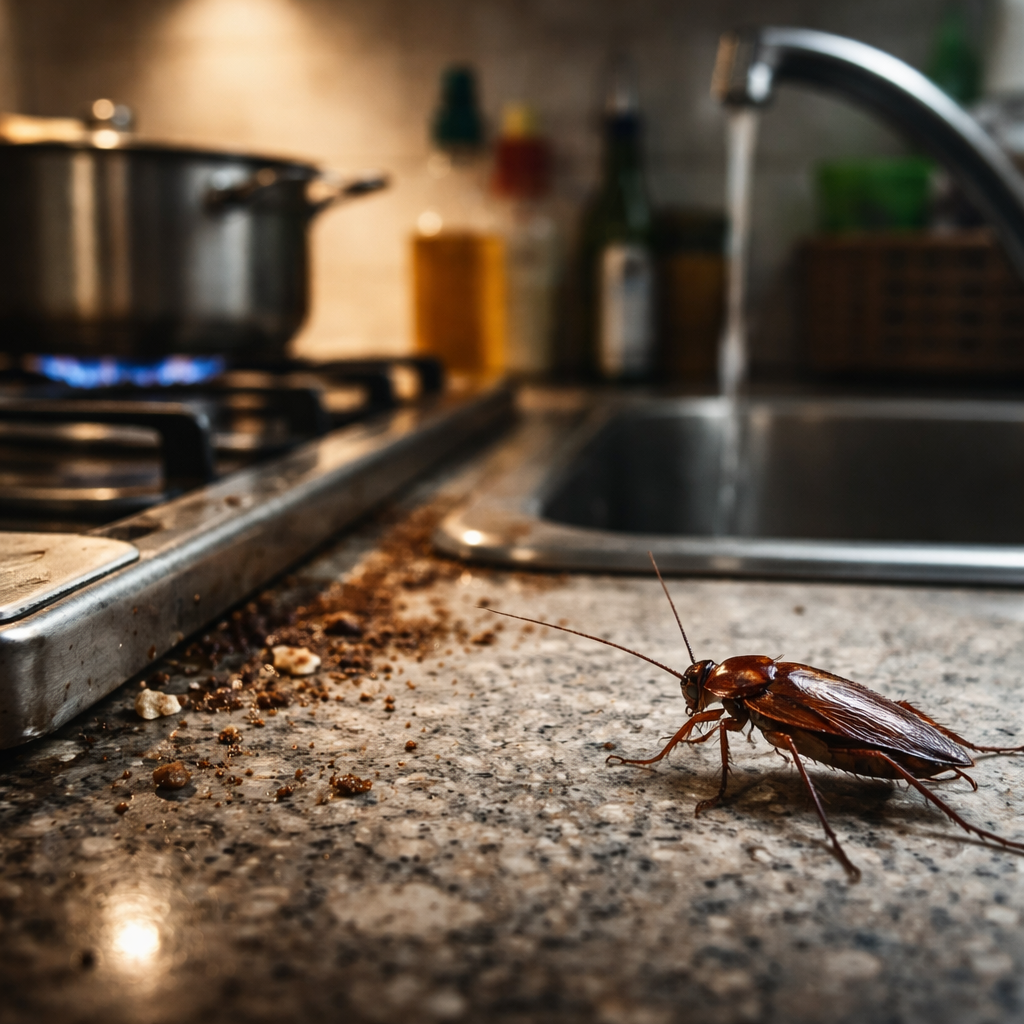
Finding a cockroach near your stove or sink is one of those moments that instantly changes your priorities for the day. If you’re seriously looking into how to get rid of cockroaches in the kitchen, you’re not alone — and more importantly, there are proven, practical ways to solve this problem without turning your home into a chemical hazard zone.
Why the kitchen is their favorite place
Cockroaches aren’t random. They don’t show up in your bedroom or bathroom nearly as often as they do in the kitchen, and there’s a clear reason for that. The kitchen offers everything they need to survive: food residue, moisture, warmth from appliances, and dark narrow gaps behind cabinets and under the refrigerator. Even a spotless-looking kitchen can harbor an infestation if there are crumbs behind the stove or a slow drip under the sink.
The most common species found in kitchens are the German cockroach and the American cockroach. German cockroaches are smaller, reproduce faster, and are significantly harder to eliminate — they thrive in warm, humid indoor environments and can become resistant to certain pesticides over time.
Start with sanitation — not sprays
Most people reach for a spray can the moment they spot a cockroach. That’s understandable, but it addresses the symptom rather than the cause. Pest control professionals consistently point out that chemical treatments without sanitation improvements will only provide temporary relief.
“An infestation will always return if the conditions that attracted cockroaches in the first place haven’t changed.”
Here’s what to focus on before anything else:
- Store all food — including dry goods like flour, rice, and cereal — in sealed containers. Cardboard packaging is not a barrier for cockroaches.
- Empty the trash daily, or use a bin with a tight-fitting lid.
- Clean up grease buildup around the stove and oven regularly. Grease is a food source.
- Don’t leave dirty dishes in the sink overnight.
- Fix any leaking pipes or faucets. Cockroaches can survive weeks without food but only days without water.
- Seal cracks and gaps in walls, baseboards, and around pipes using caulk.
These steps won’t eliminate an existing population on their own, but they will make every other method you use far more effective — and prevent new cockroaches from establishing themselves.
Effective treatment methods compared
Once the environment is less hospitable, it’s time to actively reduce the population. There are several approaches, each with different levels of effectiveness depending on the severity of the infestation.
| Method | Best for | Effectiveness | Safety near food areas |
|---|---|---|---|
| Gel bait (e.g., Advion) | German cockroaches, early-to-mid infestations | High | Yes, when applied correctly |
| Boric acid powder | Hard-to-reach areas, ongoing control | Moderate to high | Use with caution, keep away from food surfaces |
| Insect growth regulators (IGR) | Preventing reproduction | High (long-term) | Generally safe indoors |
| Contact spray insecticides | Immediate knockdown | Low (no residual effect) | Keep away from food and prep surfaces |
| Sticky traps | Monitoring and light infestations | Low to moderate | Safe |
Gel bait is widely regarded by pest management professionals as one of the most effective tools against German cockroaches specifically. It works by attracting cockroaches to consume a slow-acting insecticide, which they then spread to other members of the colony through contact and fecal matter. Small dots of gel placed inside cabinet hinges, along the back of drawers, and under the refrigerator can dramatically reduce a population within one to two weeks.
A note on boric acid
Boric acid has been used for cockroach control for decades and remains effective when applied properly. The key word is “properly.” A common mistake is applying too much of it — cockroaches will avoid large visible piles. A thin, barely visible layer in areas where cockroaches travel (behind appliances, inside cabinet voids, under the sink) is far more effective than a heavy dusting.
Keep boric acid away from food preparation surfaces and out of reach of pets and children. It has low toxicity to mammals but should still be handled responsibly.
When to call a professional exterminator
There’s no shame in recognizing when a problem is beyond DIY solutions. A large infestation — one where cockroaches are visible during the day, or where you’re finding egg cases (oothecae) regularly — often requires professional treatment. Pest control technicians have access to commercial-grade products and can identify entry points and harborage areas that are easy to miss.
If you live in an apartment building, the situation is more complex. Even with perfect sanitation and treatment in your own unit, cockroaches can migrate from neighboring units. In that case, reporting the issue to building management and coordinating a building-wide treatment is essential.
Natural deterrents — helpful additions, not standalone solutions
Several natural options are frequently mentioned online: diatomaceous earth, essential oils like peppermint or eucalyptus, cedar, and bay leaves. The honest take on these is that they can play a supporting role, but none of them will eliminate an active cockroach infestation on their own.
Diatomaceous earth (food-grade) can be effective as a physical deterrent when applied in dry conditions — it damages the exoskeleton of insects and causes dehydration. However, it loses effectiveness in humid environments, which is often the exact condition in kitchens.
Think of natural deterrents as the last line of defense after you’ve already addressed sanitation and used primary treatments — not the other way around.
Keeping them out for good
Once you’ve dealt with an infestation, maintaining a cockroach-free kitchen is mostly about consistency. A few habits go a long way:
- Inspect grocery bags and cardboard boxes before bringing them inside — cockroaches and their eggs hitchhike into homes this way more often than people realize.
- Check secondhand appliances and furniture before placing them in your kitchen.
- Keep up with sealing gaps and cracks, especially after any renovation or repair work.
- Use sticky monitoring traps periodically to catch any new activity early, before it grows into a problem.
Cockroach control isn’t a one-time event. It’s an ongoing process of reducing attractants, eliminating entry points, and staying observant. The good news is that once you’ve broken the cycle of infestation and removed what was drawing them in, maintaining that state is far less work than getting there in the first place.
