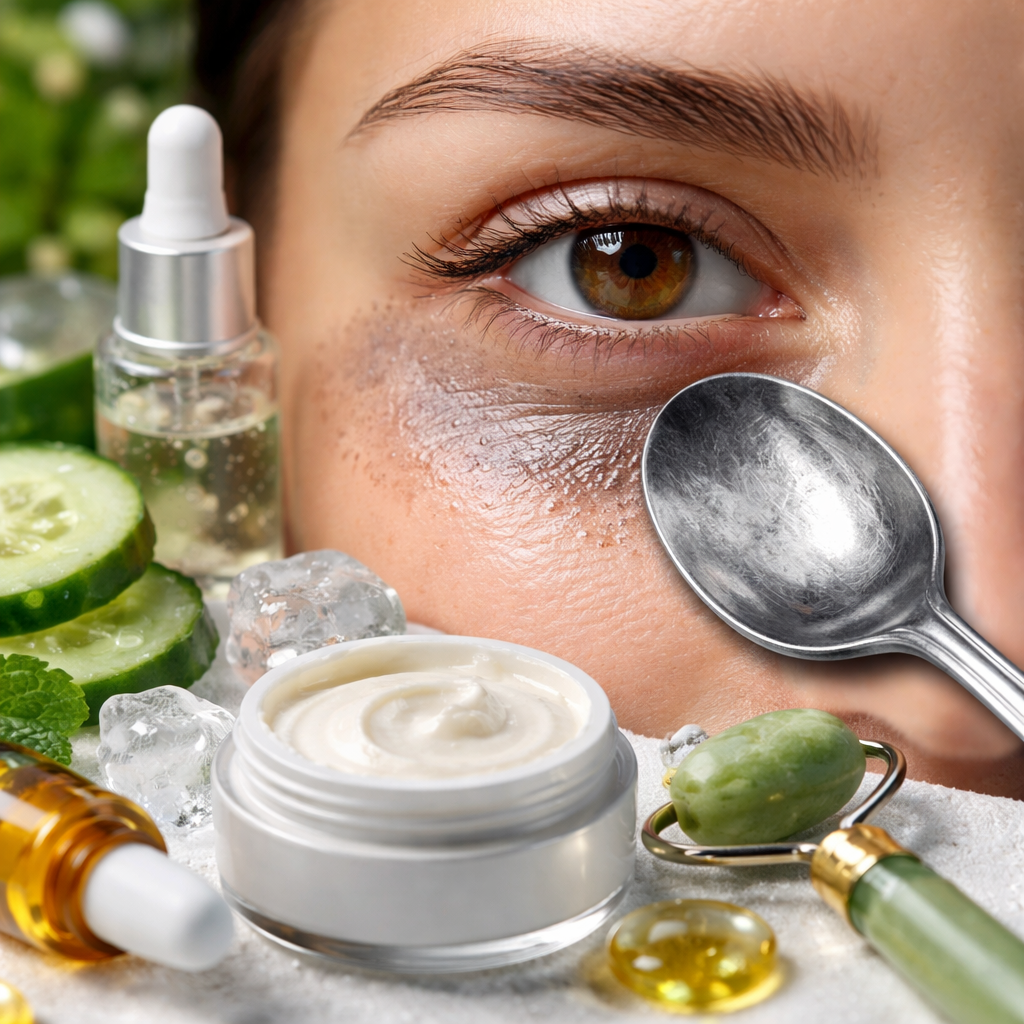
Most people who struggle with dark circles under eyes have already tried cold spoons, cucumber slices, or expensive creams — only to find the shadows still there the next morning. That’s because effective treatment starts with understanding what actually causes them, and that answer isn’t the same for everyone.
Why the skin under your eyes behaves differently from the rest of your face
The skin beneath the eyes is roughly four times thinner than skin elsewhere on the face. This makes it uniquely vulnerable to showing blood vessels, pigmentation changes, and puffiness. The under-eye area also has fewer sebaceous glands, which means it dries out faster and shows signs of fatigue more visibly. Understanding this helps explain why a one-size-fits-all solution rarely works.
Dermatologists generally group dark circles into three categories based on their origin: vascular (caused by blood vessels showing through thin skin), pigmented (caused by excess melanin), and structural (caused by hollowness or shadow from the tear trough area). Identifying which type you’re dealing with shapes everything that follows.
The real triggers most people overlook
Sleep deprivation is the most commonly blamed culprit, and while it does play a role, it’s far from the only one. Genetics, seasonal allergies, iron deficiency, dehydration, and prolonged screen time all contribute in different ways. Even sleeping on your stomach can worsen puffiness and discoloration by allowing fluid to pool around the eyes overnight.
- Chronic allergies cause repeated rubbing and inflammation, which breaks down capillaries and triggers pigmentation
- Iron-deficiency anemia reduces oxygen in blood, making vessels beneath the skin appear darker
- High sodium intake leads to water retention that creates puffiness and shadow
- Sun exposure stimulates melanin production specifically in this delicate area
- Smoking accelerates skin thinning, making vascular discoloration more visible
What actually works: evidence-backed approaches
Once you know the root cause, the approach becomes much more targeted. For vascular dark circles, ingredients that strengthen capillaries and reduce blood pooling show the strongest results. For pigmented circles, lightening and exfoliating compounds are more relevant. For structural shadows, topical products alone won’t be enough — the solution lies in restoring volume or improving facial positioning during sleep.
| Type of dark circle | Most effective approach | Key ingredients or methods |
|---|---|---|
| Vascular (bluish-purple) | Strengthening capillary walls, improving circulation | Vitamin K, caffeine, retinol |
| Pigmented (brownish) | Reducing melanin production | Niacinamide, kojic acid, vitamin C |
| Structural (shadowing) | Restoring volume or changing habits | Hyaluronic acid fillers, sleep position change |
Skincare ingredients worth your attention
Not every ingredient marketed for the eye area delivers on its promise. A few, however, have consistent clinical backing. Retinol stimulates collagen production and thickens the skin over time, reducing the translucency that makes vessels visible. It should be introduced gradually and only used at night due to photosensitivity.
Vitamin C in a stable formulation inhibits melanin synthesis and brightens discoloration caused by sun damage or post-inflammatory hyperpigmentation. Caffeine temporarily constricts blood vessels and reduces puffiness — which is why eye creams with caffeine tend to show a visible (if temporary) improvement shortly after application. Niacinamide, a form of vitamin B3, works on multiple fronts: it reduces pigmentation, strengthens the skin barrier, and calms inflammation from allergies or irritation.
Consistency matters more than the price tag. A modest product used daily for several weeks will outperform an expensive one applied occasionally.
Daily habits that compound over time
Topical products can only do so much if the underlying lifestyle factors remain unchanged. These adjustments may sound familiar, but their combined effect on the under-eye area is genuinely significant when maintained over weeks and months.
- Elevate your head slightly while sleeping to prevent fluid accumulation around the eyes
- Apply broad-spectrum SPF daily, including the under-eye area, to prevent UV-triggered melanin production
- Stay consistently hydrated — dehydration makes the skin appear more hollow and sallow
- Treat seasonal allergies proactively rather than reactively to reduce rubbing and inflammation
- Limit alcohol intake, which disrupts sleep quality and causes vasodilation
Cold compresses remain a legitimate short-term strategy. Applying something cool to the area for five to ten minutes reduces swelling and temporarily constricts vessels. This won’t address the root cause, but it’s a reliable option before an important event or when puffiness is particularly noticeable in the morning.
When to consider professional options
For people with significant structural hollowing or stubborn pigmentation that doesn’t respond to topical care, in-office treatments offer more substantial results. Hyaluronic acid fillers injected into the tear trough area restore lost volume and eliminate shadow — the effects typically last anywhere from nine months to over a year. This is a medical procedure and should only be performed by a licensed and experienced practitioner.
Chemical peels with ingredients like glycolic acid or trichloroacetic acid address surface pigmentation. Laser treatments, particularly those targeting hemoglobin or melanin, are used by dermatologists to reduce vascular or pigmented discoloration respectively. These are not first-line solutions, but they’re worth knowing about for cases where lifestyle and skincare changes haven’t produced sufficient improvement.
What to set as a realistic expectation
Dark circles rarely disappear overnight, and for some people — especially those with a genetic predisposition or significant volume loss — complete elimination may not be achievable through topical means alone. That said, meaningful improvement is realistic for the majority of people who approach this consistently and target the right type of discoloration with the right tools.
It helps to track changes with photos taken in consistent lighting, since subtle improvements in skin tone and texture can be difficult to notice day by day. Most active ingredients take at least four to eight weeks of regular use before visible results appear. Patience here isn’t a cliché — it’s just how skin biology works.
The most practical starting point is simple: figure out which type of dark circle you have, address any underlying health or lifestyle factors, pick two or three evidence-backed ingredients appropriate for your specific concern, and apply them consistently. That approach will take you further than any single miracle product ever could.
