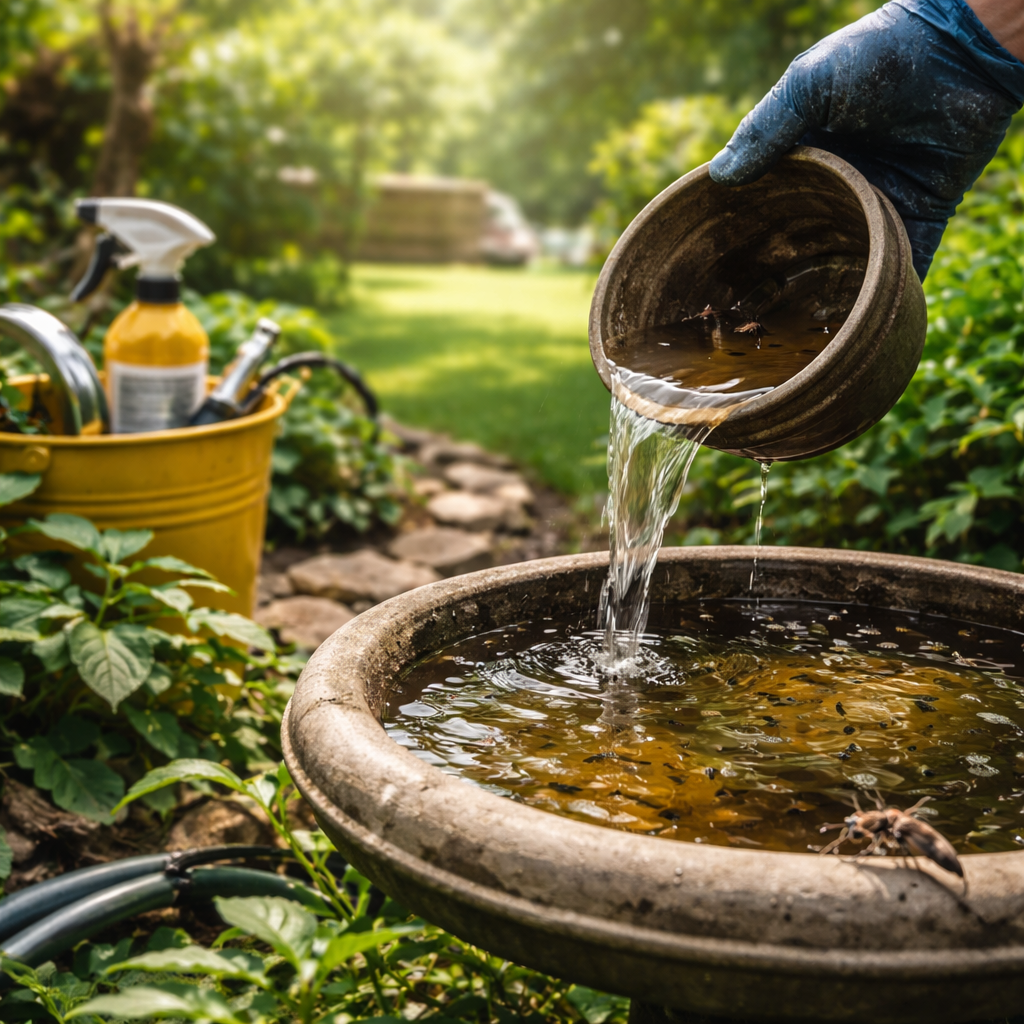
Most mosquito control efforts fail not because the methods are wrong, but because they target the wrong stage of the mosquito life cycle. If you’re trying to figure out how to get rid of mosquitoes in the yard, the most effective approach combines eliminating breeding sources with targeted treatments — and understanding which tactics actually work versus which ones are just popular myths.
Why Your Yard Becomes a Mosquito Magnet
Mosquitoes don’t appear randomly. Female mosquitoes need standing water to lay eggs — and they don’t need much of it. A bottle cap with water left outside for several days can become a viable breeding site. Beyond water, they’re drawn to dense vegetation, shaded areas, and warmth. Understanding this helps explain why your backyard may feel like a feeding ground while your neighbor’s seems mosquito-free.
Common yard features that quietly support mosquito populations include clogged gutters, bird baths that aren’t refreshed regularly, low-lying areas where rainwater pools, decorative pots without drainage, and even dense leaf litter that retains moisture. Before applying any treatment, doing a proper inspection of your property is essential.
Eliminating Breeding Sites: The Foundation of Mosquito Control
No spray or trap will give you lasting relief if mosquitoes keep reproducing in your yard. Source reduction — removing standing water and fixing drainage problems — is the single most impactful step you can take.
- Empty and scrub bird baths every 2–3 days to disrupt the mosquito egg cycle
- Clean out gutters at least twice a year and after heavy leaf fall
- Fill or grade low spots in the lawn where water collects after rain
- Store containers, buckets, and tarps upside down when not in use
- Change water in pet bowls daily
- Drill drainage holes in the bottom of decorative planters
For water features you want to keep — like ponds or rain barrels — there are biological solutions that won’t harm your garden or pets.
Bacillus thuringiensis israelensis (Bti) is a naturally occurring soil bacterium that kills mosquito larvae without affecting other wildlife, fish, or beneficial insects. It’s available as dunks or granules and is widely recommended by public health agencies.
Yard Treatments That Actually Work
Once you’ve addressed standing water, targeted treatments can dramatically reduce the adult mosquito population around your outdoor living spaces. Here’s a breakdown of the most proven options:
| Method | How It Works | Best For |
|---|---|---|
| Insecticide yard spray (pyrethrin-based) | Kills adult mosquitoes on contact and leaves residual protection on foliage | Immediate reduction before outdoor events |
| Mosquito dunks (Bti) | Releases bacteria that kills larvae in standing water | Ponds, rain barrels, water features |
| Oscillating fans | Disrupt mosquito flight and dilute CO2 plumes that attract them | Patios, decks, seating areas |
| Mosquito traps | Use CO2 or heat to lure and capture adult mosquitoes | Large yards, long-term population reduction |
| Barrier treatments (professional) | Timed-release insecticide applied to vegetation around the property | Seasonal control for larger properties |
A few notes on what’s often overhyped: citronella candles provide only very localized and temporary relief — they don’t reduce mosquito populations and are largely ineffective in open or breezy spaces. Similarly, bug zappers primarily kill moths and other insects, not mosquitoes, which are not strongly attracted to UV light.
Plants That Repel Mosquitoes — What the Research Says
There’s a lot of enthusiasm around mosquito-repelling plants, and while some have genuine scientific backing, the results depend heavily on how they’re used. Simply having these plants in your yard provides minimal protection. The active compounds need to be released — usually by crushing or rubbing the leaves.
Plants with documented repellent properties include lemon balm, catnip (which in some studies outperforms DEET in concentrated form), lavender, basil, and rosemary. Planting them near seating areas and occasionally bruising the leaves can add a small but real layer of deterrence when combined with other methods.
Personal Protection for Time Spent Outdoors
Even a well-maintained yard will have some mosquito activity, especially at dusk and dawn when these insects are most active. Personal repellents remain one of the most reliable protective measures available.
DEET (at concentrations between 20–30%) is the most extensively studied repellent and provides long-lasting protection. Picaridin is a newer alternative that works comparably to DEET, has no odor, and doesn’t damage plastics or synthetic fabrics — which makes it popular for outdoor gear. IR3535 and oil of lemon eucalyptus (OLE) are also EPA-registered options with solid safety profiles.
Wearing light-colored, loose-fitting clothing adds another layer of defense. Mosquitoes are visually attracted to dark colors and can bite through tight-fitting fabric more easily.
Building a Yard Routine That Keeps Mosquitoes Away Long-Term
The biggest mistake people make with mosquito control is treating it as a one-time fix. Sustainable results come from a consistent routine rather than occasional intensive efforts.
- Inspect your yard weekly during warm months for new standing water sources
- Refresh Bti dunks in water features every 30 days as directed
- Mow regularly and trim dense shrubs to reduce resting habitat for adult mosquitoes
- Reapply yard sprays after heavy rain, which washes away residual treatments
- Consider introducing mosquito-eating fish like Gambusia (mosquitofish) to ornamental ponds
If mosquito pressure remains high despite consistent effort, professional mosquito control services can conduct a property assessment and apply barrier treatments timed to your local mosquito season. This is particularly useful in regions with long warm seasons or where certain mosquito species — like Aedes albopictus (the tiger mosquito) — are especially aggressive.
The key takeaway: yard mosquito control works best as a layered system. Eliminate breeding habitat, treat remaining water sources biologically, reduce adult populations through targeted sprays or traps, and protect yourself with repellent when you’re outside. Each layer handles what the others miss — and together, they make a meaningful difference in how enjoyable your outdoor space actually is.
