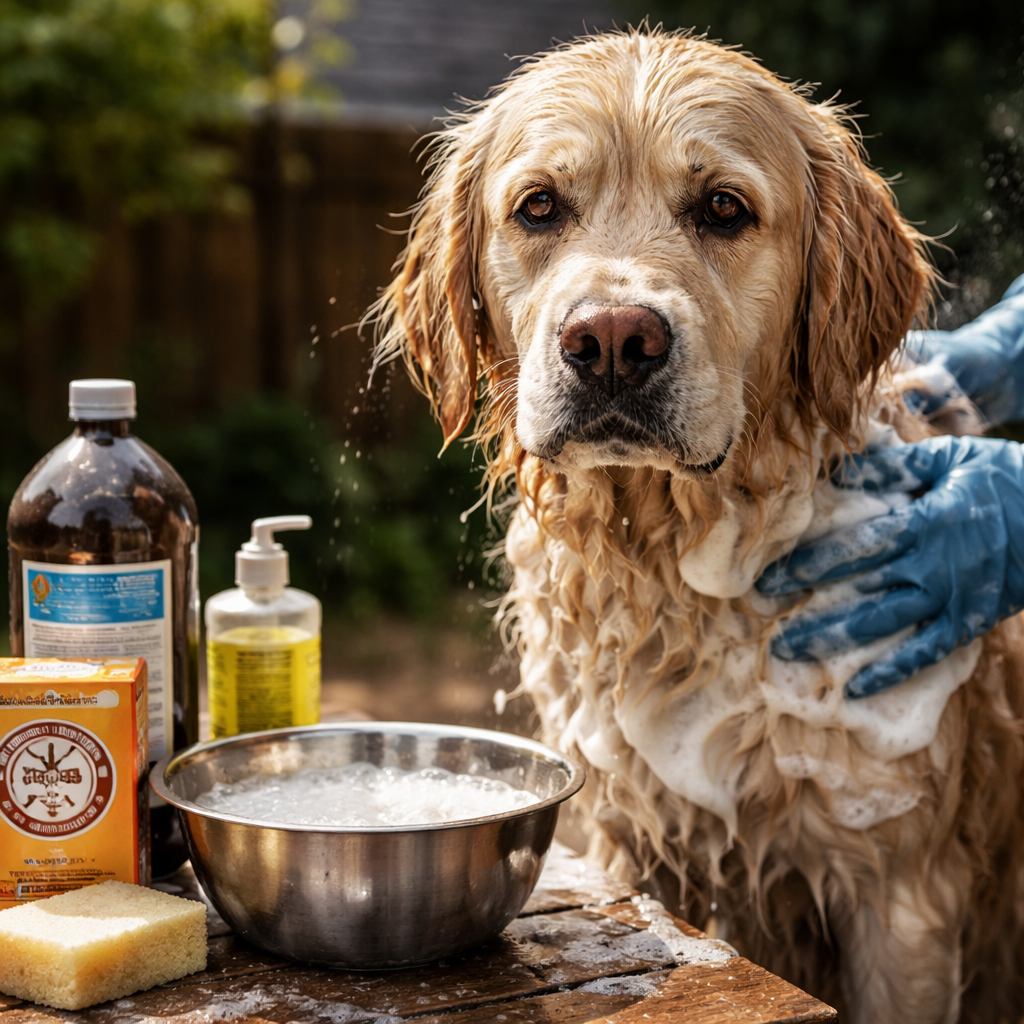
Most dog owners know the sinking feeling — your pet comes bounding back from the yard with that unmistakable, eye-watering cloud around them. Knowing how to get rid of skunk smell on a dog quickly and effectively can save your evening, your furniture, and quite possibly your sanity. The good news is that with the right approach, you do not need a professional groomer or a miracle product. You just need to act fast and understand what you are actually dealing with.
Why skunk spray is so stubborn — and why tomato juice does not help
Skunk spray is not simply a foul odor — it is a sulfur-based chemical compound called thiol. These molecules bind tightly to proteins in your dog’s fur and skin, which is exactly why the smell lingers for days if treated incorrectly. The popular tomato juice remedy does not neutralize thiols. It only masks the scent temporarily and leaves your dog smelling like a confused Italian kitchen. Understanding this chemistry is the first step toward actually solving the problem.
The proven homemade solution that actually works
Veterinarians and animal care specialists widely recommend a specific homemade mixture that chemically breaks down skunk odor compounds. It was developed in the early 1990s and has remained the gold standard for home treatment ever since.
Here is what you need to prepare:
- 1 quart (about 950 ml) of 3% hydrogen peroxide
- 1/4 cup of baking soda
- 1 to 2 teaspoons of liquid dish soap
Mix these ingredients together in an open container — never seal or store this solution, as pressure can build up. Apply it to your dog’s dry coat before wetting the fur, work it in thoroughly, and let it sit for five minutes. Then rinse completely with warm water. Repeat if the smell persists.
Do not get the mixture near your dog’s eyes, nose, or mouth. If the spray hit the face directly, use a damp cloth to gently wipe those areas instead.
Step-by-step process from the moment it happens
Timing and order of actions matter a lot here. Skunk oil spreads quickly, so resist the urge to bring your dog inside first — that transfers the odor to your floors, furniture, and walls instantly.
- Keep your dog outside or in a contained area such as a garage
- Check your dog’s eyes — if they appear red or irritated, rinse them with plain water
- Put on old clothes and rubber gloves before you begin
- Apply the deodorizing mixture to dry fur, concentrating on the sprayed areas
- Work the solution into the coat for at least three to five minutes
- Rinse thoroughly with warm water
- Follow up with your dog’s regular shampoo to clean the coat
- Dry your dog completely, ideally outdoors or with good ventilation
Commercial products worth considering
If you prefer a ready-made option, several commercial skunk odor removers are formulated specifically for pets. These products typically use enzymatic or oxidizing technology to break down odor compounds rather than just covering them.
| Product Type | How It Works | Best For |
|---|---|---|
| Enzymatic cleaners | Break down organic odor molecules | Mild to moderate exposure |
| Oxidizing sprays | Chemically neutralize thiols | Heavy or direct spray |
| Deodorizing shampoos | Cleanse and reduce surface odor | Follow-up treatment after main wash |
Always check that any product you use is labeled as safe for dogs and free from harsh chemicals that could irritate sensitive skin. If your dog has any skin conditions or allergies, consult your veterinarian before applying any new product.
What to do about your dog’s belongings and your home
Even if you treat your dog outside, odor particles may have already made it onto the leash, collar, or your own clothing. These need attention too, otherwise the smell will seem to return even after a successful wash.
For fabric items such as collars, bedding, and your clothes, add half a cup of baking soda to your regular laundry cycle. For hard surfaces inside your home, a diluted white vinegar solution works reasonably well as a surface deodorizer. Ventilate the house by opening windows and running fans — fresh air is one of the most underrated tools in odor removal.
Skunk odor can temporarily cause nausea and eye irritation in both humans and dogs. If your dog was sprayed at close range, monitor them for any signs of vomiting or unusual lethargy and contact a vet if symptoms appear.
Preventing future encounters without limiting your dog’s freedom
Skunks are most active at dawn and dusk, and they tend to forage near areas with food sources — trash bins, compost piles, and fallen fruit from trees. A few practical changes around your yard can significantly reduce the chance of another encounter.
- Secure garbage cans with tight-fitting lids
- Remove any outdoor pet food bowls before nightfall
- Install motion-activated lights near areas where your dog roams unsupervised
- Walk your dog on a leash during early morning and evening hours if skunks are known in your area
- Check your yard before letting your dog out at night
None of these steps are dramatic lifestyle changes, but together they create an environment that is far less attractive to skunks and far less stressful for you as a dog owner.
One last thing before your dog comes back inside
After washing, take a moment to smell different areas of your dog’s coat — the face, neck, chest, and the base of the tail, which is a spot that often gets overlooked. Skunk spray can be uneven, and missing a section means the odor will seem to return within hours as the fur dries. A second wash is not a failure; it is simply part of the process. With patience and the right materials, your dog will be back to their normal, pleasant-smelling self faster than you might expect.
