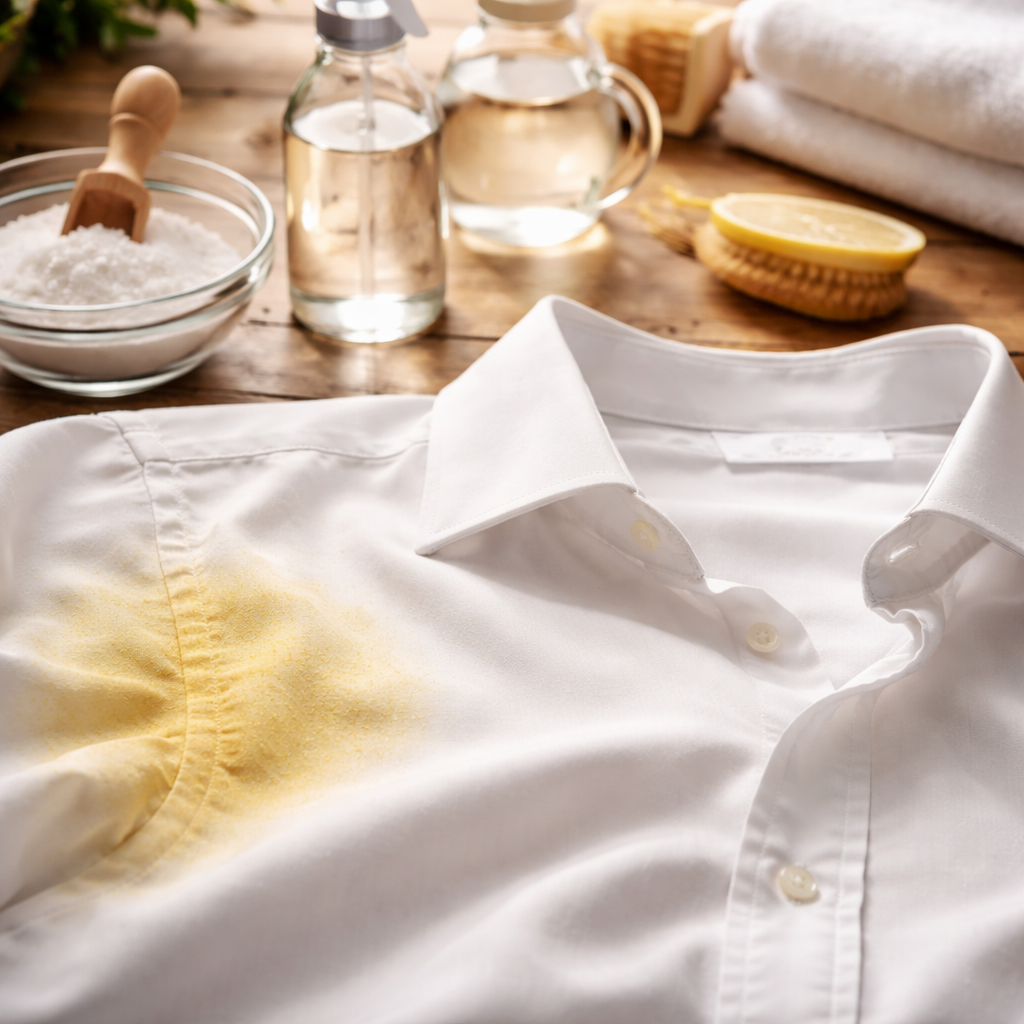
Yellow sweat stains have a way of appearing on your favorite white shirt right before an important occasion — and no amount of regular washing seems to make them disappear. If you want to know how to get rid of yellow sweat stains properly, the short answer is: detergent alone won’t cut it. These stains are caused by a chemical reaction between your sweat — specifically proteins and salts — and the aluminum compounds found in most antiperspirants. That combination bonds to fabric fibers on a deeper level than a standard wash cycle can reach.
Why yellow stains form in the first place
Understanding what you’re actually dealing with makes removing the stains much more effective. Sweat itself is largely colorless, but when it mixes with aluminum-based antiperspirant residue and heat from your dryer, it oxidizes and creates a yellowish-brown buildup. This is why stains often get worse after multiple wash-and-dry cycles — heat sets the stain deeper into the fibers.
The fabrics most vulnerable to this process are cotton, linen, and synthetic blends, especially in lighter colors. Dark fabrics can also develop a chalky white or grayish residue in the same armpit area, which is essentially the same issue in reverse.
What actually works: proven removal methods
There are several effective approaches depending on how stubborn the stain is and what materials you have at home. Starting with the gentlest option and working up to stronger treatments protects the fabric while still getting results.
White vinegar and baking soda paste
This is one of the most reliable methods for everyday stain buildup. White vinegar breaks down mineral deposits and deodorizes the fabric, while baking soda provides a mild abrasive action.
- Mix four tablespoons of baking soda with a quarter cup of white vinegar until it forms a paste.
- Apply it directly to the stained area and let it sit for 30 minutes to an hour.
- Gently scrub with an old toothbrush using circular motions.
- Rinse thoroughly with cold water before washing as normal.
Hydrogen peroxide treatment
For older or more set-in stains, hydrogen peroxide (3% solution, the kind sold in pharmacies) works as a mild bleaching agent that is safe for white and light-colored fabrics. Mix it with dish soap and baking soda in equal parts to create a cleaning solution, apply it to the stain, and leave it for up to an hour before rinsing.
Important: never use hydrogen peroxide on dark or brightly colored garments — it will bleach the dye out of the fabric along with the stain.
Enzyme-based laundry pre-treatments
Commercial enzyme-based stain removers are specifically formulated to break down protein-based stains, which is exactly what sweat residue is. Products containing protease enzymes are particularly effective. Apply the pre-treatment, allow it to penetrate for 15–30 minutes, and then launder the item in warm water (checking the care label first).
| Method | Best for | Soak time | Safe for dark fabrics? |
|---|---|---|---|
| Baking soda + vinegar | Fresh and moderate stains | 30–60 minutes | Yes |
| Hydrogen peroxide mix | Old, set-in stains on light fabrics | Up to 60 minutes | No |
| Enzyme pre-treatment | Protein-based stains, all fabric types | 15–30 minutes | Yes (check label) |
| Lemon juice + sun exposure | Light stains on white cotton | 1–2 hours outdoors | No |
The role of washing temperature and technique
One of the most common mistakes people make is washing stained garments in hot water before pre-treating them. Heat causes proteins to coagulate and bind more tightly to fabric — the same principle that makes scrambled eggs stick to a pan. Always pre-treat first, then wash in cool or warm water depending on the fabric care instructions.
Another overlooked factor is the amount of detergent used. More detergent does not mean cleaner clothes — excess detergent residue can actually attract more buildup over time. Using the recommended amount and adding a half cup of white vinegar to the rinse cycle helps strip away residue without damaging the fabric.
Preventing sweat stains from forming
Once you’ve dealt with existing stains, it makes sense to reduce how often new ones form. A few simple adjustments to your daily routine can make a significant difference.
- Allow your antiperspirant to fully dry before getting dressed — wet product transfers directly onto fabric and accelerates staining.
- Consider switching to an aluminum-free deodorant if staining is a recurring issue. These products won’t prevent sweating the same way, but they eliminate the chemical reaction that causes yellowing.
- Wear an undershirt made of moisture-wicking fabric as a barrier layer between your skin and outer garments.
- Wash clothes promptly after heavy sweating — the longer sweat sits in the fabric, the more oxidation occurs.
When home remedies aren’t enough
Heavily stained garments that have been washed and dried multiple times with the stain still present are genuinely difficult to restore at home. In these cases, a professional dry cleaner who specializes in fabric restoration may be able to treat the fibers using industrial-grade solvents and enzyme solutions not available to consumers.
If a garment has reached the point where the fabric itself has degraded or thinned from repeated harsh scrubbing, no amount of treatment will reverse the physical damage — at that point, the practical choice is accepting the loss and adjusting future laundry habits to protect other items.
Keep your clothes looking the way they should
Yellow armpit stains are frustrating, but they’re also entirely manageable once you understand what’s causing them and how different treatments work. The key is acting before the stain sets, choosing the right method for the fabric, and never letting the dryer do its damage before the stain is fully gone. A little patience and the right combination of household staples — or an enzyme-based product — goes a long way toward keeping your wardrobe in genuinely good shape.
