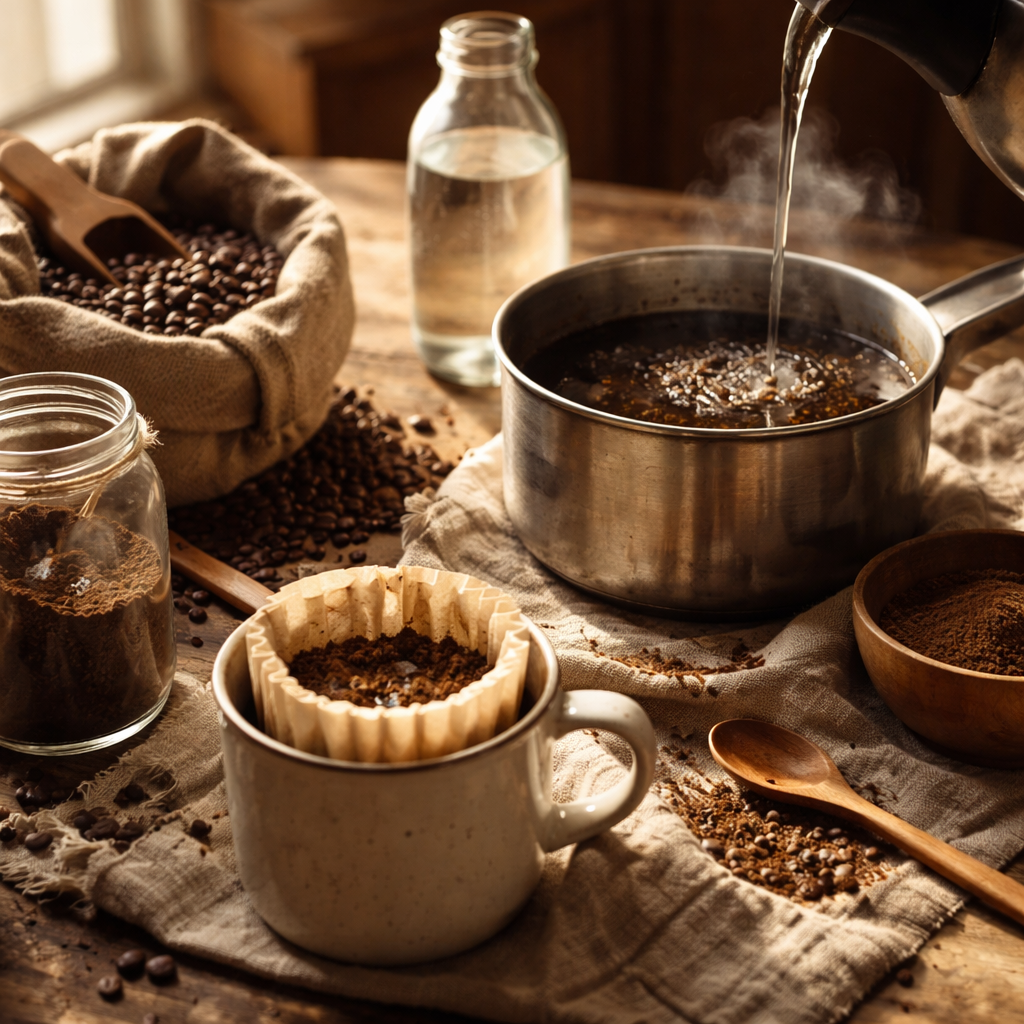
You don’t need any special equipment to brew a great cup — knowing how to make coffee without a coffee maker is one of those practical skills that quietly saves your morning when the machine breaks down, the power goes out, or you’re staying somewhere with a bare-bones kitchen. The good news is that several low-tech methods actually produce coffee that rivals what any countertop appliance can offer.
What You Actually Need Before You Start
Regardless of which method you choose, a few basics stay the same. You need ground coffee, hot water, and something to separate the grounds from the liquid. The grind size matters more than most people realize — coarser grinds work better for steeping methods, while a medium grind suits pour-over-style techniques. Water temperature is equally important: aim for around 90–96°C (195–205°F). Boiling water that’s been left to sit for about 30 seconds off the heat lands right in that range.
Using freshly ground coffee makes a noticeable difference in flavor, but pre-ground works perfectly fine for any of the methods below. The ratio most people start with is two tablespoons of ground coffee per 180–240 ml (6–8 oz) of water, then adjust from there based on how strong you prefer it.
The Cowboy Method: Simplest of All
This approach has been used for generations and requires nothing but a pot, water, and coffee. Add coarsely ground coffee directly to a small saucepan with cold water, bring it to a near-boil while stirring occasionally, then remove from heat and let it sit for four minutes. The grounds settle to the bottom on their own. Pour slowly and carefully into your cup, leaving the last bit of liquid in the pot to avoid getting a mouthful of sediment.
The cowboy method works best with coarse-ground coffee — finer grinds produce more sediment and a murkier cup.
It’s not the most refined cup you’ll ever drink, but it’s honest, straightforward, and requires zero equipment beyond what any kitchen already has.
Bag Method: Coffee the Tea Way
If you have coffee filters or even clean cheesecloth, you can create a makeshift coffee bag that mimics the logic of a tea bag. Spoon two tablespoons of medium-ground coffee into the center of a filter, gather the edges, and tie it off with a piece of string or a rubber band. Place it in your cup, pour hot water over it, and let it steep for four to five minutes before removing the bag.
This method gives you more control over strength — leave the bag in longer for a stronger brew, pull it out earlier for something lighter. It also produces a noticeably cleaner cup than the cowboy method, since the filter catches most of the fine particles.
Cold Brew Without Equipment
Cold brew coffee doesn’t require heat or brewing equipment — just time. Combine coarsely ground coffee with cold or room-temperature water in a jar or any container with a lid. The standard ratio is about 1 cup of coffee to 4 cups of water for a concentrate, or 1 to 8 for a ready-to-drink brew. Stir well, cover, and leave it in the refrigerator for 12 to 24 hours.
Once the steeping time is up, strain it through a fine mesh strainer lined with a paper towel, a clean cloth, or a coffee filter placed over a bowl or pitcher. The result is a smooth, low-acidity concentrate that keeps in the fridge for up to two weeks.
| Method | Time Required | Equipment Needed | Flavor Profile |
|---|---|---|---|
| Cowboy / stovetop | 8–10 min | Saucepan | Bold, full-bodied |
| Coffee bag | 5–7 min | Filter or cloth, string | Clean, balanced |
| Cold brew | 12–24 hours | Jar, strainer, cloth | Smooth, low acidity |
| Pour-over improvised | 4–6 min | Filter, mug, funnel or strainer | Bright, clear |
Improvised Pour-Over: Closest to Machine Coffee
If you have a coffee filter and any kind of funnel or even a fine mesh strainer that fits over your mug, you can replicate the pour-over technique that specialty coffee shops use. Place the filter in the funnel or strainer, add medium-ground coffee, and slowly pour hot water over the grounds in a steady circular motion, starting from the center and working outward.
Let the coffee drain through completely before adding more water — pouring too fast forces the water through before it has time to extract flavor properly. The whole process takes about five minutes and produces a bright, clean cup with noticeably more clarity than steeping methods.
Common Mistakes That Ruin a Handmade Brew
- Using boiling water directly on grounds — it scorches the coffee and produces a bitter, flat taste
- Steeping too long — most methods reach peak extraction within 4–5 minutes; longer usually means over-extracted and harsh
- Using too fine a grind for immersion methods — it makes the coffee muddy and difficult to strain
- Skipping the bloom — with pour-over, pouring a small amount of water first and waiting 30 seconds allows gases to escape and improves even extraction
- Using stale coffee — pre-ground coffee loses most of its aroma within a few weeks of opening; store it in an airtight container away from light and heat
Choosing the Right Method for the Moment
Each method suits a different situation. If you’re camping or facing a power outage, the cowboy method wins for simplicity — no filters, no fuss. If you want something cleaner for your regular morning routine and have a filter on hand, the bag method or improvised pour-over is worth the extra two minutes of setup. Cold brew is the right call when you have the time to plan ahead and want a mellow, low-acid drink you can keep ready in the fridge.
None of these approaches demand perfection. The more you use them, the more naturally you’ll adjust water temperature, steeping time, and coffee-to-water ratio to suit exactly what you like. Equipment helps, but it was never the essential part — the coffee and the attention you give it are.
