A blocked toilet at the wrong moment — and no plunger in sight. If you know how to unblock a toilet without a plunger, you can handle this situation calmly and effectively, without waiting for a plumber or making an emergency trip to the hardware store. The good news is that most blockages can be cleared using items you already have at home.
Why toilets block and what it tells you about the fix
Before reaching for any solution, it helps to understand what you’re dealing with. Most household toilet blockages are caused by an excess of toilet paper, non-flushable wipes, sanitary products, or a build-up of organic waste. These blockages tend to sit in the trap — the curved section just below the bowl — which is also exactly where most DIY methods work best.
If water is rising but draining slowly, you likely have a partial blockage. If it’s not draining at all, the clog is more solid. In either case, the methods below are worth trying before calling anyone.
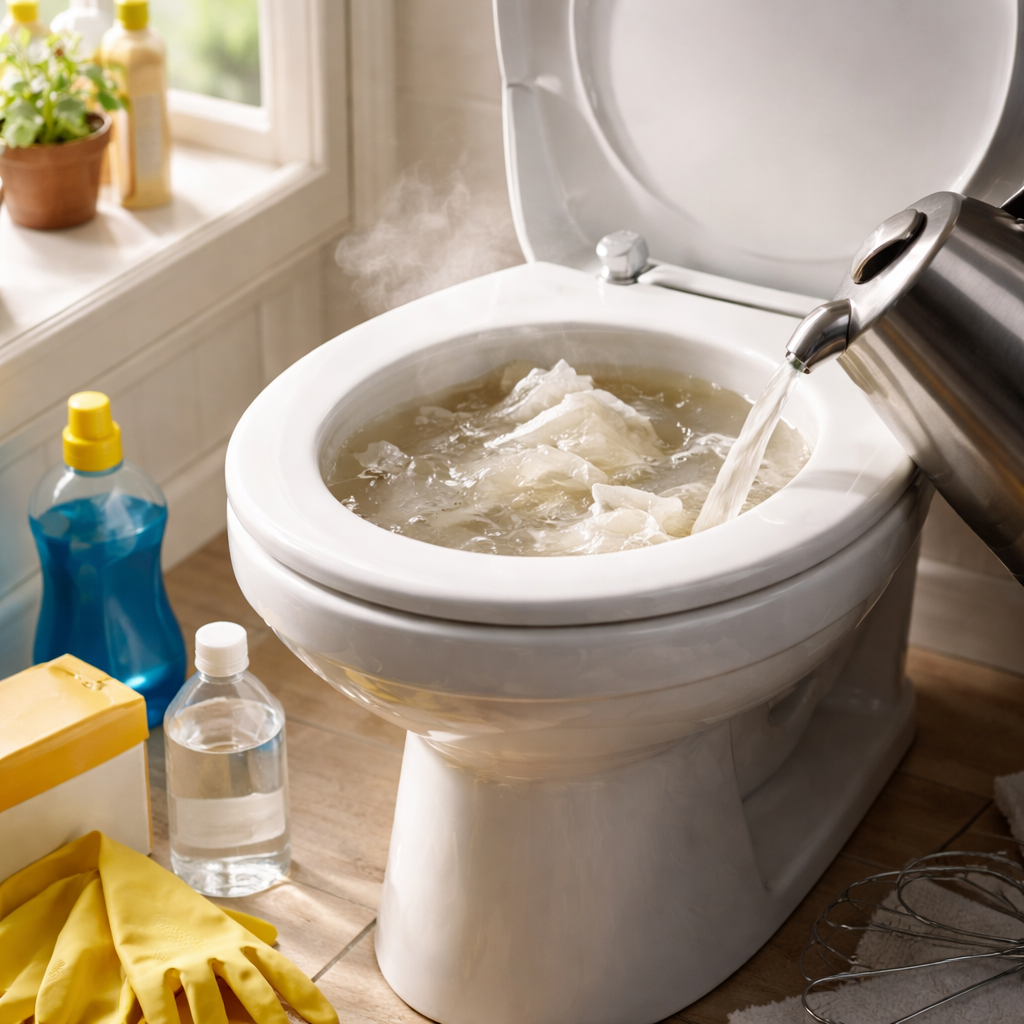
Hot water and dish soap: the simplest starting point
This combination works surprisingly well on organic blockages and paper build-up. The soap acts as a lubricant while the hot water helps break down the material and push it through.
- Squeeze a generous amount of dish soap directly into the toilet bowl — around 3–4 tablespoons.
- Let it sit for 10–15 minutes to work its way down toward the clog.
- Slowly pour hot (not boiling) water from waist height into the bowl. Boiling water can crack porcelain, so keep the temperature below that point.
- Wait several minutes, then check if the water begins to drain.
In many cases, one or two rounds of this is enough to shift a minor blockage. If it doesn’t fully clear, move on to the next approach.
Baking soda and vinegar: the controlled reaction method
You’ve probably seen this used to clean drains, and it works on toilets too. The chemical reaction between baking soda and white vinegar creates a fizzing action that can help loosen a clog.
Pour one cup of baking soda into the bowl first, followed slowly by one cup of white vinegar. Let the fizzing reaction do its work for 20–30 minutes before flushing.
This method is gentler than chemical drain cleaners and won’t damage your pipes. It’s particularly effective when combined with the hot water and soap method afterward.
A DIY drain snake from a wire hanger
When liquid methods don’t reach the blockage, you need something physical. A wire coat hanger can be straightened and shaped into a basic drain snake that reaches into the toilet trap.
Unwind the hanger and create a small hook at one end. Wrap the hooked end in a cloth or tape to avoid scratching the porcelain. Carefully insert it into the drain opening and gently rotate and push to break up or hook onto the clog. This takes some patience but can be very effective for solid blockages.
Plastic bottle pressure trick
This one requires a large plastic bottle and is a surprisingly effective way to create manual water pressure — essentially replicating what a plunger does.
- Fill a large plastic bottle with warm water.
- Put on rubber gloves and place your thumb over the bottle opening.
- Insert the bottle neck into the drain opening as far as it will go.
- Release your thumb and squeeze the bottle firmly to push water into the drain.
The sudden burst of water pressure can dislodge the blockage in the same way a plunger would. Repeat a few times if necessary.
Comparing the methods: when to use what
| Method | Best for | Time needed | Tools required |
|---|---|---|---|
| Hot water + dish soap | Paper and organic clogs | 15–30 min | Soap, kettle |
| Baking soda + vinegar | Partial or minor blockages | 30–45 min | Baking soda, vinegar |
| Wire hanger snake | Solid or stubborn clogs | 10–20 min | Wire hanger, gloves |
| Plastic bottle pressure | Blockages near the trap | 5–10 min | Large plastic bottle |
When none of this works — and what it means
If you’ve tried multiple methods and the toilet still won’t drain, the blockage may be deeper in the soil pipe or connected to a wider drainage issue. Signs that the problem is beyond a standard clog include gurgling sounds from other drains, water backing up in the shower or basin when you flush, or a smell coming from multiple fixtures at once.
In these situations, calling a licensed plumber is the right call. Using chemical drain unblockers at this stage is generally not recommended — they can damage older pipes and don’t address structural drainage problems.
Keeping it from happening again
Most toilet blockages are entirely preventable. The single most effective habit is being strict about what goes in the bowl. Only human waste and toilet paper should ever be flushed — despite what some product packaging claims, “flushable” wipes do not break down quickly enough and are a leading cause of both household clogs and wider sewer blockages.
A monthly maintenance flush of hot water and dish soap is a simple way to keep the trap clear and reduce the chance of build-up. It takes under five minutes and can save you a very unpleasant situation down the line.
The next time a blockage catches you off guard, you won’t need to panic — or search frantically for a plunger. Most of what you need is already in your kitchen.
