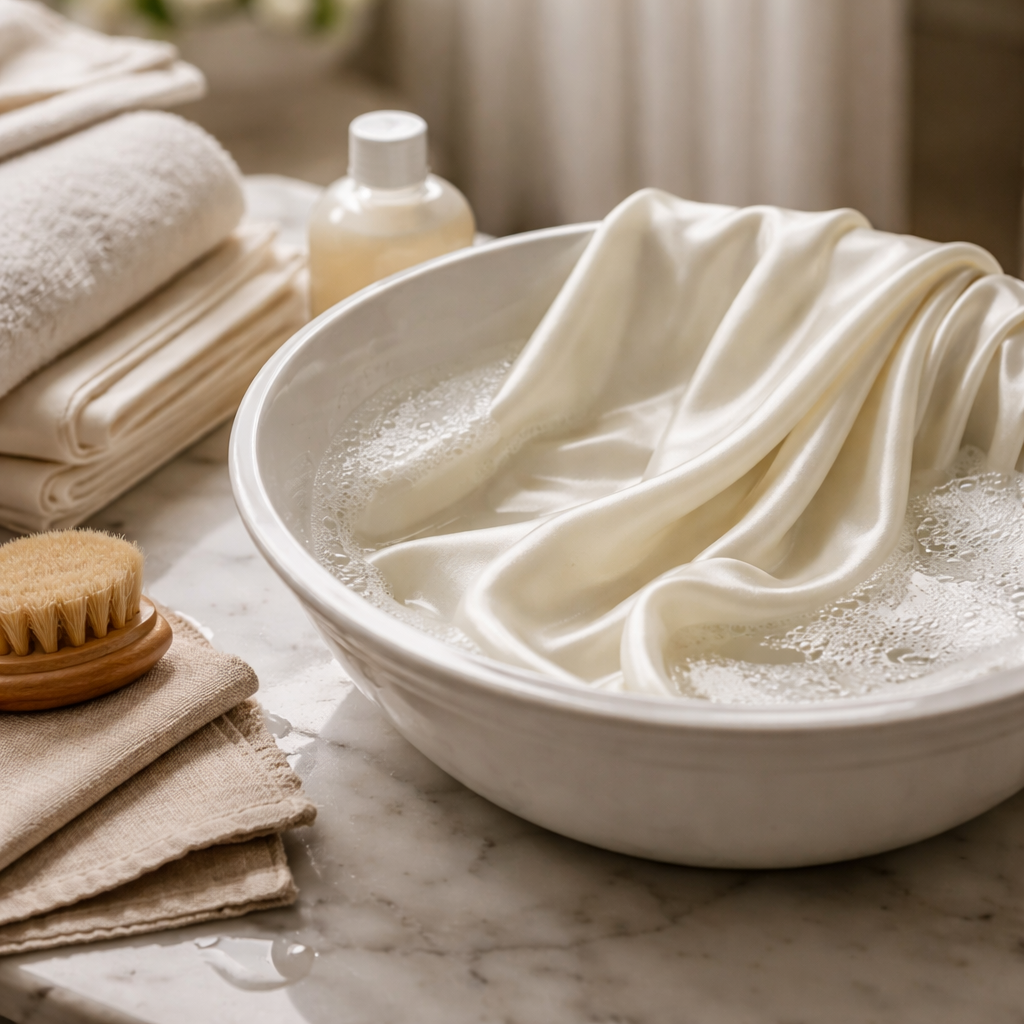
Silk feels incredible against your skin — until you realize you have no idea how to wash a silk pillowcase without ruining it. That hesitation is completely understandable. Silk is a protein-based fiber that reacts differently to water, heat, and detergents than cotton or linen does. But here’s the reassuring part: caring for silk is not complicated once you understand what actually harms it and what doesn’t.
Why silk needs a different approach
The fibers in silk are made of a natural protein called fibroin, which gives the fabric its signature smoothness and slight sheen. This structure is surprisingly delicate when exposed to alkaline detergents, high temperatures, or aggressive agitation. Unlike synthetic fabrics that can bounce back from rough handling, silk degrades gradually — and often invisibly at first, until the damage is already done.
That’s why the method you choose matters. Most pillowcase damage happens not from washing itself, but from using the wrong product, the wrong temperature, or skipping the drying step properly.
Hand washing: the safest route
If you want to keep your pillowcase in the best possible condition for as long as possible, hand washing is your most reliable option. Here’s how to do it correctly:
- Fill a clean basin with cool or lukewarm water — never hot. Temperatures above 30°C can cause silk to shrink or lose its luster.
- Add a small amount of detergent specifically formulated for delicate fabrics or silk. Look for pH-neutral formulas. Avoid anything with enzymes, bleach, or brighteners.
- Submerge the pillowcase and gently move it through the water with your hands. Do not scrub, twist, or wring.
- Let it soak for no more than 3 to 5 minutes.
- Rinse thoroughly with cool water until no soap remains. Residue left in the fibers can cause stiffness and dullness over time.
Never wring silk to remove water. Instead, gently press it against the side of the basin or between your palms. Twisting even once can distort the weave permanently.
Can you use a washing machine?
Yes — with conditions. Many modern washing machines include a dedicated silk or delicates cycle that uses minimal agitation and cold water. If yours has this option and you’re short on time, it can work well. The key is preparation.
Always place the pillowcase inside a mesh laundry bag before putting it in the drum. This protects it from friction caused by other items and from getting caught in the machine’s mechanisms. Use cold water and the gentlest spin speed available — ideally 400 rpm or less. High spin speeds stretch and stress the fibers in ways that hand washing simply doesn’t.
| Factor | Hand Washing | Machine Washing |
|---|---|---|
| Fabric safety | Highest | Good, if done correctly |
| Water temperature control | Full control | Depends on machine settings |
| Agitation risk | Minimal | Low (delicate cycle only) |
| Time required | 10–15 minutes | 30–45 minutes |
| Recommended frequency | Every wash | Occasional use |
Detergents: what to use and what to avoid
This is where a lot of people make mistakes. Regular laundry detergents — even “gentle” ones marketed for everyday use — often contain enzymes that break down protein-based fibers. Since silk is a protein fiber, these enzymes can degrade the fabric over repeated washes.
Choose a detergent that is explicitly labeled for silk or wool. Baby shampoo can work as a temporary substitute in a pinch, as it is usually pH-neutral and free from harsh additives. A very small amount goes a long way — about a teaspoon for a single pillowcase in a basin of water.
Drying silk without causing damage
The dryer is off-limits. Heat is one of the fastest ways to ruin silk — it weakens the fibers, causes shrinkage, and strips the natural sheen that makes silk feel premium in the first place. Even a low heat setting is risky and not worth the convenience.
After washing, lay the pillowcase flat on a clean dry towel. Roll the towel up with the pillowcase inside and press gently to absorb excess water. Then unroll it, reshape the pillowcase, and lay it flat on a fresh dry surface or a drying rack away from direct sunlight. Direct sun exposure fades silk and weakens the fibers over time.
Silk dries relatively quickly — usually within a few hours at room temperature with good air circulation. Avoid hanging it by one corner, as the weight of the water can stretch the fabric unevenly while it’s still wet.
Stain removal without the panic
Dealing with a stain on silk feels stressful, but acting quickly and calmly makes all the difference. The most important rule: never rub a stain. Rubbing spreads it and pushes it deeper into the fibers.
- Blot the stained area gently with a clean, damp cloth as soon as possible after the stain occurs.
- For oil-based stains, a small amount of cornstarch can be applied to absorb the oil before washing. Let it sit for 15 minutes, then brush it off lightly.
- For general stains, treat with a drop of silk-safe detergent directly on the spot, let it sit briefly, then rinse with cool water before a full wash.
- Avoid using vinegar, baking soda, or hydrogen peroxide — these are too harsh for silk and can discolor or damage the fabric.
How often should you wash a silk pillowcase?
Dermatologists and fabric care specialists generally suggest washing pillowcases every one to two weeks. For silk specifically, washing more frequently than necessary isn’t beneficial — each wash, no matter how gentle, puts some stress on the fibers. At the same time, leaving a pillowcase unwashed for too long allows natural oils, sweat, and skincare product residue to build up, which can cause odor and eventually affect the fabric’s texture.
If you use heavy creams or hair oils at night, consider washing your silk pillowcase weekly. Otherwise, every ten to fourteen days is a reasonable and sustainable routine.
What your silk pillowcase is telling you
If your pillowcase starts feeling rough, looks dull, or has developed small pulls in the fabric, it’s worth reconsidering your washing routine. Roughness is often a sign of detergent buildup or hard water deposits — try an extra rinse cycle or use filtered water for washing. Dullness can indicate exposure to heat or harsh chemicals. Pulls and snags usually point to friction during washing or drying, which is why the mesh laundry bag and flat drying method are not just recommendations but genuinely necessary steps.
A well-cared-for silk pillowcase can last for years while maintaining its softness and color. The investment you made in the fabric pays off only when the care routine matches the quality of the material. And as you’ve seen, that routine doesn’t demand much — just a little attention to detail and the right products on hand.
