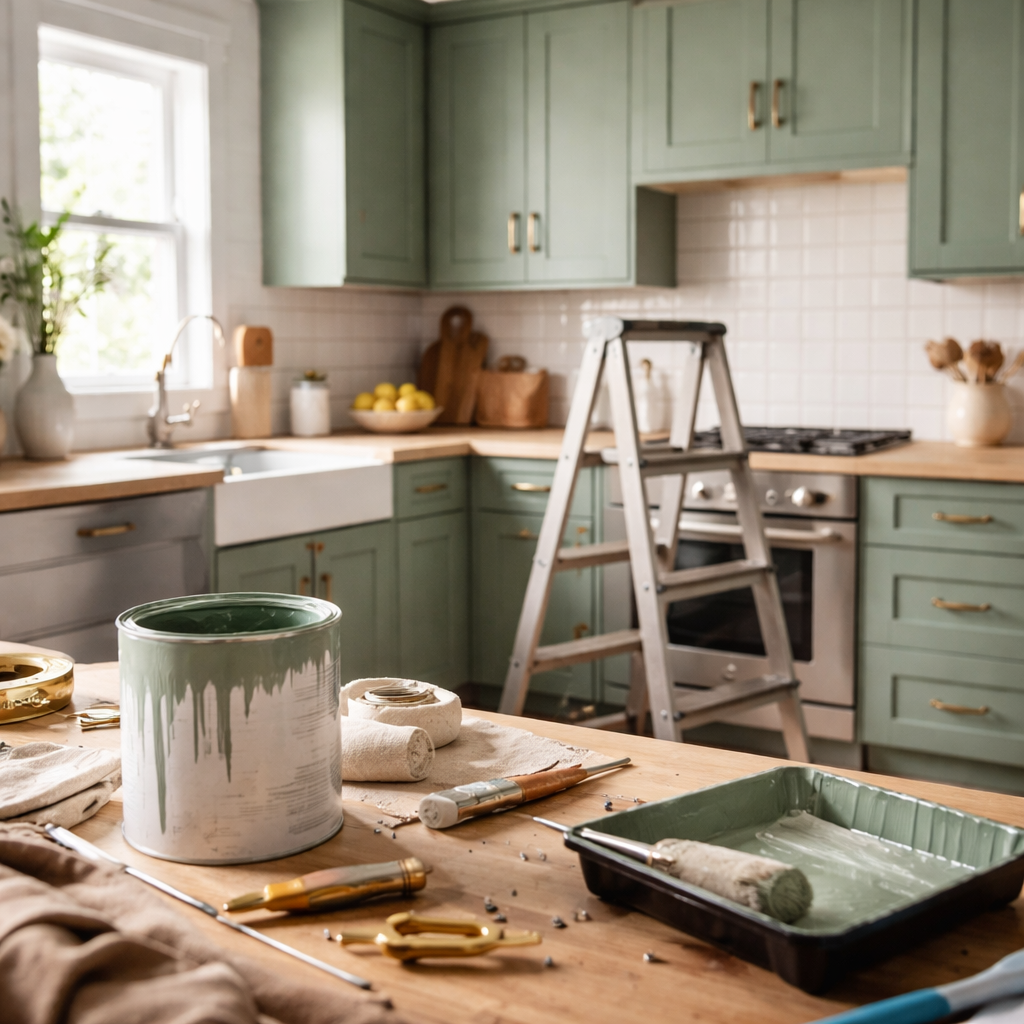
Most people overestimate what a renovation costs and underestimate what they can actually do themselves. The truth is, ideas for a budget-friendly renovation are far more practical and achievable than most home improvement shows would have you believe — and you don’t need to gut an entire room to make a space feel genuinely different.
Start with what already exists
Before buying anything new, take a hard look at what you already own. Furniture that feels dated often just needs new hardware, a fresh coat of paint, or a different position in the room. Repainting kitchen cabinet doors, for example, is one of the highest-impact, lowest-cost changes you can make to a home. You’re not replacing the structure — you’re changing the perception of it entirely.
The same logic applies to bathroom vanities, bedroom wardrobes, and even interior doors. Swapping out handles and hinges for more modern ones takes under an hour and costs a fraction of what new furniture would. This approach — working with existing bones rather than against them — is the foundation of smart, low-cost home improvement.
Where to focus your money for maximum effect
Not all renovation investments pay off equally. Some updates are purely cosmetic, while others genuinely change how a space functions and feels. Here’s a breakdown of where spending tends to make the most sense on a limited budget:
| Area | High-impact change | Approximate cost level |
|---|---|---|
| Kitchen | Repaint cabinets, replace handles | Low |
| Bathroom | Re-grout tiles, update lighting | Low to medium |
| Living room | Add an accent wall or new curtains | Low |
| Entryway | New mirror, coat hooks, fresh paint | Very low |
| Bedroom | New bedding, rearranged layout | Very low |
Lighting deserves special mention here. Replacing a single overhead fixture with something more intentional — a pendant lamp, a warmer bulb temperature, or even a dimmer switch — can shift the entire mood of a room without touching a single wall.
DIY versus hiring out: knowing the line
One of the most common budget mistakes is hiring professionals for work that’s genuinely DIY-friendly, or — going the other direction — attempting complex work without the skills and ending up with a more expensive problem. Painting, basic tiling, installing shelves, laying peel-and-stick flooring, and replacing light switch covers are all well within reach for most people with minimal tools and patience.
On the other hand, anything involving structural changes, electrical rewiring, or plumbing beyond simple fixture swaps should be handled by licensed professionals. The cost of fixing a DIY mistake in those areas almost always exceeds what you’d have paid upfront.
A good renovation isn’t about how much you spend — it’s about how deliberately you spend it. A hundred dollars in the right place can outperform a thousand spent without a plan.
Affordable materials that don’t look cheap
There’s a persistent myth that budget materials always look budget. That hasn’t been true for a while. Peel-and-stick vinyl planks now closely mimic hardwood and hold up surprisingly well in dry areas. Laminate countertops in stone patterns are significantly harder to distinguish from real stone than they were even a decade ago. Subway tiles remain one of the most cost-effective options for kitchens and bathrooms — classic, clean, and widely available at low price points.
When shopping for materials, it’s worth checking contractor supply stores, online marketplaces for leftover stock, and architectural salvage shops. End-of-line tiles, discontinued flooring, and surplus paint from contractors are frequently available at steep discounts — and often in exactly the neutral tones most renovators are after anyway.
Small spaces, big changes
Compact rooms benefit enormously from targeted, inexpensive interventions. A few strategies that consistently work well:
- Use vertical space — shelving that reaches toward the ceiling draws the eye up and adds storage without eating floor space.
- Replace heavy curtains with lighter ones to let in more natural light, which is the cheapest way to make a room feel larger.
- Choose furniture with legs rather than pieces that sit flat on the floor — it creates visual breathing room.
- A large mirror on one wall effectively doubles the perceived depth of any room.
- Decluttering before decorating isn’t just a cliché — removing unnecessary items is a zero-cost renovation that changes everything.
These aren’t workarounds or compromises. They’re the same principles interior designers apply regardless of budget — the difference is just scale.
Planning saves more money than any discount
Impulse decisions are the silent killers of renovation budgets. Buying tiles before confirming measurements, choosing paint color without testing it in natural light, or ordering furniture without checking doorway dimensions — these are all avoidable, and all expensive to correct. A clear plan drawn up before a single purchase is made will consistently outperform any sale or special offer.
Set a realistic total budget, then subtract 15–20% as a contingency buffer. Renovations — even small, carefully planned ones — almost always surface at least one unexpected cost. Having that buffer means a surprise doesn’t derail the entire project.
Phasing work over time is also underrated as a strategy. Doing the kitchen this season, the bathroom six months later, and the living room after that allows you to learn from each phase, avoid overspending in a single push, and make more considered decisions rather than rushed ones.
The rooms worth doing first
If you’re renovating a home you live in, starting with the spaces you use most daily delivers the fastest return on your quality of life. Kitchens and bathrooms tend to top that list for most households — and they’re also the rooms where thoughtful, inexpensive updates make the clearest difference.
If resale value is the goal rather than personal comfort, the calculus shifts slightly. Entryways create the first impression. Kitchens drive buyer decisions disproportionately. Bathrooms — particularly the primary one — are scrutinized closely. Refreshing these areas with affordable updates tends to offer the best return when selling, especially in competitive markets where buyers are comparing multiple properties.
Wherever you start, the underlying principle stays the same: thoughtful choices, good preparation, and realistic expectations will take a renovation further than a large budget spent without direction ever could.
