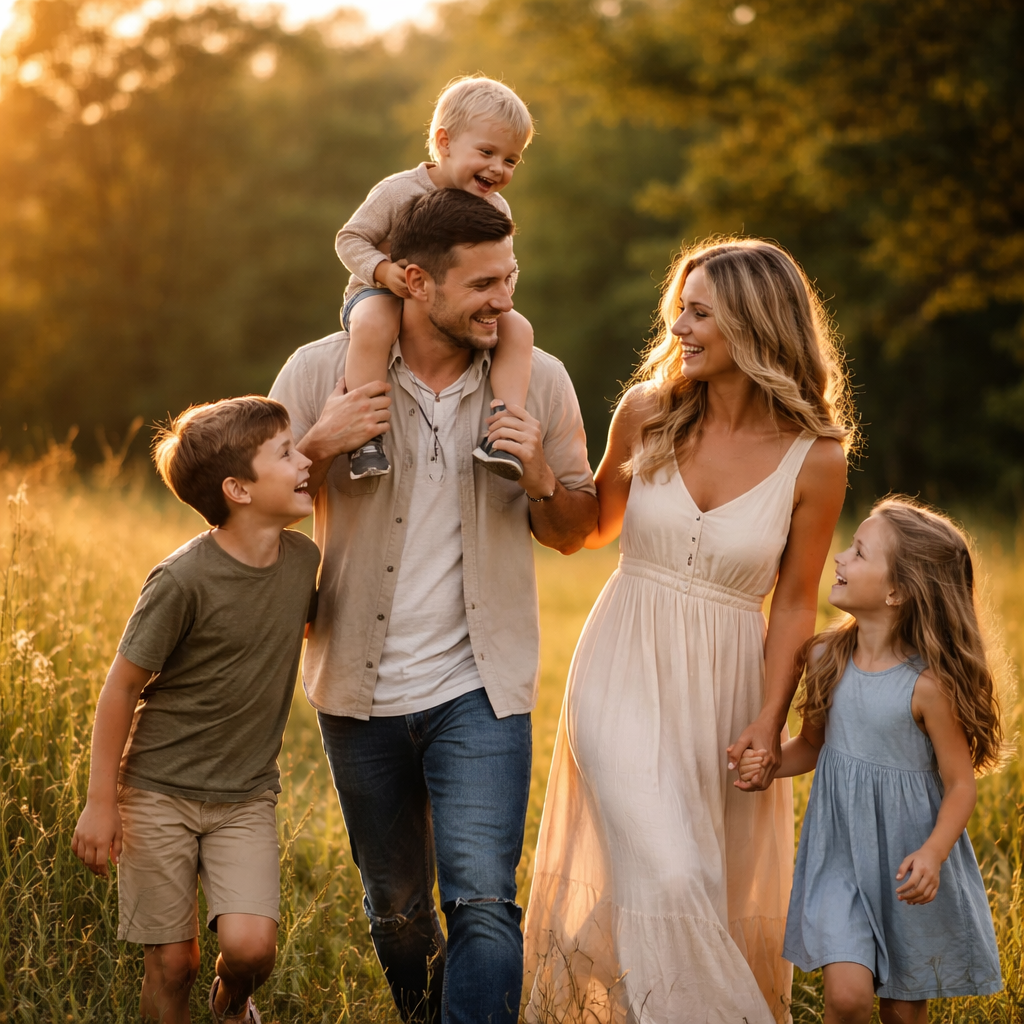
Planning ideas for a family photoshoot outdoors often starts with one simple question: where do we even begin? The location, the outfits, the time of day — it all feels like a lot to figure out, especially when kids are involved. But here’s the thing: outdoor family sessions tend to produce the most natural, emotionally rich photos precisely because the environment does half the work for you. The open sky, changing light, and room to move freely allow people to relax in ways that a studio simply cannot replicate.
Choose a location that tells your story
The backdrop of your photos will shape the entire mood of the shoot. Before you pick a spot purely for its aesthetics, think about what it means to your family. A park where your kids play every weekend will feel more alive in photos than a picture-perfect location you’ve never visited before. Familiar places naturally bring out genuine expressions.
That said, variety matters. Different outdoor settings offer very different visual results:
- Open meadows and fields — great for wide, airy shots with lots of natural light
- Forest paths and woodland areas — softer, filtered light and a cozy, intimate feel
- Urban environments — textured walls, bridges, and street architecture add a modern edge
- Beaches or lakesides — reflective surfaces and open horizons create a dreamy atmosphere
- Your own backyard or garden — underrated for its personal, relaxed energy
There’s no universally “best” location. The right one is the place where your family feels comfortable enough to forget the camera is even there.
Timing the shoot around natural light
Lighting is the single most important technical factor in outdoor photography. Most professional family photographers work during what’s called the golden hour — the period shortly after sunrise or in the last hour before sunset. During this time, the sun sits low on the horizon and casts warm, soft, directional light that flatters everyone naturally.
Midday sun creates harsh shadows under the eyes and chin — it’s unflattering for portraits and uncomfortable for children who have to squint. If midday is your only option, look for open shade under trees or near a building.
Overcast days are another underestimated ally. Clouds act as a natural diffuser, spreading light evenly across faces without any harsh shadows. Many photographers actually prefer slightly cloudy conditions for family sessions because the light remains consistent throughout the shoot.
What to wear without overthinking it
Outfit coordination is one of the things families stress about most before a session. The key principle is harmony over matching. You want the family to look like they belong together visually, not like they’re wearing identical uniforms.
| What works well | What tends to distract |
|---|---|
| A cohesive color palette (2–3 tones) | Bright logos and large graphic prints |
| Layers and textures (denim, linen, knit) | All-white or all-black outfits in bright settings |
| Outfits you’ve worn before and feel good in | Brand new clothes that feel stiff or uncomfortable |
| Seasonal colors that complement the surroundings | Colors that clash with the chosen location |
Comfort matters more than you might think. A child who’s itchy in a formal outfit or a parent who’s self-conscious in something too tight will show that discomfort in every frame.
Poses and activities that actually look natural
The stiff, lineup-style family portrait where everyone stares at the camera has largely given way to something more real. Movement, interaction, and shared activities between family members produce photos with genuine emotion — the kind you want to hang on a wall for years.
Some of the most effective approaches involve giving families something to do rather than a specific pose to hold:
- Walking together along a path — natural movement, natural expressions
- Parents lifting or swinging children — always produces laughter
- Reading a book or playing a simple game on a blanket
- Chasing each other or playing hide-and-seek near trees
- Cooking or eating something outdoors — a picnic setup works beautifully
The photographer’s job becomes capturing those in-between moments — when a child laughs unexpectedly, when a parent looks down at their kid with that particular kind of tenderness. These aren’t posed. They’re just real life, documented well.
Involving children without forcing them
Kids don’t follow directions the way adults do, and that’s actually something to work with rather than against. Younger children especially respond to energy — if the adults around them are relaxed and having fun, they will be too. If the adults are anxious and issuing commands, the kids will pick up on that immediately.
Bringing a favorite toy, a snack, or even a pet can help younger children feel at ease and give them something familiar to focus on. This also creates natural props within the photos without anything feeling staged.
Seasonal considerations worth planning around
Each season brings its own visual language to outdoor family photography. Autumn is consistently popular for the warm tones and falling leaves, but every season has something genuinely valuable to offer:
- Spring — fresh greenery, blossoms, and soft pastel light
- Summer — vibrant colors, longer days, and the flexibility of golden hour lasting well into the evening
- Autumn — rich oranges and reds, perfect for earthy outfit palettes
- Winter — bare trees create elegant minimalism, and snow adds a graphic, high-contrast quality
Choosing a season you genuinely love will show in the photos. If your family has a tradition tied to a particular time of year, build the session around that feeling.
What makes the photos worth keeping
At the end of the day, the best outdoor family photos aren’t technically perfect — they’re emotionally true. They show who you actually are together, not a performance of who you want to appear to be. The preparation matters, the location matters, the light matters. But none of it matters as much as showing up ready to be present with each other and letting the camera catch what’s already there.
Go somewhere that means something to you. Wear something you feel good in. Give your kids room to be themselves. And if something doesn’t go according to plan — a muddy puddle, an unexpected tantrum, a toddler who refuses to look at the camera — those unplanned moments often become the photos you treasure most.
