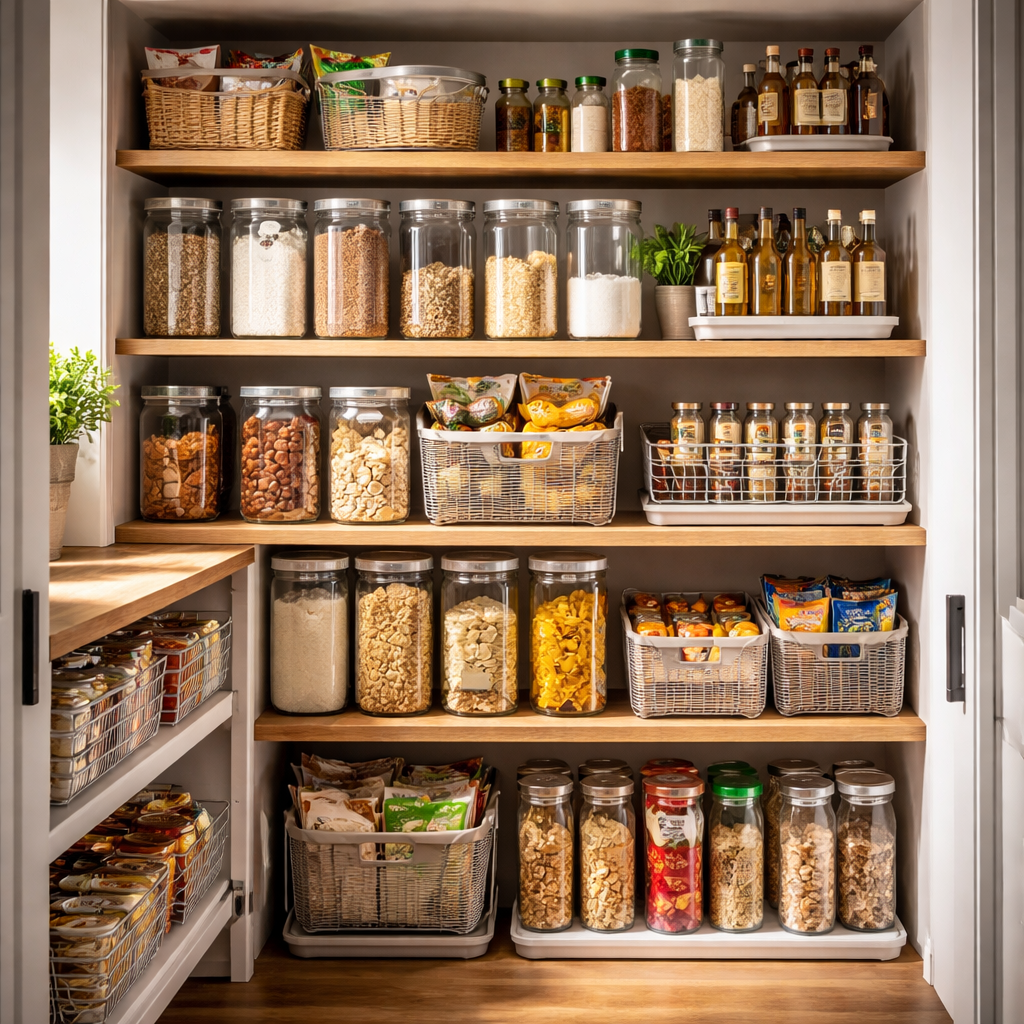
Most people open their pantry at least a few times a day — yet for many, it remains the most chaotic corner of the kitchen. If you’ve ever found expired cans hiding behind cereal boxes or spent ten minutes searching for the paprika, you already know the frustration. Practical ideas for a kitchen pantry organization can genuinely change how you cook, shop, and even feel in your own home. And the good news is that you don’t need a walk-in pantry or a designer budget to make it work.
Start with a full reset, not just a tidy-up
Before buying a single bin or label, take everything out. This sounds dramatic, but it’s the only way to see what you actually have. Check expiration dates, toss what’s stale, and donate duplicates you won’t realistically use. Many people discover they own three open bags of the same pasta or a forgotten spice that’s been sitting there for years.
Once the shelves are empty, wipe them down and take a moment to think about how you cook. Do you bake often? Do you meal prep on Sundays? Your pantry layout should reflect your actual habits, not a Pinterest ideal that doesn’t match how you live.
Zone-based organization: the method that actually sticks
One of the most effective approaches to pantry storage is grouping items by use rather than by type. Instead of putting all cans together regardless of what they’re for, create dedicated zones based on cooking habits.
- Breakfast zone — oats, cereals, pancake mix, honey, nut butters
- Baking zone — flour, sugar, baking soda, cocoa, vanilla, measuring tools
- Snack zone — crackers, nuts, dried fruit, protein bars
- Cooking staples — canned tomatoes, broths, grains, dried beans, oils, vinegars
- Spices and seasonings — ideally on a dedicated shelf or pull-out rack at eye level
When zones are consistent, restocking becomes automatic. You always know where things go, and so does anyone else in the household.
Containers, labels, and the question of what’s worth buying
Airtight containers are genuinely worth the investment for dry goods like flour, rice, lentils, oats, and pasta. They keep food fresh longer, protect against pantry pests, and make it immediately obvious when you’re running low. Clear containers are especially useful — you can see the fill level without opening anything.
Uniform containers don’t just look neat — they stack efficiently and eliminate the clutter of mismatched packaging that makes pantries feel overwhelming even when they’re technically organized.
Labels don’t need to be elaborate. A simple label with the item name and, if helpful, the date it was transferred into the container is enough. Chalkboard labels, printable stickers, or even masking tape with a marker all work fine. The goal is clarity, not aesthetics.
Vertical space, lazy Susans, and other tools that help
Most pantry shelves waste a significant amount of vertical space. Shelf risers and stackable organizers let you double the usable surface area without adding shelves. Tiered spice racks allow you to see every jar at a glance instead of digging through rows.
| Tool | Best used for | Why it helps |
|---|---|---|
| Lazy Susan (turntable) | Oils, vinegars, sauces, jars | Easy access to items at the back of a shelf |
| Over-door organizer | Spices, foil rolls, small packets | Uses otherwise wasted door space |
| Stackable bins | Snacks, packets, pouches | Groups loose items without spreading |
| Pull-out drawer inserts | Cans, bottles | Prevents items from getting lost at the back |
| Shelf risers | Plates, small appliances, jars | Creates two usable levels on one shelf |
Over-door organizers are particularly underused. The inside of a pantry door can hold a surprising number of items — spice packets, aluminum foil and plastic wrap boxes, small bottles, and snack bags — without taking up any shelf space at all.
How to maintain order without constant effort
Organization systems fail when they’re too complicated to maintain. The simpler your system, the more likely it is to last. A few habits make a real difference over time.
- Follow the FIFO rule (first in, first out) — always put new groceries behind older ones so nothing gets forgotten at the back
- Do a quick monthly scan instead of waiting for chaos to build up
- Keep a running shopping list on the pantry door or in a shared notes app — this prevents overbuying duplicates
- Designate one small area for items that need to be used soon, so they stay visible
Involving everyone in the household matters too. If the system only makes sense to the person who set it up, it won’t be maintained consistently. Clear zones and visible labels solve most of this problem without requiring any explanation.
Small pantries and tight spaces deserve smart solutions too
Not everyone has a dedicated pantry cabinet. Some kitchens have a single deep shelf, a small closet, or just a section of upper cabinetry. The same principles apply, just scaled down. In tight spaces, every inch counts even more — so prioritizing the items you reach for daily and keeping less-used things higher or lower is especially important.
Magnetic spice tins mounted on a metal strip free up shelf space entirely. Pegboards inside cabinet doors can hold small baskets. A rolling cart beside the pantry can function as an extension for overflow items. Thinking creatively about vertical and hidden surfaces often reveals more storage than you’d expect.
When your pantry works for you, cooking does too
A well-organized pantry isn’t just satisfying to look at — it changes how you interact with your kitchen. Meal planning becomes easier when you can see what you have. Grocery shopping gets more intentional. You waste less food, save money over time, and spend less mental energy on the daily question of what’s even in there.
The transformation doesn’t have to happen in a single afternoon. Tackling one shelf or one category at a time is a completely valid approach. What matters is starting with a clear system rather than just moving things around. Once a good structure is in place, maintaining it takes far less effort than most people expect — and the difference it makes in daily kitchen life is genuinely noticeable.
