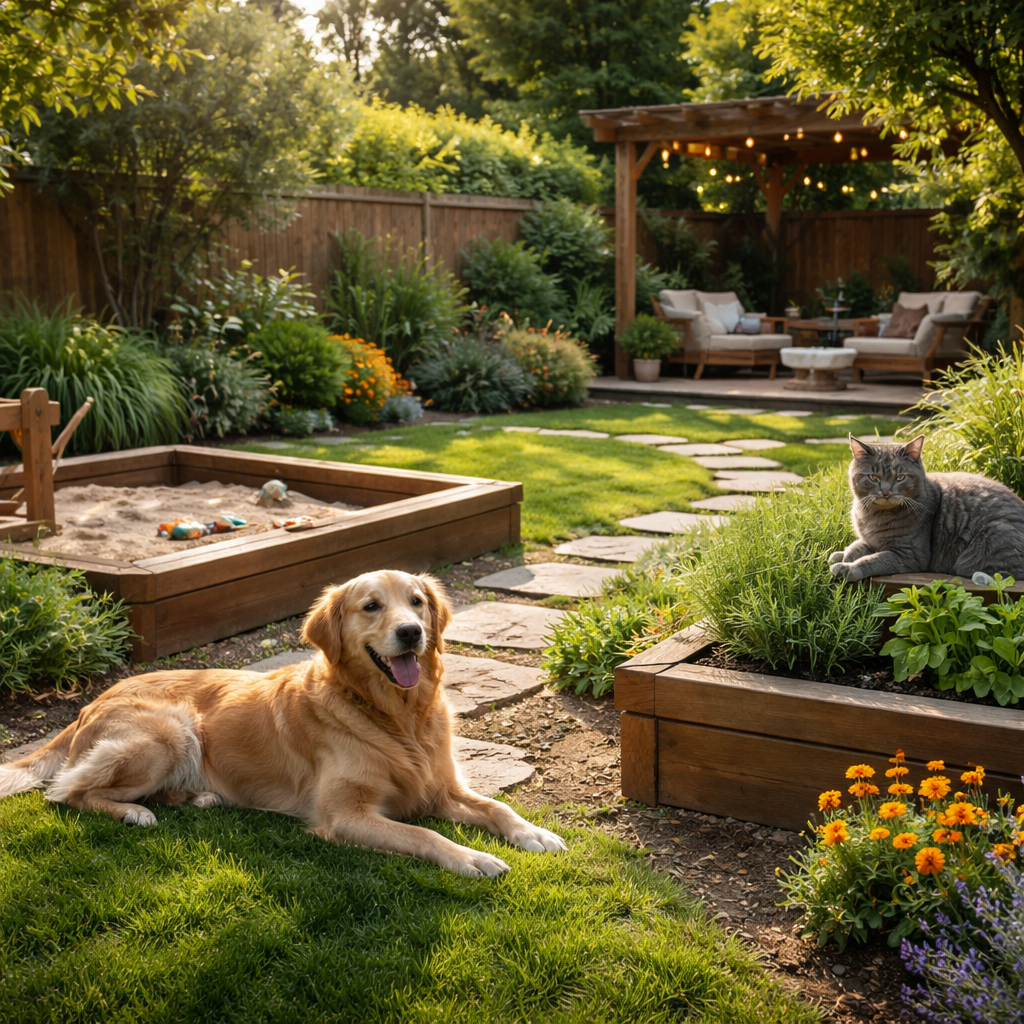
Most dogs will dig up a garden bed within a week, and most cats will treat a carefully planted herb patch as a personal lounge. If you’ve been searching for ideas for a pet-friendly backyard that actually hold up in real life, the good news is that thoughtful design can satisfy both your aesthetic goals and your animals’ instincts at the same time.
Why the layout matters more than the plants
Before choosing a single shrub or fence panel, think about how your pet actually uses the outdoor space. Dogs tend to patrol a perimeter, sprint in open stretches, and dig in shaded corners. Cats look for elevated vantage points and hidden pathways. Understanding these natural behaviors is the foundation of any yard that works long-term for both the animal and the owner.
A yard that ignores pet behavior ends up as a constant repair project. One that accounts for it becomes genuinely low-maintenance over time.
Ground cover that survives pet traffic
Grass is the obvious choice, but not all grass types handle repeated running and digging equally well. Tall fescue and Bermuda grass are two varieties known for their durability under heavy foot and paw traffic. If you want something beyond turf, consider these alternatives:
- Clover — soft underfoot, drought-tolerant, and resistant to pet urine discoloration
- Decomposed granite — firm, drains quickly, and works well in designated run areas
- River rocks or pea gravel — excellent drainage and easy to clean, though better for dogs than cats
- Artificial turf — consistent appearance, no mud, but requires proper drainage installation to avoid odor buildup
The key is to zone your yard. Reserve a softer surface for your pet’s main activity area and use more decorative materials in planting beds or seating zones.
Plants that are safe around pets
This is where many pet owners make costly mistakes. A number of popular garden plants are toxic to dogs and cats, including azaleas, oleander, foxglove, and sago palm. The ASPCA maintains an updated database of toxic and non-toxic plants for pets, which is worth bookmarking before any planting session.
Choosing non-toxic plants doesn’t mean settling for boring. Sunflowers, roses, snapdragons, and marigolds are all considered safe for most pets and provide strong visual interest throughout the growing season.
If you want to grow herbs, stick to pet-safe options like basil, dill, and rosemary. Avoid chives, garlic, and mint in areas where your animals graze freely, as these can cause digestive issues or worse with repeated exposure.
Fencing and boundary solutions that actually work
A yard is only as pet-friendly as it is secure. The right fence depends entirely on your animal’s size, energy level, and escaping habits. Here’s a quick comparison of common options:
| Fence Type | Best For | Key Consideration |
|---|---|---|
| Wooden privacy fence | Dogs of all sizes | Check for gaps at the base; diggers can get underneath |
| Chain link | High-energy dogs | Not ideal aesthetically; can be paired with climbing plants |
| Coyote rollers on top | Dogs and cats that climb | Prevents escape without raising fence height significantly |
| Invisible/electric fence | Dogs with boundary training | Does not keep other animals out; not suitable for all temperaments |
For cats specifically, a fully enclosed “catio” structure attached to the house allows outdoor access with zero escape risk. These range from small window boxes to full garden enclosures and have become increasingly popular among cat owners who live near roads or wildlife areas.
Dedicated zones that reduce conflict between pets and plants
One of the most practical strategies is giving your pet their own defined space rather than hoping they’ll respect yours. A designated digging area, for example, can redirect a dog’s instinct away from your vegetable beds. Bury a few toys or treats in the spot initially to build the association — most dogs catch on within a few days.
Similarly, a shaded resting area with a durable outdoor pet bed or a wooden platform keeps animals out of your planted zones simply because they have somewhere better to be. Shade cloth pergolas or a large tree canopy serve double duty as both a cool retreat for pets and a visual anchor for the yard’s overall design.
Water features with pet safety in mind
Many dogs are drawn to water, and a shallow splash zone or a pet-specific water fountain can become a favorite feature in a warm-weather yard. However, standard garden ponds present real risks: steep sides make them difficult for a dog or small animal to exit if they fall in, and still water can harbor harmful bacteria and algae.
If you want a water element, opt for a recirculating fountain with a shallow basin, or add a simple splash pad made from a flat tray connected to a garden hose. These are far safer than ornamental ponds and require much less maintenance.
Hardscaping and pathways that hold up over time
Pets create desire lines — the paths they naturally want to walk. Rather than fighting this, consider laying pavers or stepping stones along those routes. It protects the lawn, keeps mud from being tracked indoors, and gives the yard a more intentional look.
Raised garden beds are another hardscaping solution that pays off quickly. At a height of 30 cm or more, most dogs lose interest entirely. Cats may still jump in, but a layer of chicken wire just below the soil surface deters digging without harming the plants or the animal.
Small adjustments with a big impact
Sometimes the difference between a yard that works and one that doesn’t comes down to a handful of low-cost changes:
- Store fertilizers, pesticides, and herbicides in locked sheds — even organic options can be harmful if consumed
- Check mulch type before spreading; cocoa mulch is toxic to dogs and should be avoided entirely
- Avoid sharp-edged decorative stones near play areas where pets run at speed
- Install outdoor lighting near steps or drops to prevent nighttime accidents
- Rinse paws after contact with lawn treatments, even those labeled pet-safe
None of these require a renovation budget. They’re habits and material choices that compound into a significantly safer environment over time.
A yard that grows with your pet
The best outdoor spaces for animals aren’t designed around restriction — they’re built around understanding. When a yard gives a pet somewhere to run, somewhere to rest, somewhere to dig, and somewhere to explore safely, the destructive behaviors that frustrate most owners tend to disappear on their own. That’s not idealism. It’s just good design responding to real animal behavior, and it makes the space more enjoyable for everyone who uses it.
