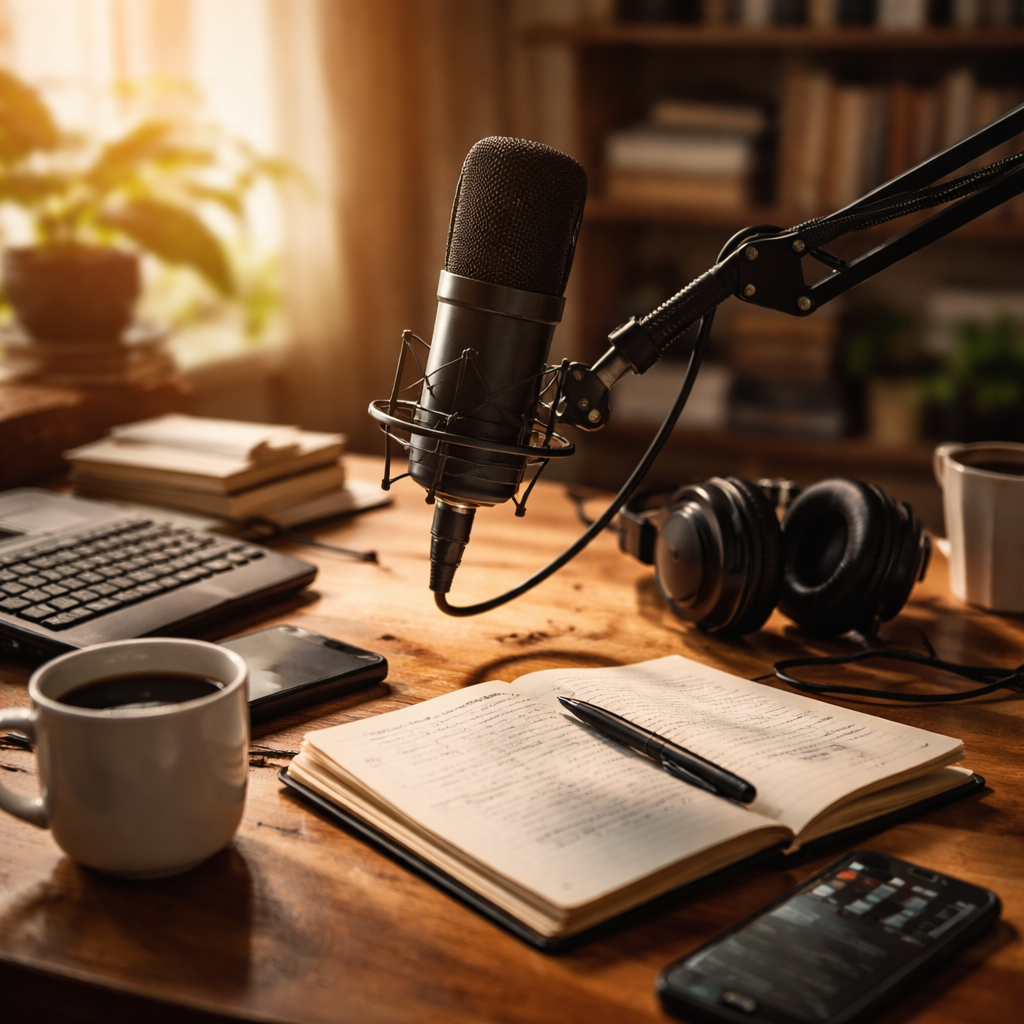
Most people who search for ideas for a podcast for beginners make the same mistake: they spend weeks overthinking the perfect niche instead of just hitting record. The truth is, a compelling podcast topic is often hiding in the things you already talk about every single day — your work, your hobbies, your questions, your frustrations.
Why your topic choice matters more than your microphone
Before diving into specific concepts, it’s worth understanding one thing: listeners subscribe to a podcast because of relevance and connection, not production quality. Sure, clear audio helps, but a show built around a genuinely useful or entertaining subject will always outperform a technically flawless podcast with nothing interesting to say.
This means your starting point should be a topic you can speak about consistently — not just once or twice, but across dozens of episodes. Passion helps, but so does having a real perspective or a unique angle that others aren’t offering.
Topic directions worth exploring
Here’s a mix of podcast concepts that work well for newcomers, ranging from personal storytelling to structured educational formats:
- Interview-based shows — you invite guests and let them carry the conversation. This takes pressure off you as a solo speaker and naturally adds credibility to your content.
- Skill-building podcasts — episodes where each installment teaches one specific, actionable thing. Great for niches like photography, budgeting, language learning, or fitness.
- Behind-the-scenes of a real journey — document yourself learning something new in real time. Audiences love authenticity, and you don’t need to be an expert to start.
- Topic deep-dives — pick one subject per episode and research it thoroughly. Works well for history, science, psychology, or niche hobbies.
- Opinion and commentary — share your take on trends, news, or cultural shifts in a specific industry. Best when your voice is distinct and your logic is clear.
- Storytelling and narrative — fictional or non-fictional stories told episode by episode. Requires strong writing but builds incredibly loyal audiences.
Each of these formats has a different production complexity. Interviews, for example, require scheduling and editing two voices, while solo educational episodes give you full control over pacing and content.
How to find your specific angle
Generic topics rarely grow. “Health and wellness” is saturated. “Mental health for first-generation college students” is specific and searchable. The process of narrowing down your niche usually comes down to three questions:
| Question | What it reveals |
|---|---|
| Who do I want to talk to? | Your target listener persona |
| What problem or interest do they have? | The core value your show provides |
| What can I offer that others don’t? | Your unique positioning in the space |
Once you can answer all three, your podcast concept essentially writes itself. The clearer your positioning, the easier it becomes to plan episodes, attract guests, and grow an audience that actually returns.
“The riches are in the niches” — this phrase is overused, but in podcasting it holds up. A show for “people who work night shifts and want to stay healthy” will find its audience faster than a show about general health tips.
A few underestimated podcast formats for first-timers
Some of the most practical podcast formats for beginners are ones that don’t get talked about enough. If you’re not sure where to start, consider these:
The “learning in public” format is especially beginner-friendly. You pick something you’re genuinely curious about — say, urban gardening, personal finance, or sourdough baking — and you document your progress. Episode one might be “I have no idea what I’m doing.” Episode ten might be “Here’s what actually worked.” Listeners follow for the honesty, not the expertise.
Another underrated format is the “two friends talking” structure — essentially a conversational show with a co-host. You don’t need scripts or heavy preparation. The dynamic between two people with different viewpoints creates natural engagement, and the format feels low-pressure for newcomers who are nervous about speaking alone.
Mini-series podcasts — where you plan a limited run of 6 to 10 episodes on one focused topic — are also gaining traction. They’re manageable, feel complete to listeners, and give you a low-commitment way to test whether podcasting suits you before committing to an open-ended show.
Practical tips before you launch
Choosing a topic is only part of the equation. A few things that will save you time and frustration early on:
- Record at least three episodes before publishing anything — this gives you a realistic sense of how long it takes and what your actual workflow looks like.
- Keep early episodes under 20 minutes. Shorter content is easier to produce and easier for new listeners to commit to.
- Name your podcast with searchability in mind — include keywords your target listener would actually type into a search bar.
- Write a clear, specific show description. Most listeners decide whether to subscribe based on the first two sentences of your podcast bio.
- Don’t wait for perfect equipment. A decent USB microphone and a quiet room are enough to start building an audience.
The one thing that separates podcasts people finish from podcasts people forget
Consistency. Not daily uploads, not studio-quality audio, not celebrity guests — just showing up on a predictable schedule with something genuinely worth a listener’s time. The podcasts that build real audiences aren’t always the most polished ones. They’re the ones where you can tell the host actually cares about the subject and the person listening.
Whatever topic you choose, the best podcast you can make is the one you’re willing to keep making after the initial excitement wears off. Start with something that genuinely interests you, give yourself permission to be imperfect in the beginning, and adjust as you learn what your audience responds to. That feedback loop, over time, shapes the podcast you actually want to create.
