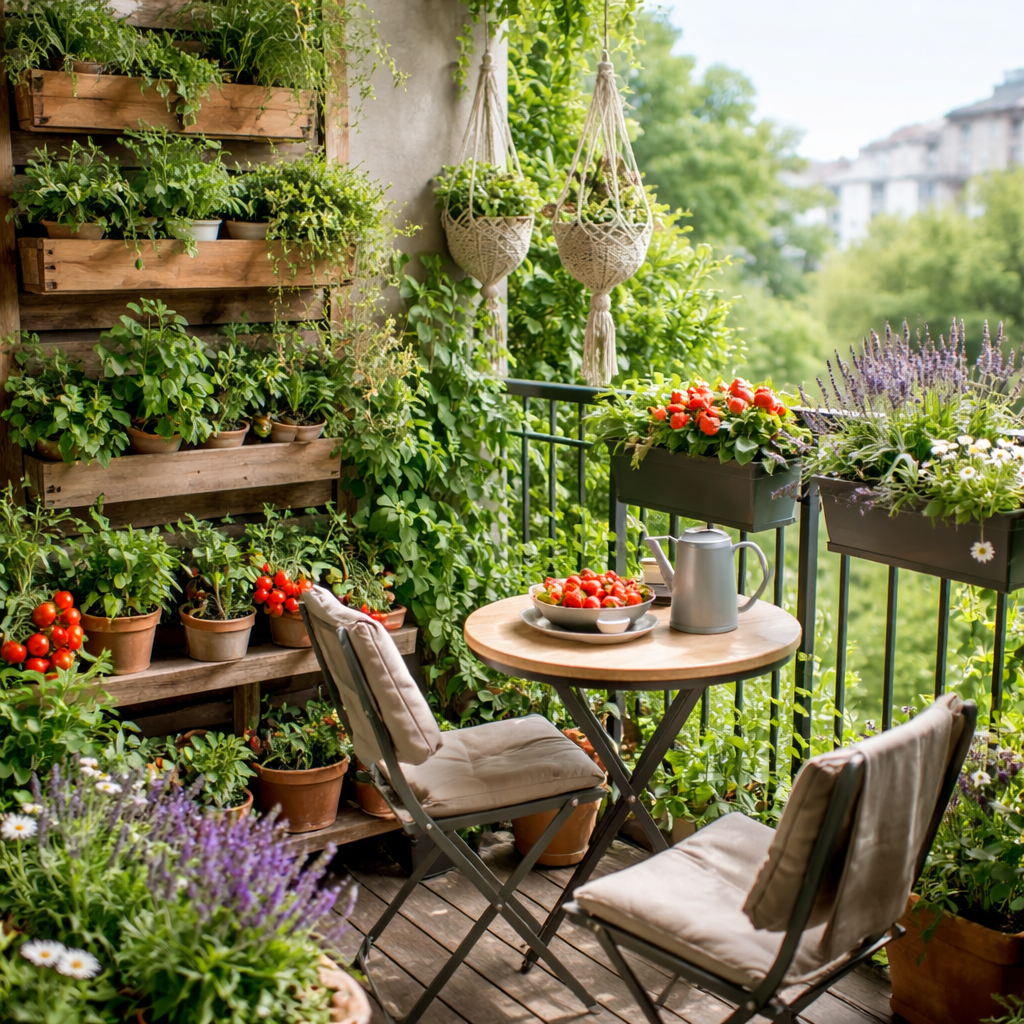
Most people underestimate how much a compact outdoor space can actually hold. If you’ve been searching for ideas for a small balcony garden, chances are you already sense that something green and alive belongs out there — you just need a clear direction to start without wasting money or space.
Think vertically before you think horizontally
The single biggest shift in small-space gardening thinking is moving away from floor space as the only canvas. Walls, railings, and even ceilings become legitimate planting zones when you approach them intentionally. Vertical planters, tiered shelving units, and hanging pots can triple the growing area of a standard balcony without adding a single square foot of floor coverage.
Wall-mounted pocket planters work particularly well for herbs and shallow-rooted plants like lettuce and strawberries. A simple wooden pallet repurposed as a vertical garden frame is both budget-friendly and visually striking. Railing planters that hook over the edge of your balcony are another reliable option — they free up floor space entirely while keeping plants in full sunlight.
Vertical gardening isn’t just a trend — it’s a practical response to limited space that professional urban gardeners have used for decades in rooftop and terrace environments.
Choosing plants that actually work in containers
Not every plant thrives when its roots are confined to a pot. Choosing the right species from the start saves you from the frustration of watching something slowly decline despite regular watering. The good news is that the range of container-friendly plants is genuinely wide.
For edible gardens, compact varieties of tomatoes (like cherry or patio types), dwarf peppers, bush beans, and herbs such as basil, mint, thyme, and chives all perform well in pots. If you’re going decorative, petunias, marigolds, lavender, and begonias are reliable bloomers that handle container life without stress.
| Plant type | Best for | Minimum pot size |
|---|---|---|
| Cherry tomatoes | Sunny balconies | 10–12 liters |
| Basil | Culinary use, any light | 1–2 liters |
| Lavender | Decorative + fragrance | 3–5 liters |
| Dwarf peppers | Warm, sheltered spots | 5–8 liters |
| Strawberries | Hanging baskets, railings | 2–4 liters |
Light conditions shape everything
Before buying a single pot, spend a few days observing how sunlight moves across your balcony throughout the day. South-facing balconies with six or more hours of direct sun open up the full range of vegetable and flowering plant options. North-facing or heavily shaded spaces call for a different approach — shade-tolerant plants like ferns, hostas, impatiens, or leafy greens such as spinach and arugula.
Even partially shaded balconies can host productive herb gardens. Mint, parsley, and chives all manage comfortably with three to four hours of indirect light per day. The key is matching plant selection to reality rather than wishful thinking.
A simple sunlight check method
- Stand on your balcony at 9 AM, 12 PM, and 4 PM on a clear day.
- Note which areas are in direct sun versus shade at each time.
- Mark zones with chalk or tape so you can arrange pots accordingly.
- Reassess seasonally, since sun angles change significantly between summer and winter.
Container choices and drainage basics
The container itself matters more than most beginners realize. Terracotta pots are breathable and classic but dry out quickly — ideal for Mediterranean herbs and succulents, less so for moisture-loving plants. Plastic containers retain water longer and are lighter, which matters on balconies with weight restrictions. Fabric grow bags have gained serious popularity in recent years because they air-prune roots naturally, preventing the root-circling that stunts growth in rigid pots.
Drainage is non-negotiable. Every container needs holes at the bottom, and saucers should be emptied regularly to prevent root rot. Using a high-quality potting mix rather than garden soil makes a significant difference — potting mixes are formulated to drain properly and provide the aeration container roots need.
One of the most common mistakes in container gardening is using garden soil in pots. It compacts over time and suffocates roots. A proper potting mix changes the outcome entirely.
Making the space livable, not just functional
A balcony garden doesn’t have to choose between being beautiful and being productive. Layering plants of different heights — tall grasses or trellised climbers at the back, medium flowering plants in the middle, trailing varieties at the edges — creates visual depth even in tight quarters.
Folding furniture, slim bistro sets, and multi-purpose storage benches that double as planting surfaces help maintain a balance between green space and usable seating area. String lights woven through planters or along railings extend the atmosphere into the evening without requiring any structural changes.
Color cohesion matters too. Choosing a limited palette — say, white and purple blooms with silver-leafed plants — creates a sense of intentional design rather than a random collection of pots. This applies even to purely edible gardens, where mixing different leaf textures and green tones produces visual interest naturally.
Watering on a small balcony — smarter, not more often
Container plants dry out faster than in-ground ones, especially on exposed balconies with wind and heat. Rather than watering on a fixed schedule, check soil moisture by pushing a finger about two centimeters into the mix — if it’s still damp, wait. If dry, water thoroughly until it runs from the drainage holes.
Self-watering containers with built-in reservoirs are worth the investment for anyone who travels frequently or tends to forget. Drip irrigation kits designed for balconies are another effective solution — they connect to a standard outdoor tap and can be controlled by a basic timer, making consistent moisture management almost effortless.
Quick tips for reducing watering frequency
- Add perlite or vermiculite to potting mix to improve moisture retention.
- Group pots together — clustered plants create a microclimate that reduces evaporation.
- Use mulch on the soil surface (wood chips, moss, or gravel) to slow moisture loss.
- Water in the morning or evening to avoid rapid evaporation during peak heat.
Starting small pays off more than starting ambitious
The most sustainable balcony gardens are built gradually. Starting with three to five containers, learning how each plant responds to your specific conditions, and expanding from there leads to far better results than filling every available surface at once. Attention and observation are what make container gardening succeed — and a smaller setup makes both easier.
Even a single window box of mixed herbs changes the quality of a balcony morning — the smell, the texture, the sense that something is growing. That’s a reasonable place to begin, and for many people, it’s enough to spark a much longer relationship with outdoor growing.
