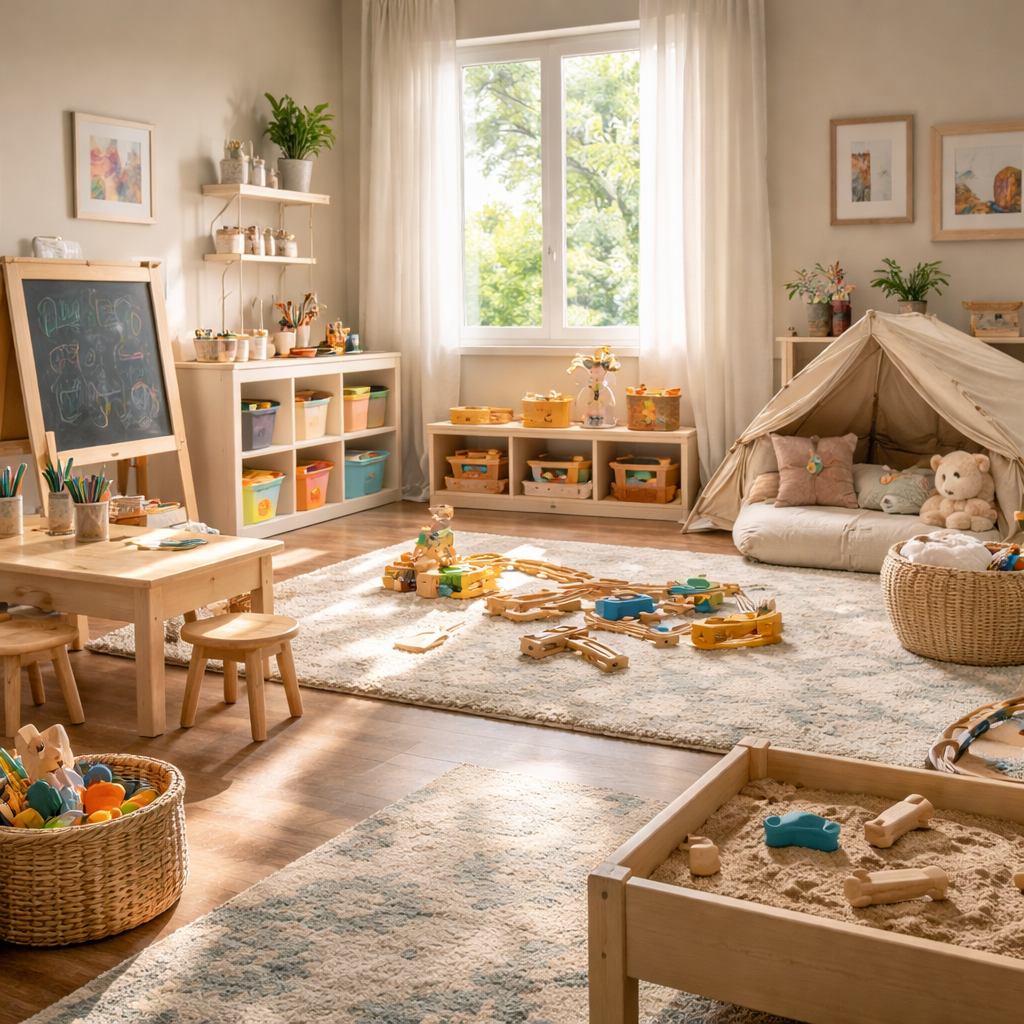
Most parents underestimate how much the physical environment shapes a toddler’s development — and that’s exactly where ideas for a toddler’s playroom become genuinely powerful tools, not just decorative choices. A well-thought-out space can encourage independence, spark creativity, and even reduce daily meltdowns by giving children a sense of ownership over their own corner of the world.
Think zones, not just furniture
One of the most effective approaches to designing a toddler playroom is dividing the space into distinct activity zones. Rather than scattering toys randomly, grouping items by purpose helps children understand what each area is for — and naturally guides their play without constant adult direction.
A reading nook with low shelves and a soft rug signals “quiet time.” A building zone stocked with blocks and construction toys invites focused, hands-on problem-solving. An art corner with washable surfaces and accessible supplies gives kids permission to create without worrying about mess. Each zone serves a developmental function, and together they create a balanced environment that grows with the child.
Storage that children can actually use
Adult-height storage defeats the purpose of an independent play space. When toddlers can reach their own toys, put them away, and make choices without asking for help, it builds confidence and fine motor skills simultaneously. The best storage solutions for young children share a few common traits:
- Open bins or baskets at floor level, categorized by toy type
- Picture labels or color coding so pre-readers can navigate independently
- Toy rotation systems to prevent overstimulation and keep interest fresh
- Low bookshelves with books facing forward so covers are visible
- Dedicated spots for puzzles, art supplies, and dress-up items
Toy rotation deserves special mention. Research in early childhood education consistently shows that children engage more deeply and for longer periods when they have fewer choices available at once. Storing half the toys and swapping them out every few weeks keeps the playroom feeling new without spending a single dollar.
Flooring and safety: the foundation of the space
Before thinking about wall colors or themed decor, flooring deserves careful consideration. Toddlers spend a significant portion of their time sitting, crawling, and tumbling on the ground, which makes surface choice both a safety and a comfort decision.
Foam interlocking tiles are a popular option for their cushioning effect and easy replacement if one section gets damaged. Large area rugs over hardwood offer warmth and define zones visually. Whatever material you choose, check that it is non-toxic, easy to clean, and free of small pieces that could detach over time.
Anchor all tall furniture to the wall. Bookshelves and storage units that are not secured are among the leading causes of furniture-related injuries in children under five, according to pediatric safety organizations.
Sensory-friendly elements that support development
A toddler’s brain is processing enormous amounts of sensory input every single day. Designing a playroom with sensory development in mind is not reserved for children with specific needs — it benefits every child at this stage of growth.
Consider incorporating a variety of textures through rugs, cushions, and fabric bins. Natural light is preferable to harsh overhead lighting where possible, and a dimmable option for quieter moments helps signal transitions. A small sensory table filled with kinetic sand, water beads, or dry rice gives toddlers an outlet for tactile exploration that keeps them engaged independently for surprisingly long stretches.
| Element | Developmental benefit | Budget level |
|---|---|---|
| Sensory table with fillers | Fine motor skills, focus, calm | Low–Medium |
| Mirrored wall panel (child-safe) | Self-awareness, imaginative play | Medium |
| Chalkboard wall section | Creativity, pre-writing skills | Low |
| Balance beam or wobble board | Gross motor skills, coordination | Low–Medium |
| Puppet theater frame | Language development, storytelling | Low |
Open-ended toys over screen time
What fills the space matters just as much as how the space is arranged. Open-ended toys — items with no single “correct” use — consistently outperform electronic or single-function toys in terms of developmental value and longevity of interest. Wooden blocks, fabric dolls, building sets, play dough, simple instruments, and loose parts like wooden rings or pebbles all invite children to lead the play rather than follow a script.
A playroom stocked primarily with open-ended materials also tends to stay tidier, paradoxically, because children develop genuine attachment to fewer, more meaningful objects rather than cycling through dozens of single-use toys that quickly lose appeal.
Personalizing without overwhelming
There is a real temptation to fill a toddler’s playroom with bold colors, licensed characters, and every trend available. The reality is that young children are easily overstimulated by visual noise. A calmer, more intentional aesthetic — soft neutrals with one or two accent colors, simple wall art at child’s eye level, and a few meaningful personal touches — tends to support longer, calmer independent play.
Hanging a low gallery wall with the child’s own artwork gives them visible pride in their space. A small photo display of family or friends adds warmth and emotional connection to the room. These personal details matter far more to toddlers than any licensed character ever could.
A space that grows with your child
The smartest investment in a toddler playroom is flexibility. Adjustable shelving, modular furniture, and storage systems that can be reconfigured mean the room can evolve as your child does — from a sensory-rich infant space to an imagination-driven toddler zone, and eventually to a creative space for a school-age child.
Avoid committing too heavily to a single theme that may be outgrown in six months. Instead, build around function and let the personality of the space develop organically through the child’s own artwork, chosen toys, and natural interests. A playroom that grows alongside a child is not only more practical — it gives that child a space they genuinely feel belongs to them, which is ultimately the point of creating one in the first place.
