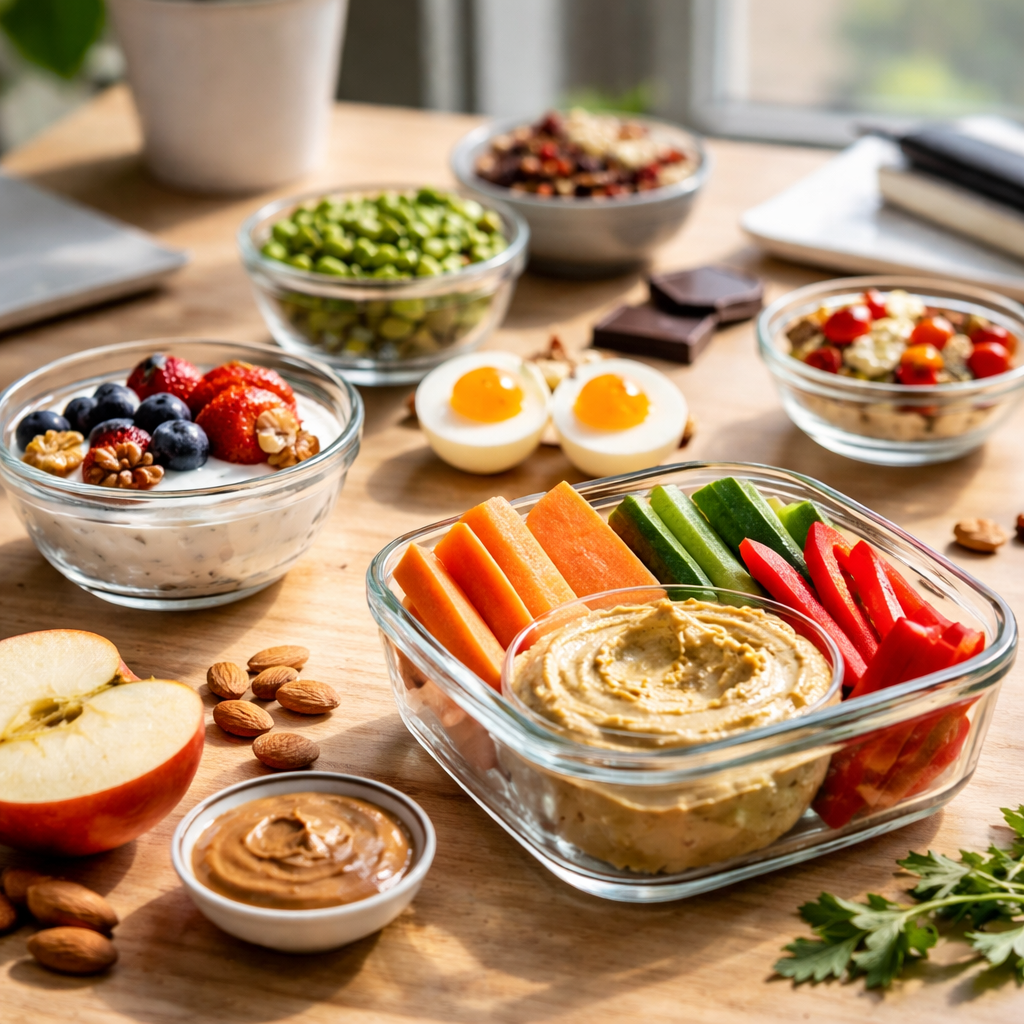
Most people reach for a bag of chips or a candy bar somewhere around 3 p.m. — not because they’re truly hungry, but because their brain needs a quick reset. If you’ve been looking for ideas for healthy snacks at work, the good news is that eating well between meals doesn’t require meal prep wizardry or a fully equipped kitchen. It takes a bit of planning and knowing which foods actually fuel your focus rather than crash it.
Why your midday snack choice matters more than you think
Blood sugar fluctuations are one of the main reasons people feel mentally foggy or irritable in the afternoon. When you eat refined carbohydrates or sugary snacks, your glucose spikes fast — and drops just as quickly. That’s the slump you feel after a cookie or a sweetened coffee drink. Protein, fiber, and healthy fats slow that process down, giving you steady energy instead of a short burst followed by fatigue.
Beyond energy, what you snack on also affects your mood and concentration. Research in nutritional psychology consistently links diets rich in whole foods with better cognitive performance. That doesn’t mean you need to be perfect — it means small, consistent choices add up over time.
Snacks that are actually easy to bring to the office
The biggest barrier isn’t motivation — it’s convenience. Here are options that require almost no preparation, travel well, and keep you satisfied for at least a couple of hours:
- Greek yogurt with a small handful of mixed nuts — protein and fat together keep hunger away longer than either one alone
- Apple slices with almond or peanut butter — natural sugars paired with healthy fats create a balanced snack without blood sugar spikes
- Hard-boiled eggs — easy to prep in batches on Sunday, portable, and packed with protein
- Hummus with sliced vegetables like carrots, cucumber, or bell pepper strips
- A small portion of cottage cheese with cherry tomatoes or berries
- Edamame — either frozen and reheated or pre-packaged; rich in plant protein and fiber
- A handful of mixed seeds and unsweetened dried fruit (go easy on the fruit portion to keep sugar moderate)
Notice that each of these combines at least two macronutrients. That’s intentional — single-ingredient snacks like a plain banana or a handful of crackers can leave you hungry again within an hour.
What to keep in your desk drawer
Not everything needs refrigeration. Having a few non-perishables at your desk is smart insurance against vending machine temptations.
| Snack | Main benefit | Watch out for |
|---|---|---|
| Raw almonds or walnuts | Healthy fats, magnesium, long-lasting satiety | Portion size — a small handful is enough |
| Dark chocolate (70%+) | Antioxidants, mild caffeine boost | Stick to 1–2 squares, not a full bar |
| Whole grain crackers | Fiber, slow-digesting carbs | Pair with protein, don’t eat alone |
| Roasted chickpeas | Plant protein, crunchy, filling | Check labels for added salt and sugar |
| Nut butter sachets | Portable protein and fat source | Choose varieties with no added oils |
A smarter way to think about snacking at work
One mindset shift that helps: think of snacks as bridges, not treats. A snack’s job is to get you comfortably from one meal to the next without energy dips or overeating at lunch or dinner. When you frame it that way, the question stops being “what do I feel like eating?” and becomes “what will actually keep me functional?”
Hunger at work isn’t just a physical signal — it’s your brain telling you it’s running low on the resources it needs to concentrate, make decisions, and stay patient with people.
It’s also worth paying attention to timing. Most nutrition professionals suggest spacing snacks roughly two to three hours after a main meal, rather than grazing constantly throughout the day. Giving your digestive system actual breaks has benefits for gut health and insulin sensitivity.
Tips for people who always forget to pack snacks
If you’re the type who plans well but executes poorly, these practical habits can help:
- Keep a reusable container in your work bag permanently — when it’s already there, you’re more likely to fill it
- Prep portioned snack bags on the weekend alongside your regular meal prep
- Set a recurring grocery reminder for snack staples so you never run out
- Keep at least one shelf-stable option in your desk at all times as backup
Small friction reduction goes a long way. The easier it is to grab something nutritious, the less likely you are to reach for whatever’s available in the break room.
The snacks worth leaving behind
Just as useful as knowing what to eat is understanding what consistently works against you. Flavored rice cakes, “low-fat” granola bars, fruit juice, and most commercial trail mixes contain more sugar than their healthy image suggests. They’re not terrible occasionally, but as daily go-to snacks, they tend to spike blood sugar without providing meaningful satiety or nutrients.
Energy drinks and sugary coffees fall into the same category — they feel like they help, but the caffeine-and-sugar combination creates a temporary lift followed by a more pronounced crash. If you rely on them regularly, it’s often worth looking at whether your meals and snacks are providing enough actual sustenance.
Building a snack routine that sticks
The goal isn’t to eat perfectly every single day. It’s to build enough good defaults into your routine that healthy choices become the path of least resistance. Start with one or two swaps — maybe replace your afternoon vending machine visit with a small container of nuts and a piece of fruit. Do that consistently for a few weeks, and it stops feeling like discipline and starts feeling like just what you do.
Over time, you’ll likely notice that your afternoon energy is more stable, your concentration holds longer, and you arrive at dinner less ravenously hungry. Those aren’t dramatic transformations — they’re the quiet, compounding benefits of giving your body what it actually needs during the workday.
