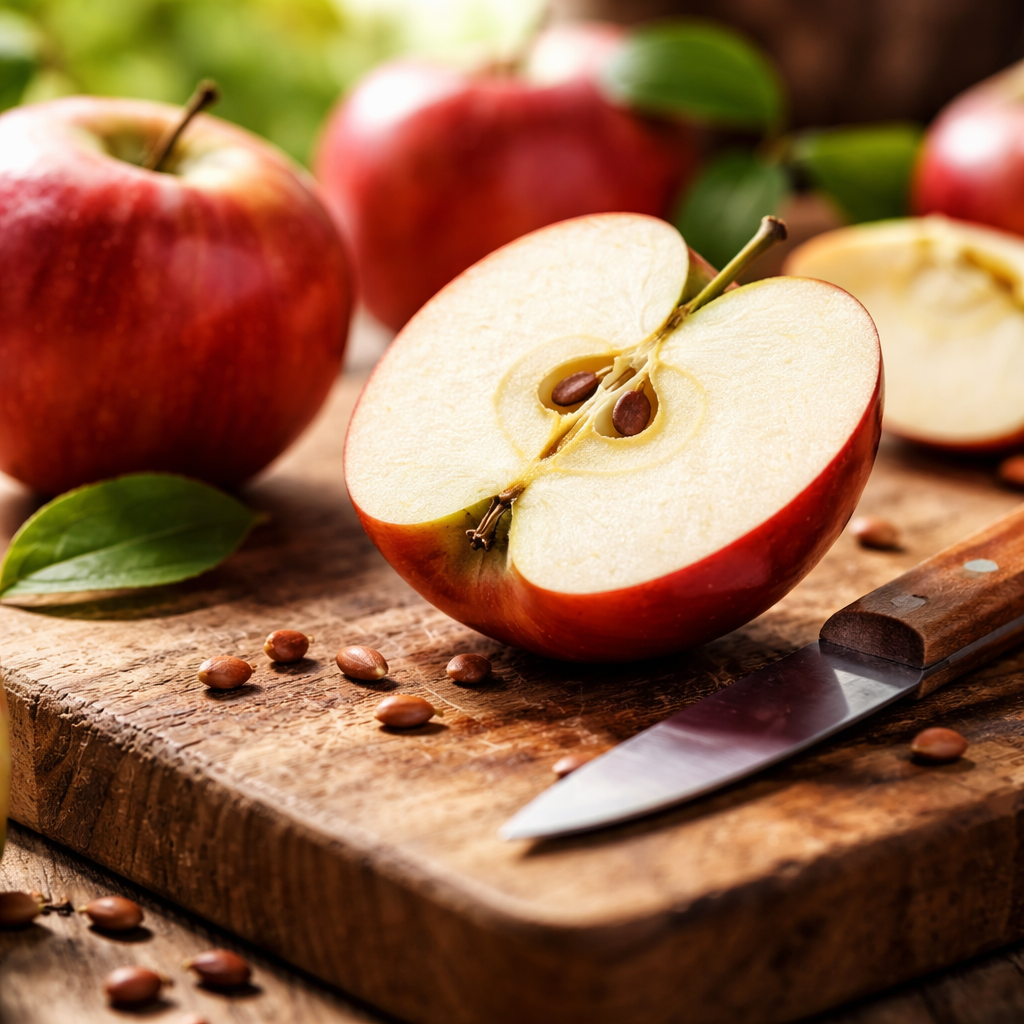
Most people never give it a second thought — you bite into an apple, accidentally swallow a seed or two, and move on. But is it safe to eat apple seeds, or is there something genuinely worth paying attention to? The answer is more nuanced than a simple yes or no, and it actually comes down to chemistry, quantity, and how your body processes certain natural compounds.
What apple seeds actually contain
Apple seeds contain a naturally occurring compound called amygdalin. This substance belongs to a group known as cyanogenic glycosides — molecules that, under specific conditions, can release hydrogen cyanide in the body. That word “cyanide” is enough to make anyone nervous, and understandably so. But context matters enormously here.
Amygdalin itself is not cyanide. It only converts into hydrogen cyanide when the seed is chewed or crushed and comes into contact with digestive enzymes. An intact, swallowed seed passes through the digestive system largely without releasing any harmful compounds — the hard outer shell acts as a protective barrier.
How much cyanide is actually in a seed?
Let’s put some numbers on the table, because this is where the real picture becomes clear.
| Apple variety | Amygdalin content per gram of seed |
|---|---|
| Common dessert apple | ~1–4 mg of amygdalin |
| Wild apple varieties | Can be significantly higher |
According to toxicological data, a lethal dose of hydrogen cyanide for an adult is estimated at around 1–3 mg per kilogram of body weight. For a person weighing 70 kg, that would require a staggering number of crushed, chewed apple seeds consumed all at once — far beyond anything that could happen accidentally. Most estimates suggest you would need to thoroughly chew somewhere between 150 and 700 seeds in one sitting to approach a dangerous threshold, depending on the apple variety and individual factors.
Accidentally swallowing a few apple seeds while eating fruit poses no meaningful health risk to a healthy adult or child. The body can detoxify small amounts of cyanide compounds naturally and efficiently.
When should you actually be cautious?
While everyday apple eating is perfectly safe, there are specific situations where it makes sense to be a little more careful.
- Juicing large quantities of apples whole, including the core and seeds, concentrates the amygdalin content in a single serving.
- Grinding apple seeds in a blender or food processor breaks the hard shell and activates the enzymatic reaction that releases cyanide compounds.
- Children have lower body weight, which means the threshold for any toxic effect is proportionally lower — though still far above accidental exposure.
- People who consume alternative health preparations made from concentrated apple seed extracts should exercise caution, as these products deliberately increase the dose.
The key distinction is between incidental exposure — a seed swallowed here and there — and deliberate, concentrated consumption. These are genuinely different scenarios from a toxicology standpoint.
The myth of apple seeds as a cancer cure
It’s worth addressing something that circulates widely online: the idea that amygdalin (sometimes marketed as “vitamin B17” or laetrile) has anti-cancer properties. This claim has been studied extensively. Regulatory agencies including the U.S. Food and Drug Administration have not approved laetrile as a cancer treatment, and the scientific consensus does not support its effectiveness. There are, however, documented cases of cyanide poisoning in people who consumed large amounts of apricot kernels or apple seed extracts believing in these claims.
This is a case where a kernel of folk wisdom — that certain plants contain bioactive compounds — gets stretched far beyond what evidence supports, sometimes with harmful results.
What about apple core, peel, and stems?
Apple seeds often get conflated with other parts of the fruit in people’s minds. To be clear:
- The apple flesh is entirely safe and nutritious, rich in fiber, vitamin C, and antioxidants.
- The peel is safe and actually contains a higher concentration of certain beneficial compounds than the flesh.
- The core (the fibrous center) is also safe to eat, though most people find the texture unpleasant.
- Only the seeds contain amygdalin, and only in meaningful amounts if deliberately chewed and consumed in large quantities.
The bottom line on apple seeds and everyday eating
Apple seeds do contain a compound that can produce a toxic substance under the right conditions. That part is factually accurate. But the leap from “apple seeds contain amygdalin” to “apple seeds are dangerous” skips over several important steps — the need for mechanical breakdown, the small quantities typically encountered, and the body’s own detoxification capacity.
Eating an apple — seeds and all, if they happen to be swallowed — is not a health risk. What this topic really highlights is the importance of dose in toxicology: virtually any substance can be harmful in large enough quantities, and virtually any substance is harmless below a certain threshold. Apple seeds sit very comfortably in the harmless category for the vast majority of everyday eating situations.
So go ahead and eat your apple. The seeds are the least of your worries.
