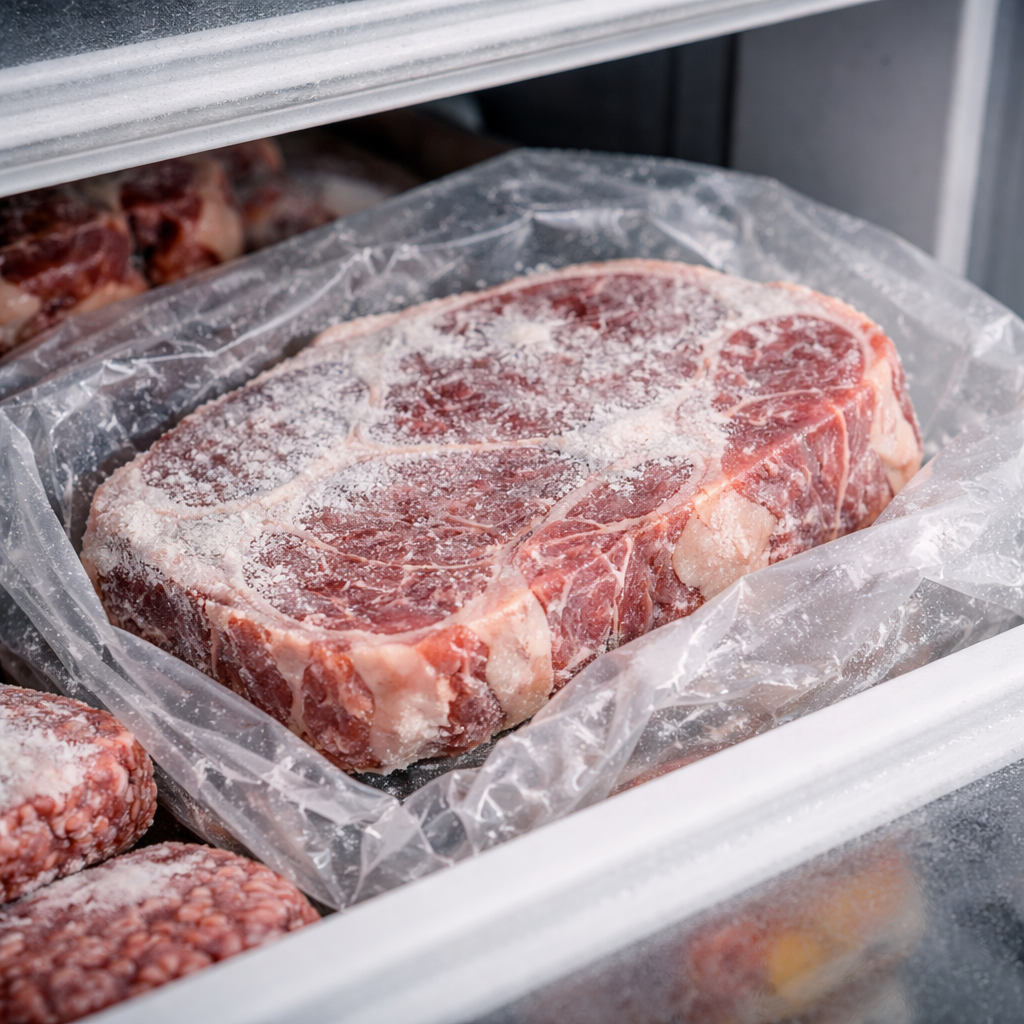
Most people have opened their freezer at some point and found meat covered in pale, dry patches — and immediately wondered: is it safe to eat freezer burned meat, or should it go straight in the trash? The short answer might surprise you. Freezer burn is not a food safety issue. It is a quality issue, and understanding that difference changes how you think about the food already sitting in your freezer.
What freezer burn actually is — and what it is not
Freezer burn happens when moisture escapes from the surface of frozen food and evaporates into the air inside the freezer. This process, called sublimation, leaves behind dry, discolored patches that look grayish-white or leathery. It tends to occur when food is not wrapped tightly enough or when it has been stored for a long time.
One important clarification: freezer burn does not mean the meat has gone bad. There are no harmful bacteria or toxins involved. The USDA confirms that freezer-burned food remains safe to consume — it has simply lost moisture, which affects texture and taste rather than safety.
“Freezer burn is a quality issue, not a food safety issue.” — United States Department of Agriculture (USDA)
How to tell freezer burn apart from actual spoilage
This is where many people get confused — and understandably so. Freezer-burned meat looks unappetizing, which makes it easy to assume it has spoiled. But the signs of actual spoilage are very different.
| Freezer Burn | Actual Spoilage |
|---|---|
| Dry, pale, or grayish patches on the surface | Strong sour or rotten smell after thawing |
| Leathery or tough texture in affected areas | Slimy or sticky surface that does not wash off |
| No unusual odor when raw or cooked | Unusual color throughout the meat, not just on edges |
| Affects taste but not safety | Can cause foodborne illness if consumed |
If meat smells off after thawing, feels genuinely slimy, or has an unusual color deep in the flesh — that is spoilage, and it should be discarded regardless of appearance. Freezer-burned meat, by contrast, tends to smell normal once cooked.
Does it still taste good? Honest answer
Here is where honesty matters more than reassurance. Freezer-burned meat is safe, but it does not always taste great. The loss of moisture causes a dry, sometimes cardboard-like texture, and heavily affected areas can have a slightly off flavor — often described as bland or faintly stale.
That said, the degree of freezer burn matters enormously. Light freezer burn — small patches on the edges — barely affects flavor at all, especially once the meat is cooked in a sauce or marinade. Severe freezer burn across the whole surface is a different story.
Which meats are most vulnerable to freezer burn
Not all meats freeze equally well. Some cuts and types are far more prone to freezer burn than others, largely due to their fat content, surface area, and how they are packaged.
- Chicken breasts and lean poultry — highly susceptible due to low fat content and large exposed surface
- Ground meat — because of its loose, porous texture that allows air penetration
- Fish and seafood — particularly vulnerable because of thin flesh and delicate cell structure
- Pork chops and lean cuts — more affected than fattier cuts like pork shoulder
- Steaks — fattier cuts like ribeye hold up better than sirloin or flank
Fatty cuts generally fare better in the freezer because fat acts as a partial barrier against moisture loss. This is one reason why ground beef with higher fat content tends to freeze more successfully than extra-lean varieties.
How long is too long — storage times that matter
Freezer burn becomes more likely the longer meat sits in the freezer, especially if the packaging is not airtight. The USDA provides recommended maximum storage times that apply to a standard home freezer kept at 0°F (−18°C) or below.
- Whole chicken or turkey: up to 12 months
- Chicken pieces: 9 months
- Beef steaks and roasts: 6 to 12 months
- Ground beef: 3 to 4 months
- Pork chops: 4 to 6 months
- Fish (lean): 6 months; fatty fish: 2 to 3 months
Exceeding these timeframes does not automatically mean the meat is unsafe — it means the quality has likely declined. Freezer burn accelerates significantly past these windows, especially if temperature fluctuations occur due to opening and closing the freezer frequently.
Simple ways to prevent freezer burn from happening
Prevention is far easier than dealing with dry, tasteless meat after the fact. The main enemy is air contact — and reducing it is the core of every effective storage method.
Vacuum sealing is the gold standard. Removing all air from around the meat essentially eliminates the conditions needed for freezer burn to develop. If a vacuum sealer is not an option, heavy-duty freezer bags with the air pressed out manually come close. Regular zip-lock bags designed for everyday storage — not freezing — leave too much air inside and should be avoided for long-term storage.
Double wrapping adds another layer of protection. Wrapping meat tightly in plastic wrap first, then placing it in a freezer bag, significantly slows moisture loss. For extra protection, some people add a layer of aluminum foil on top.
Making the most of what you already have
If freezer-burned meat is already in your freezer, there is no reason to panic or toss it out. The best approach is to use it in dishes where the texture matters less — and where other flavors carry the meal.
Slow-cooked stews, chilis, soups, and braised dishes work exceptionally well with freezer-burned meat. The long cooking time in liquid rehydrates the proteins somewhat and masks the dryness. Heavily spiced dishes — curries, tacos, meat sauces — are another excellent option because the seasoning compensates for the muted flavor that freezer burn sometimes causes.
The one approach to avoid is grilling or pan-searing freezer-burned meat at high heat without any marinade. Dry cooking methods amplify the dryness and make the textural flaws more noticeable. A simple overnight marinade with an acidic component — citrus juice, vinegar, or yogurt — helps break down the toughened surface proteins and adds moisture back before cooking.
Ultimately, the freezer is a powerful tool for reducing food waste — but only when you use it thoughtfully. Knowing that freezer burn affects quality rather than safety gives you the freedom to cook with confidence, trim what needs trimming, and turn an imperfect cut of meat into something genuinely good on the plate.
