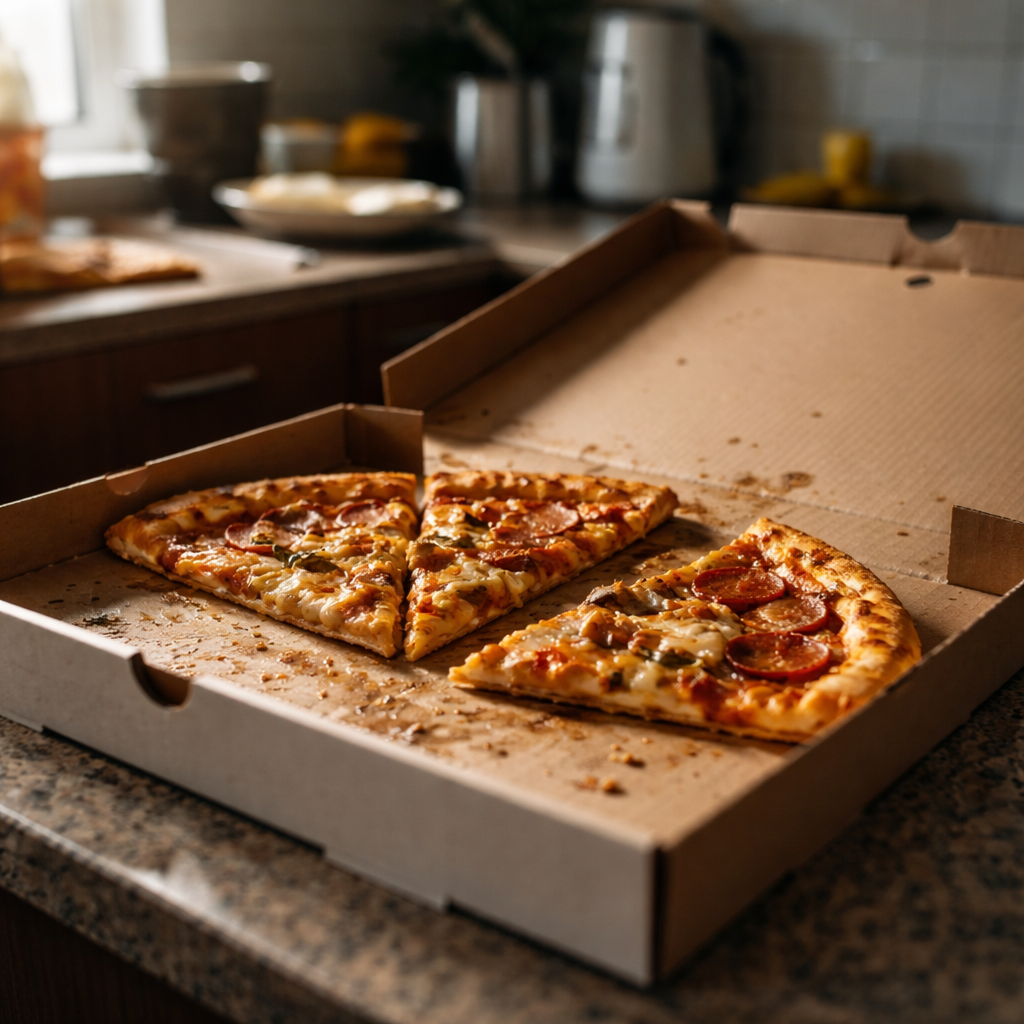
Most people have faced this exact moment: you wake up, walk into the kitchen, and spot the pizza box still sitting on the counter from last night. The question of whether is it safe to eat pizza left out overnight is genuinely one of the most common food safety dilemmas, and the answer is more nuanced than a simple yes or no.
What Actually Happens to Pizza at Room Temperature
Food safety scientists refer to the temperature range between 40°F (4°C) and 140°F (60°C) as the “danger zone.” Within this range, bacteria multiply at a rapid rate — roughly doubling in number every 20 minutes under ideal conditions. When pizza sits on your counter in a typical indoor environment, it falls squarely within this zone for the entire duration.
After about two hours at room temperature, perishable toppings like cheese, cooked meats, and vegetables begin hosting bacterial growth at levels that can become problematic. This is not a scare tactic — it is the established guidance from food safety authorities including the USDA and the FDA. The two-hour rule applies to virtually all cooked foods, and pizza is no exception.
Why Pizza Is Particularly Vulnerable
Pizza is essentially a combination of several high-risk ingredients layered together. Understanding which components pose the greatest concern helps explain why overnight storage outside the refrigerator is considered unsafe.
- Cheese — a dairy product that supports the growth of Listeria, Staphylococcus aureus, and other bacteria when kept warm
- Cooked meat toppings such as pepperoni, sausage, or chicken — these contain proteins and moisture that bacteria thrive on
- Tomato sauce — slightly acidic but not acidic enough to prevent bacterial growth over an extended period
- Vegetables like mushrooms, peppers, and onions — cooked vegetables lose their natural protective properties and become susceptible to spoilage organisms
Notably, plain cheese pizza left out overnight still carries risk — it is not just meat toppings that make leftover pizza unsafe. The moisture content of the entire slice creates a hospitable environment for bacterial activity.
The Real Risk: What Bacteria Can Develop
One of the most important things to understand about foodborne illness is that you cannot always detect contamination by looking, smelling, or tasting food. Pizza that has been sitting out overnight may look and smell perfectly fine while still containing harmful levels of bacteria or their toxins.
Staphylococcus aureus is one of the more deceptive culprits in leftover food scenarios. It produces heat-stable toxins that remain dangerous even after reheating — meaning that warming up overnight pizza does not neutralize the risk if the bacteria have already had enough time to multiply.
Other bacteria that may develop in improperly stored pizza include Bacillus cereus (commonly found in starchy and grain-based foods) and various strains of Salmonella if the original ingredients were not handled hygienically. Symptoms of related foodborne illness typically include nausea, vomiting, stomach cramps, and diarrhea, appearing anywhere from 30 minutes to 24 hours after consumption.
Does Reheating Fix the Problem?
This is where a very common misconception needs to be addressed directly. Many people believe that reheating food to a high temperature kills off any bacteria and makes it safe again. While heat does kill active bacteria, it does not destroy the toxins those bacteria may have already produced during the hours they spent multiplying at room temperature.
| Action | Does it kill bacteria? | Does it neutralize toxins? |
|---|---|---|
| Reheating in oven (400°F+) | Yes | No |
| Microwaving thoroughly | Mostly yes | No |
| Refrigerating within 2 hours | Slows growth significantly | Prevents toxin buildup |
| Freezing promptly | Stops growth entirely | Prevents toxin buildup |
The table above makes the logic clear: prevention is far more effective than correction. The safest approach is to refrigerate or freeze pizza within two hours of it being cooked or delivered, not to rely on reheating as a fix afterward.
How to Store Leftover Pizza Correctly
Proper storage is straightforward and takes less than a couple of minutes — yet it makes a significant difference in both safety and quality.
- Allow pizza to cool for no more than 30 minutes before refrigerating — you do not need to wait until it reaches room temperature
- Place slices in an airtight container or wrap them tightly in aluminum foil or plastic wrap to prevent drying out and cross-contamination
- Store in the refrigerator at or below 40°F (4°C)
- Consume refrigerated pizza within three to four days
- For longer storage, wrap individual slices and freeze them — they keep well for up to two months
The Honest Bottom Line on That Morning-After Slice
Food safety guidance is not built on theoretical worst-case scenarios — it is based on the real and documented behavior of bacteria in common food environments. Pizza left out overnight at room temperature has been sitting in conditions that actively encourage bacterial growth for six to eight hours or more. That is well beyond the established safe window, regardless of how the pizza looks or smells.
This does not mean that every single person who has ever eaten overnight pizza has gotten sick. Human immune systems and the specific bacterial load at the time both play a role. But the unpredictability is precisely the problem — you have no way of knowing whether your particular slice crossed the threshold. For healthy adults, the risk may be lower, but for children, elderly individuals, pregnant people, or anyone with a compromised immune system, the potential consequences of foodborne illness are genuinely serious.
The decision is ultimately yours, but it helps to make it with accurate information rather than hopeful guesswork. A fresh slice reheated from the refrigerator is not just safer — it also tastes considerably better than one that has been sitting in a box for nine hours. That alone is a pretty compelling reason to store it properly.
