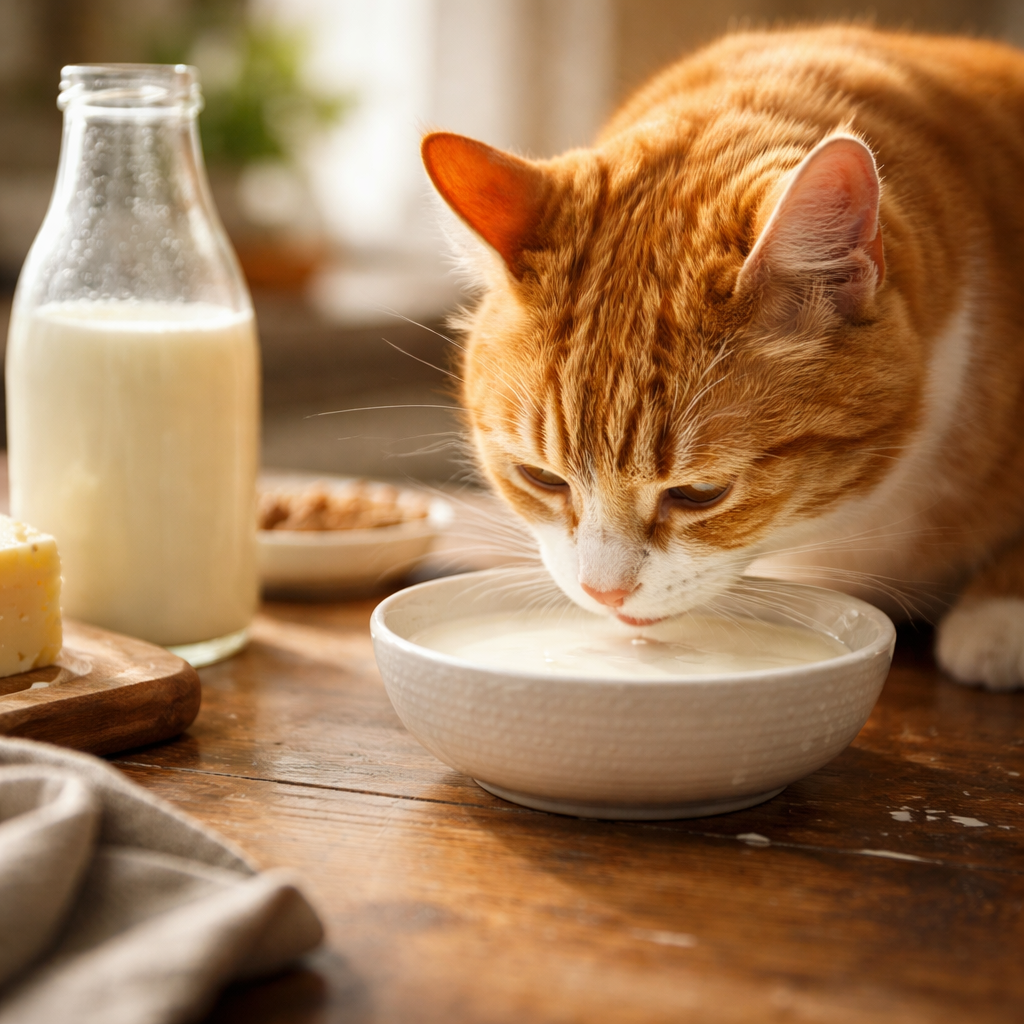
Many cat owners have asked themselves: is it safe to give cats milk? The question seems simple, but the answer is layered with biology, breed differences, and a few common misconceptions that veterinarians deal with regularly. If you’ve ever poured a small bowl for your cat thinking it was a kind gesture, this article is worth reading before you do it again.
Why cats and dairy don’t always get along
Most adult cats are lactose intolerant. This isn’t a disease or a defect — it’s a completely natural biological shift that happens as kittens grow up. Newborn cats produce an enzyme called lactase, which breaks down lactose, the sugar found in milk. As they transition to solid food, lactase production drops significantly. Without enough of this enzyme, lactose passes through the digestive system undigested, leading to fermentation in the gut.
The result? Digestive upset that can include bloating, gas, loose stools, or vomiting. The severity depends on the individual cat — some handle small amounts with no visible reaction, while others show symptoms after just a tablespoon. There’s no universal threshold, which is exactly what makes this tricky for owners to manage.
The kitten exception — and why it’s still complicated
Kittens do produce lactase, but that doesn’t mean any milk will do. A kitten separated from its mother and given cow’s milk instead of cat milk replacer is at real risk. Cow’s milk has a very different nutritional profile compared to feline milk — the protein and fat ratios don’t match what a developing kitten needs.
If you’re hand-raising an orphaned kitten, always use a commercial kitten milk replacer (KMR) available at pet stores or through your vet. Cow’s milk, goat’s milk, or plant-based alternatives are not appropriate substitutes and can cause serious harm to very young cats.
This is one of those areas where good intentions can lead to real problems, especially for kittens under four weeks old whose immune and digestive systems are still fragile.
What happens in the body when a lactose-intolerant cat drinks milk
When undigested lactose reaches the large intestine, bacteria ferment it and produce gases. At the same time, lactose draws water into the intestine through osmosis, which contributes to diarrhea. The process isn’t immediate — symptoms can appear anywhere from a few hours to half a day after consumption, which sometimes makes it harder for owners to connect the cause and effect.
| Symptom | Typical onset | Severity range |
|---|---|---|
| Diarrhea | 2–8 hours after ingestion | Mild to moderate |
| Vomiting | 1–4 hours after ingestion | Mild to moderate |
| Bloating / gas | 2–6 hours after ingestion | Mild |
| Abdominal discomfort | 1–6 hours after ingestion | Mild to moderate |
It’s also worth noting that even if your cat shows no obvious symptoms, regular dairy consumption can still cause low-grade gut irritation over time. Absence of visible symptoms doesn’t always mean the digestive system is handling it well.
Does the type of milk matter?
Not all dairy is equal when it comes to lactose content. Hard cheeses, for instance, are relatively low in lactose and are occasionally used as high-value training treats in small amounts. Plain yogurt with live cultures contains bacteria that break down some of the lactose, making it more tolerable for some cats. However, “more tolerable” is not the same as “safe to feed regularly.”
- Whole cow’s milk — high lactose, not recommended
- Skim milk — still contains lactose, not a safer option
- Goat’s milk — slightly lower lactose than cow’s milk, but still problematic for many cats
- Lactose-free cow’s milk — lactose is removed, lower risk, but still not nutritionally necessary
- Plain full-fat yogurt — lower lactose due to fermentation, sometimes tolerated in tiny amounts
- Hard cheese — lowest lactose content in dairy, occasionally used as a treat in very small pieces
Plant-based milks such as oat milk, almond milk, or soy milk carry different risks — they often contain additives, sweeteners, or ingredients like xylitol that can be harmful to cats. They are not a safe alternative to dairy even though they’re lactose-free.
Why cats seem to want milk if it’s bad for them
Here’s where it gets interesting. Cats are drawn to the smell and fat content of milk, not necessarily the lactose. The high-fat nature of whole milk makes it appealing, and cats are known to seek out calorie-dense foods by instinct. A cat begging for milk isn’t necessarily telling you it needs it — it’s responding to scent and flavor cues the same way it might beg for a bite of your salmon.
This is worth remembering because cats are notoriously persistent in asking for food they enjoy. The fact that your cat seems eager doesn’t mean its digestive system agrees with what it’s asking for.
Practical alternatives if you want to give your cat something special
If you love the idea of offering your cat a little something as a treat, there are better options that won’t upset their gut or add unnecessary dietary risk.
- Commercial cat treats formulated for digestive health
- A small piece of cooked, unseasoned chicken or fish
- Cat-specific “milk” products made with hydrolyzed lactose — these are sold in pet stores and designed specifically for cats
- A small amount of plain, unseasoned cooked egg
Specially formulated cat milk products deserve particular mention. They go through a process that removes or breaks down lactose, making them far safer than regular dairy while still satisfying that instinctual pull toward fatty, creamy foods. They’re not nutritionally necessary, but they’re a reasonable occasional treat.
When to check in with your vet
If your cat has already consumed milk and is showing signs of gastrointestinal distress — loose stools, vomiting, or visible discomfort — the symptoms are usually self-limiting and resolve within 24 hours. Make sure fresh water is available and monitor your cat’s behavior. However, if symptoms persist beyond a day, if your cat is very young, elderly, or has an existing health condition, a call to the vet is a smart move.
Cats with inflammatory bowel disease, kidney disease, or other chronic conditions may be significantly more sensitive to dietary changes, and even a small amount of dairy could trigger a more serious response in those individuals.
The bottom line your cat won’t tell you
Your cat’s digestive system wasn’t built to process the milk of another species past kittenhood. While occasional, tiny amounts of certain dairy products may not cause visible harm in some cats, milk is simply not a food that belongs in a cat’s regular diet. The appeal of the classic image — a contented cat lapping from a bowl — doesn’t match the biological reality for the vast majority of domestic cats. Keeping dairy off the menu is one of those small, easy choices that genuinely supports your cat’s long-term comfort and health.
