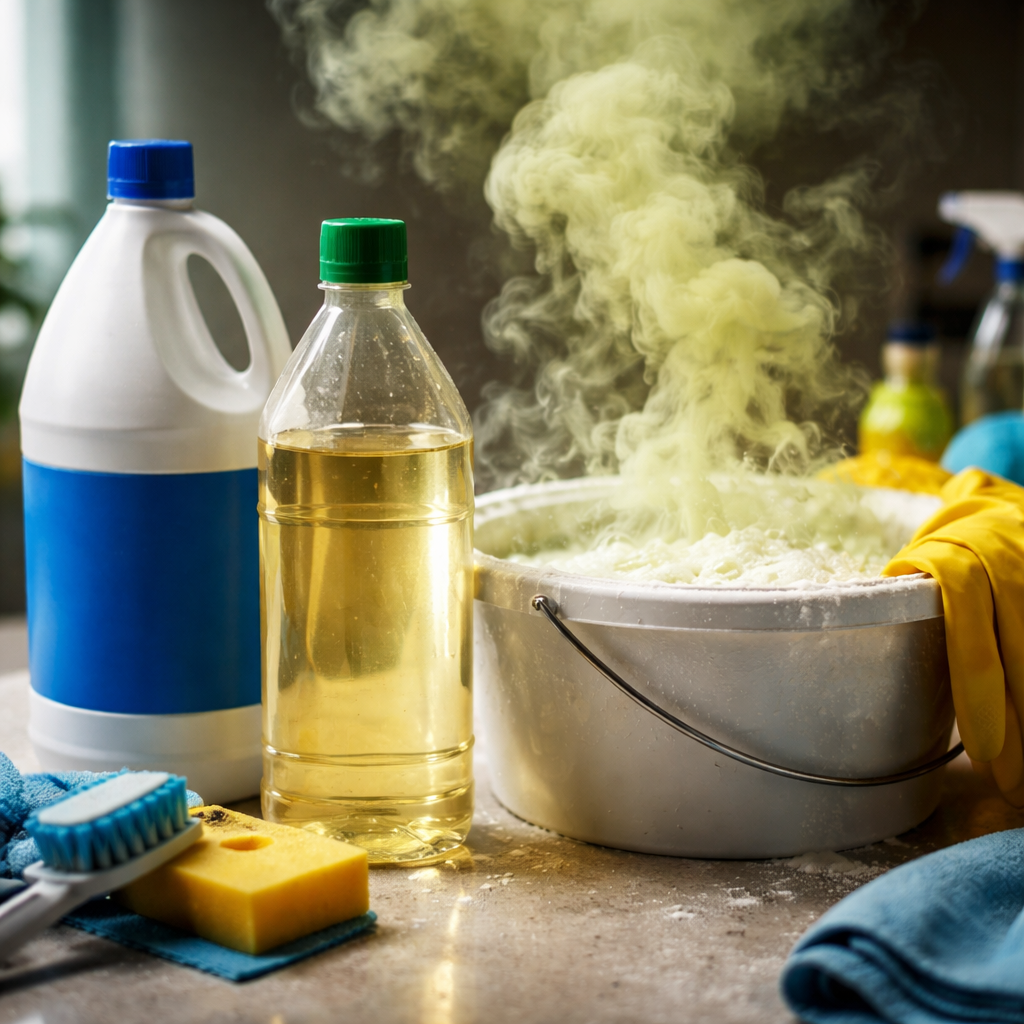
Most people have both bleach and vinegar somewhere in their cleaning cabinet — and at some point, the thought crosses your mind: what if you combined them for extra cleaning power? The question of whether is it safe to mix bleach and vinegar has a very clear answer, and it is not the one most people expect.
What actually happens when bleach meets vinegar
Bleach is a strongly alkaline solution, typically based on sodium hypochlorite. Vinegar, on the other hand, is a dilute acetic acid. When these two substances come into contact, they do not neutralize each other in a harmless way. Instead, the acid in vinegar destabilizes the hypochlorite, causing it to release chlorine gas into the surrounding air.
Chlorine gas was historically used as a chemical weapon during World War I — that alone tells you something about what you do not want floating around your bathroom. Even at low concentrations produced by household mixing, the effects on the human body are real and immediate.
Symptoms you should not ignore
Exposure to chlorine gas released from mixing cleaning products does not require large amounts to cause discomfort or harm. Even a few breaths in an enclosed space like a bathroom or kitchen can trigger noticeable reactions. Here is what typically happens:
- Burning or stinging sensation in the eyes, nose, and throat
- Coughing and difficulty breathing
- Headache and dizziness
- Chest tightness
- Nausea and skin irritation upon contact
People with asthma, respiratory conditions, or chemical sensitivities are at significantly higher risk of serious reactions. If you or someone nearby experiences any of these symptoms after mixing cleaning products, move to fresh air immediately and seek medical attention if breathing does not improve quickly.
According to the U.S. National Poison Control Center, mixing household chemicals is one of the leading causes of accidental poisoning incidents at home. The combination of bleach and acid-based products ranks among the most frequently reported.
The cleaning myth that keeps circulating
There is a persistent belief that combining two strong cleaning agents makes an even stronger cleaner. It sounds logical, but chemistry does not work that way. In this case, mixing bleach and vinegar does not enhance cleaning power — it destroys both. The sodium hypochlorite in bleach loses its disinfecting effectiveness when it reacts with acid, so you end up with a mixture that is both toxic and less effective than either product used alone.
Vinegar is genuinely useful for removing mineral deposits, hard water stains, and light mildew. Bleach is effective at disinfecting surfaces and killing pathogens. They each do their job well — just not together, and not at the same time on the same surface.
Other dangerous combinations worth knowing
Bleach and vinegar are not the only risky pairing in a typical home. Several other common products create toxic reactions when combined. Understanding these helps you clean more safely across the board.
| Combination | What it produces | Risk level |
|---|---|---|
| Bleach + ammonia | Chloramine vapors | High — respiratory damage |
| Bleach + rubbing alcohol | Chloroform and other toxic compounds | High — organ damage |
| Bleach + hydrogen peroxide | Oxygen release, concentrated bleach reaction | Moderate to high |
| Vinegar + hydrogen peroxide | Peracetic acid | Moderate — corrosive to skin and eyes |
| Different drain cleaners | Unpredictable violent reactions | High — potential for splashing |
Many commercial cleaning products contain ammonia or alcohol without clearly labeling it on the front. Always check ingredient lists before combining any two cleaners, even if they seem similar in purpose.
How to store and use these products safely
Proper storage reduces the chance of accidental mixing, especially in households with children. A few straightforward habits make a real difference.
- Store bleach and acid-based products on separate shelves, ideally in different cabinets
- Never transfer cleaning products into unlabeled containers
- Keep products in original packaging so ingredient information is always visible
- Ventilate rooms well when using any chemical cleaner, even without mixing
- Wear gloves and avoid touching your face while cleaning with bleach-based products
- Rinse surfaces with clean water between applying different products
If you are ever unsure whether two products can be used together, a quick search of their active ingredients is more reliable than going by the product name or smell. Many products marketed as “natural” or “gentle” still contain acids or oxidizing agents that react badly with bleach.
What to do if the mixing already happened
Accidents happen. If you or someone in your home has already mixed bleach with vinegar or another acid and noticed a strong smell or sudden irritation, take these steps without delay:
- Leave the area immediately and get to fresh air
- Do not try to clean up the mixture right away — ventilate the room first by opening windows and doors
- If eyes are affected, rinse with clean running water for at least 15 minutes
- Call Poison Control (in the US: 1-800-222-1222) or your local emergency line if symptoms are severe
- When returning to clean up, wear gloves, eye protection, and ensure strong ventilation
Most mild exposures resolve quickly once the person is away from the source. However, chest tightness or difficulty breathing that does not improve within a few minutes warrants emergency medical attention.
Keep them apart and both work better
Both bleach and vinegar earn their place in a cleaning routine — just never together. Bleach disinfects hard surfaces, eliminates mold, and sanitizes high-touch areas. Vinegar cuts through grease, dissolves limescale, and deodorizes naturally. Used separately and appropriately, they are two of the most effective and accessible cleaning agents available.
The key takeaway is simple: more is not always better when it comes to cleaning chemistry. Respecting how these substances behave — individually and in combination — keeps your home clean and everyone in it safe.
