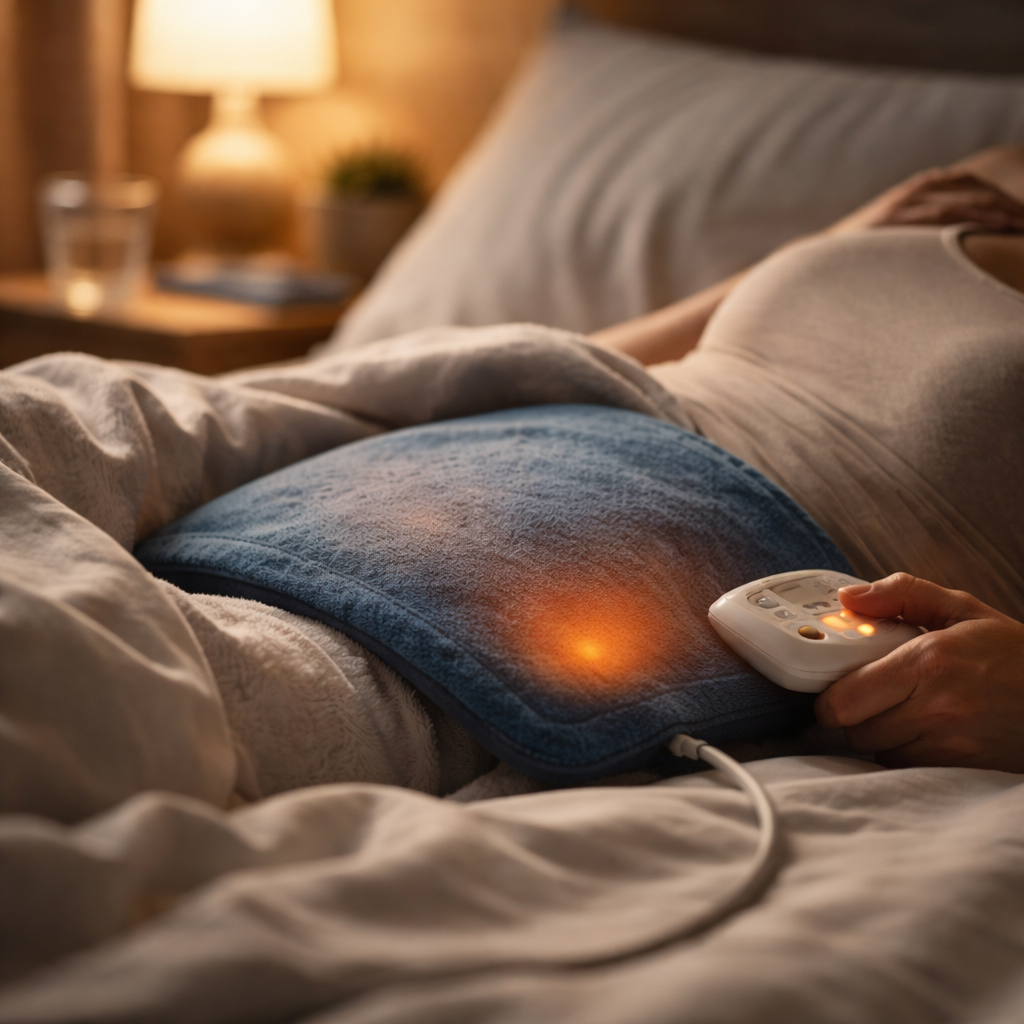
Most people who’ve ever dealt with back pain, muscle soreness, or menstrual cramps have probably fallen asleep with a heating pad still running — and woken up wondering whether that was actually a good idea. The question of is it safe to sleep with a heating pad on comes up more often than you’d think, and the honest answer is more nuanced than a simple yes or no.
What actually happens to your body during prolonged heat exposure
When you apply heat to skin continuously for several hours, the physiological response differs significantly from a short 20-minute session. During sleep, your body temperature naturally drops and your pain sensitivity decreases — which means you won’t feel warning signals like overheating or discomfort the same way you would while awake.
Prolonged contact with a heating pad can lead to a condition called erythema ab igne — a skin discoloration pattern caused by repeated or sustained heat exposure. It’s not immediately dangerous, but it’s a clear sign that your tissue is being stressed in ways that aren’t beneficial. Beyond the skin, extended heat can cause dehydration of surface tissues and even minor burns without you realizing it until morning.
The real risks you should know about
Understanding the specific risks helps you make an informed decision rather than simply being scared off heating pads altogether. Here’s what medical professionals most commonly flag:
- Burns and skin damage — even low-heat settings can cause first or second-degree burns over several hours of continuous contact, especially in people with reduced skin sensitivity
- Fire hazard — older heating pads, frayed cords, or models without auto-shutoff can overheat and potentially ignite bedding materials
- Dehydration — localized tissue dehydration can worsen muscle cramps rather than relieve them
- Disrupted sleep quality — constant heat can prevent your core body temperature from dropping naturally, which is essential for deep sleep cycles
- Masking of symptoms — sleeping through pain relief can delay recognizing conditions that need medical attention
People with diabetes, peripheral neuropathy, or circulatory disorders face a heightened risk because they may not sense heat damage until it’s already significant. The same applies to anyone taking sedative medications or sleeping very deeply.
When using heat overnight might seem tempting — and what to do instead
There are genuinely difficult nights when chronic pain makes it nearly impossible to fall asleep without some form of warmth. That impulse is completely understandable. But there are smarter alternatives that provide lasting relief without the associated risks.
| Method | Duration | Safety for sleep |
|---|---|---|
| Electric heating pad (no shutoff) | Continuous | Not recommended |
| Electric heating pad (with auto-shutoff) | Up to 2 hours | Use with caution |
| Microwavable heat pack | 30–60 minutes | Generally safe |
| Heated blanket (low setting) | Pre-warming bed only | Turn off before sleeping |
| Warm bath before bed | 20–30 minutes | Safe and effective |
A warm bath or shower roughly 90 minutes before bed is actually one of the most evidence-supported methods for both pain relief and improving sleep onset. It works by raising your surface temperature temporarily, which then triggers a cooling response that signals to your brain it’s time to sleep.
If you do use a heating pad near bedtime, follow these guidelines
Rather than banning heat therapy entirely — which would be impractical advice — the goal is to use it in a way that actually helps your body rather than working against it.
The safest approach is to use heat therapy as preparation for sleep, not as a companion through it. Apply warmth for 15 to 20 minutes, let your muscles relax, then remove the heating pad before you drift off.
Practical steps that reduce risk significantly:
- Always choose a heating pad with an automatic shut-off feature — most modern models include this as a standard function
- Use a cloth barrier between the pad and your skin to reduce direct heat intensity
- Set a timer or alarm if you tend to fall asleep quickly during use
- Never fold or bunch a heating pad while it’s in use — this concentrates heat in one spot
- Inspect the cord regularly for any fraying or damage before each use
- Keep the heat setting at low or medium rather than high, especially if you’re already relaxed
If you’re using heat for a specific medical condition like arthritis or chronic lower back pain, it’s worth having a conversation with a physical therapist about a structured heat therapy routine that fits safely into your sleep schedule.
What the body actually needs for pain relief overnight
Here’s something worth considering: heat therapy works best in short, targeted sessions — not marathon applications. Muscles respond to warmth by relaxing and increasing blood flow, but this effect plateaus relatively quickly. Keeping heat on for hours doesn’t multiply the benefit; it only multiplies the exposure time and the associated risks.
For nighttime pain management, a combination approach tends to work better than relying solely on a heating pad. Gentle stretching before bed, an appropriate sleeping position for your specific pain point, and a supportive mattress or pillow setup can work together with brief heat therapy to create actual lasting comfort rather than just temporary numbing.
If you find yourself reaching for a heating pad every single night just to fall asleep, that pattern itself is worth discussing with a healthcare provider — not because heat therapy is wrong, but because recurring pain that severe may benefit from a more targeted treatment approach.
Making heat work for you, not against you
Heat therapy is genuinely useful, and there’s no reason to give it up entirely. The key distinction is between using it as a deliberate, time-limited tool and leaving it running passively while you’re unconscious and unable to respond to discomfort. That shift in how you approach it makes all the difference between effective pain management and an unnecessary risk.
Keep the heating pad in your nighttime routine if it helps — but let it do its job in the 20 minutes before you close your eyes, not throughout the night. Your skin, your sleep quality, and your long-term comfort will all benefit from that one adjustment.
